
Top 10 Experiences
Explore the island's most unforgettable beaches, historic cities, forests, and natural wonders
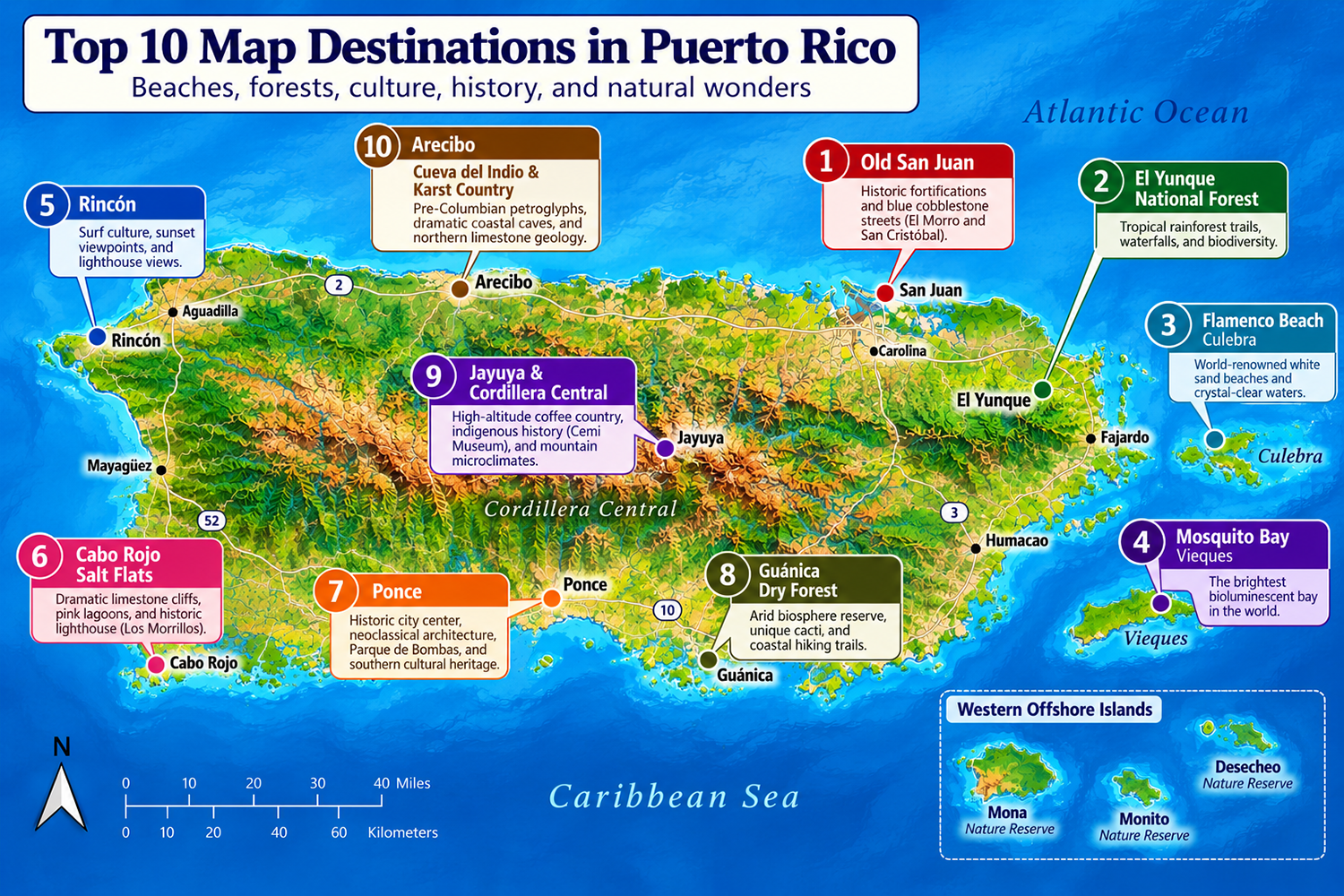
Puerto Rico offers an extraordinary variety of destinations, from centuries-old Spanish fortresses and tropical rainforests to world-famous beaches, bioluminescent bays, and dramatic coastal landscapes.
Whether you're exploring the colorful streets of Old San Juan, hiking through El Yunque National Forest, relaxing on Flamenco Beach, or discovering the island's Indigenous heritage in Jayuya, every destination reveals a different side of Puerto Rico.
Explore the Top 10 Destinations
Top 10 Destinations at a Glance
From historic cities and tropical rainforests to world-famous beaches and remarkable natural landscapes, these ten destinations showcase the best of Puerto Rico.
| # | Destination | Location | Known For |
|---|---|---|---|
| 1 | Old San Juan | San Juan | Spanish colonial architecture, historic fortresses, and cobblestone streets |
| 2 | El Yunque National Forest | Eastern Puerto Rico | Tropical rainforest, waterfalls, hiking trails, and biodiversity |
| 3 | Flamenco Beach | Culebra | White sand, turquoise waters, and scenic coastal landscapes |
| 4 | Mosquito Bay | Vieques | Extraordinary bioluminescence and nighttime kayaking experiences |
| 5 | Rincón | West Coast | Surfing, sunsets, beaches, and lighthouse views |
| 6 | Cabo Rojo Salt Flats & Los Morrillos Lighthouse | Cabo Rojo | Pink salt ponds, limestone cliffs, and a historic lighthouse |
| 7 | Ponce Historic City Center | Ponce | Neoclassical architecture, Parque de Bombas, and cultural heritage |
| 8 | Guánica Dry Forest | Guánica | Subtropical dry forest, wildlife, and coastal hiking trails |
| 9 | Jayuya & Cordillera Central | Central Mountains | Taíno heritage, mountain landscapes, and coffee-growing traditions |
| 10 | Cueva del Indio & Karst Country | Arecibo | Indigenous petroglyphs, coastal caves, and limestone formations |
Explore Puerto Rico's Top 10 Destinations
From the colorful streets of Old San Juan to the mountains of the Cordillera Central, these ten destinations showcase Puerto Rico's extraordinary combination of history, culture, beaches, and natural beauty.
1. Old San Juan — San Juan
Step Back in Time Through Five Centuries of History
Old San Juan is one of the Caribbean's most celebrated historic districts, known for its colorful colonial buildings, blue-toned cobblestone streets, and impressive Spanish fortifications.
Founded during the early sixteenth century, the historic city preserves centuries of architecture, culture, and maritime history. Visitors can explore the imposing Castillo San Felipe del Morro, walk along the historic city walls, discover Castillo San Cristóbal, and wander through picturesque plazas lined with shops, restaurants, and historic buildings.
What Makes Old San Juan Special
- Castillo San Felipe del Morro and Castillo San Cristóbal.
- Colorful Spanish colonial architecture.
- Historic cobblestone streets and charming plazas.
- Museums, galleries, restaurants, and waterfront views.
Did You Know? La Fortaleza and the San Juan National Historic Site are recognized as a UNESCO World Heritage Site.
Local Tip: Explore Old San Juan on foot early in the morning or late in the afternoon to avoid the strongest midday heat.
2. El Yunque National Forest — Eastern Puerto Rico
Explore the Only Tropical Rainforest in the U.S. National Forest System
El Yunque National Forest is one of Puerto Rico's most remarkable natural attractions.
Located in the Luquillo Mountains of eastern Puerto Rico, the forest is known for its lush vegetation, cascading waterfalls, mountain views, and extraordinary biodiversity.
Visitors can explore scenic trails, discover tropical plant life, and experience the sounds of native wildlife, including the iconic coquí frog.
What Makes El Yunque Special
- Tropical rainforest landscapes and diverse ecosystems.
- Hiking trails and scenic mountain viewpoints.
- Waterfalls, streams, and lush vegetation.
- Native wildlife, including the Puerto Rican parrot.
Did You Know? El Yunque is the only tropical rainforest within the U.S. National Forest System.
Local Tip: Check current trail conditions and entry requirements before visiting. Mountain weather can change quickly, and some trails may close after heavy rainfall.
3. Flamenco Beach — Culebra
Discover One of Puerto Rico's Most Beautiful Beaches
Located on the island of Culebra, Flamenco Beach is celebrated for its crescent-shaped shoreline, soft white sand, and exceptionally clear turquoise waters.
Surrounded by green hills and tropical scenery, the beach offers an idyllic setting for swimming, relaxing, and enjoying the Caribbean landscape.
Flamenco Beach is also known for its distinctive abandoned military tanks, reminders of Culebra's history as a former U.S. Navy training area.
What Makes Flamenco Beach Special
- Wide stretches of white sand.
- Clear turquoise water and beautiful coastal scenery.
- Opportunities for swimming and snorkeling when conditions permit.
- Historic military tanks near the shoreline.
Did You Know? Culebra and its surrounding islands form part of the Spanish Virgin Islands.
Local Tip: Arrange ferry or flight transportation to Culebra in advance, especially during holidays and weekends.
4. Mosquito Bay — Vieques
Experience the Magic of Bioluminescent Waters
Mosquito Bay, located on the southern coast of Vieques, is internationally recognized for its extraordinary bioluminescence.
The bay is home to microscopic organisms called dinoflagellates that emit light when the surrounding water is disturbed, creating a glowing effect.
On suitable nights, the movement of a kayak paddle or fish beneath the water can produce shimmering blue-green trails.
What Makes Mosquito Bay Special
- Exceptionally bright bioluminescence.
- Guided nighttime kayaking experiences.
- A protected coastal ecosystem.
- One of Puerto Rico's most extraordinary natural phenomena.
Did You Know? Mosquito Bay has been recognized by Guinness World Records for its exceptional bioluminescence.
Local Tip: Plan your visit around a darker moon phase when possible. Bright moonlight can make the glow harder to see.
5. Rincón — West Coast
Discover Puerto Rico's Surfing and Sunset Capital
Located on Puerto Rico's western coast, Rincón is famous for its surfing culture, laid-back atmosphere, and spectacular sunsets.
The municipality gained international recognition as a surfing destination and continues to attract surfers from around the world.
Beyond its beaches, Rincón offers coastal viewpoints, restaurants, local shops, and the historic Punta Higüero Lighthouse.
What Makes Rincón Special
- Internationally recognized surfing beaches.
- Spectacular sunsets over the western horizon.
- Punta Higüero Lighthouse and coastal viewpoints.
- Relaxed seaside atmosphere and local restaurants.
Did You Know? Rincón hosted the 1968 World Surfing Championships, helping establish Puerto Rico's reputation as an international surfing destination.
Local Tip: Surf conditions vary by season. Winter generally brings larger Atlantic swells, while summer often offers calmer conditions at many beaches.
6. Cabo Rojo Salt Flats & Los Morrillos Lighthouse
Explore Dramatic Cliffs and Colorful Coastal Landscapes
Cabo Rojo's southwestern coastline is home to some of Puerto Rico's most dramatic scenery.
The Cabo Rojo Salt Flats feature shallow salt ponds that can develop striking shades of pink and reddish-orange.
Nearby, Los Morrillos Lighthouse stands above towering limestone cliffs, offering panoramic views of the Caribbean Sea.
What Makes Cabo Rojo Special
- Salt ponds that sometimes appear pink.
- Historic Los Morrillos Lighthouse.
- Dramatic limestone cliffs and coastal viewpoints.
- Important habitats for migratory birds.
Did You Know? The pink coloration of the salt ponds is associated with salt-tolerant microorganisms and environmental conditions.
Local Tip: Visit early or late in the day for more comfortable temperatures. Bring water and sun protection, as the area offers limited shade.
7. Ponce Historic City Center — Ponce
Discover Puerto Rico's Architectural and Cultural Heritage
Known as La Perla del Sur (The Pearl of the South), Ponce is celebrated for its historic architecture, cultural institutions, and distinctive urban identity.
Its historic center features colorful buildings, elegant plazas, and landmarks that reflect the city's economic and cultural importance during the nineteenth and early twentieth centuries.
One of its most recognizable attractions is Parque de Bombas, the iconic red-and-black former firehouse in Plaza Las Delicias.
What Makes Ponce Special
- Parque de Bombas and Plaza Las Delicias.
- Historic neoclassical and Creole architecture.
- Museums, art, and cultural institutions.
- Rich traditions in music, art, and civic history.
Did You Know? Ponce is commonly called La Perla del Sur, reflecting its importance as a cultural and economic center in southern Puerto Rico.
Local Tip: Explore the historic center on foot, but check attraction operating hours because restoration work and access restrictions can affect individual sites.
8. Guánica Dry Forest — Guánica
Explore Puerto Rico's Remarkable Tropical Dry Forest
Guánica Dry Forest protects one of the Caribbean's most important subtropical dry forest ecosystems.
Unlike the lush rainforest of El Yunque, Guánica features drought-adapted vegetation, rocky terrain, and distinctive coastal landscapes.
The forest is recognized for its ecological significance and diverse plant and animal communities.
What Makes Guánica Special
- Subtropical dry forest ecosystems.
- Hiking trails and coastal landscapes.
- Unique plant communities adapted to dry conditions.
- Important habitats for native and migratory birds.
Did You Know? Guánica Dry Forest was designated a UNESCO Biosphere Reserve in 1981.
Local Tip: Start hiking early in the morning and bring plenty of water. Temperatures can become very hot, especially during midday.
9. Jayuya & Cordillera Central
Discover Taíno Heritage and Puerto Rico's Mountain Heartland
Jayuya, located in Puerto Rico's central mountains, offers a combination of Indigenous history, rural traditions, and scenic mountain landscapes.
The municipality is particularly associated with Taíno heritage and features cultural landmarks such as Museo El Cemí and Piedra Escrita.
The surrounding Cordillera Central offers winding mountain roads, coffee-growing landscapes, and cooler temperatures than many coastal areas.
What Makes Jayuya Special
- Taíno archaeological heritage and petroglyphs.
- Museo El Cemí and Piedra Escrita.
- Mountain scenery and coffee-growing traditions.
- Rural communities and cultural experiences.
Did You Know? The Cordillera Central is Puerto Rico's principal mountain range and contains some of the island's highest elevations.
Local Tip: Allow extra driving time for mountain roads and check weather conditions before traveling.
10. Cueva del Indio & Karst Country — Arecibo
Explore Ancient Petroglyphs and Dramatic Limestone Landscapes
Located along Puerto Rico's northern coast, Arecibo is known for its dramatic limestone formations, coastal caves, and connections to Indigenous history.
One of the area's most recognizable attractions is Cueva del Indio, a coastal cave containing Indigenous petroglyphs.
The surrounding landscape is part of Puerto Rico's northern karst region, characterized by limestone hills, caves, sinkholes, and other formations shaped by geological processes over thousands of years.
What Makes Arecibo Special
- Indigenous petroglyphs at Cueva del Indio.
- Dramatic coastal rock formations.
- Northern Puerto Rico's limestone karst landscape.
- Scenic views of the Atlantic Ocean.
Did You Know? Puerto Rico's northern karst region contains extensive cave systems and important groundwater resources.
Local Tip: Exercise caution near coastal cliffs and cave openings. Rocks can be slippery, and strong waves can make certain areas dangerous.
Plan Your Visit
Puerto Rico may be a relatively small island, but its diverse landscapes, winding mountain roads, and offshore islands make travel planning important.
To make the most of your visit, consider grouping nearby destinations into regional excursions rather than trying to see everything in a few days.
Explore Puerto Rico by Region
| Region | Destinations | Suggested Time |
|---|---|---|
| San Juan / Metro | Old San Juan | 1 day |
| East | El Yunque National Forest | 1 day |
| Offshore Islands | Culebra and Vieques | 2–4 days |
| West | Rincón | 1 day |
| Southwest | Cabo Rojo and Guánica | 1–2 days |
| South | Ponce | Half day to 1 day |
| Central Mountains | Jayuya and Cordillera Central | 1 day |
| North | Arecibo and Karst Country | Half day to 1 day |
Travel Tips for Exploring Puerto Rico
Rent a Car for Greater Flexibility: While transportation options are available in the San Juan metropolitan area, renting a car is generally the most convenient way to explore destinations outside the capital.
Plan Offshore Island Transportation: Culebra and Vieques require additional travel arrangements, including ferry or air transportation. Book transportation and accommodations early, particularly during holidays and peak travel periods.
Allow Extra Time for Mountain Roads: Routes through the Cordillera Central can be narrow, winding, and slower than major highways. Allow additional travel time when visiting Jayuya.
Check Attraction Hours and Conditions: Historic sites, museums, hiking trails, and natural attractions may have limited hours or temporary closures. Confirm current conditions before traveling.
Prepare for Different Environments: Bring comfortable walking shoes, drinking water, sun protection, and appropriate clothing. Weather and terrain vary significantly between coastal destinations, tropical rainforests, and mountain communities.
How Many Days Do You Need?
A 7–10 day trip can provide a good introduction to many of Puerto Rico's top destinations, especially if you organize your itinerary by region.
However, travelers who want to explore both Culebra and Vieques, spend time hiking, and enjoy a relaxed pace should consider allowing additional days.
Local Tip: Rather than rushing to visit every attraction, choose a few destinations that match your interests and allow time to discover nearby beaches, restaurants, historic town centers, and scenic viewpoints.
Frequently Asked Questions
What are the top places to visit in Puerto Rico?
Some of Puerto Rico's most popular destinations include Old San Juan, El Yunque National Forest, Flamenco Beach in Culebra, Mosquito Bay in Vieques, Rincón, Cabo Rojo, Ponce, Guánica Dry Forest, Jayuya, and Arecibo's coastal karst region.
What is the most popular tourist destination in Puerto Rico?
Old San Juan is one of Puerto Rico's most visited and recognizable destinations, known for its historic Spanish fortresses, colorful colonial architecture, cobblestone streets, restaurants, and cultural attractions.
How many days do you need to explore Puerto Rico?
A 7–10 day trip provides time to experience several major destinations across Puerto Rico. Travelers planning to visit both Culebra and Vieques, explore the central mountains, or spend additional time at the beach may benefit from a longer stay.
Is El Yunque National Forest worth visiting?
Yes. El Yunque offers a unique opportunity to explore a tropical rainforest, hike scenic trails, discover waterfalls, and experience Puerto Rico's remarkable biodiversity. It is one of the island's most distinctive natural attractions.
Which is better to visit, Vieques or Culebra?
Both islands offer memorable experiences. Culebra is especially known for Flamenco Beach, clear waters, and snorkeling opportunities. Vieques is famous for Mosquito Bay, its bioluminescent waters, and beautiful beaches. The best choice depends on your interests and available time.
Where are the best beaches in Puerto Rico?
Puerto Rico has beautiful beaches throughout the island. Popular destinations include Flamenco Beach in Culebra, the beaches of Vieques, Rincón's surfing beaches, and the scenic coastline of Cabo Rojo. Beach conditions vary by location and season.
What are the best places to visit outside San Juan?
Popular destinations outside San Juan include El Yunque National Forest, Rincón, Cabo Rojo, Ponce, Guánica Dry Forest, Jayuya, Arecibo, Culebra, and Vieques. These destinations offer a combination of natural scenery, history, outdoor recreation, and cultural experiences.
Can you visit Puerto Rico's top attractions without a car?
Some attractions in San Juan can be explored without a car, using walking, taxis, rideshare services, or organized tours. However, renting a car is generally the most convenient option for visiting destinations across the main island. Culebra and Vieques require separate ferry or air transportation.
What is the best time of year to visit Puerto Rico?
Puerto Rico can be visited year-round. December through April is generally popular for its relatively drier weather, while summer offers warmer temperatures and beach activities. The Atlantic hurricane season runs from June through November, so travelers should monitor weather forecasts when planning trips.
Are Puerto Rico's historic and natural attractions family-friendly?
Many of Puerto Rico's attractions are suitable for families, including Old San Juan, selected trails and viewpoints in El Yunque, and beaches with appropriate swimming conditions. However, some locations involve steep trails, rocky cliffs, strong currents, or nighttime activities. Choose attractions based on children's ages, weather conditions, and accessibility needs.
Did You Know?
Puerto Rico Flag Day is July 24 — the same date the first publicly acknowledged flag was raised during the Spanish-American War campaign in 1898.
Get Our Newsletter
Discover new places, local flavors, upcoming events, cultural stories, and some of our favorite finds from around the island.Read the Latest ¡La Isla! Newsletter
Follow Along


