
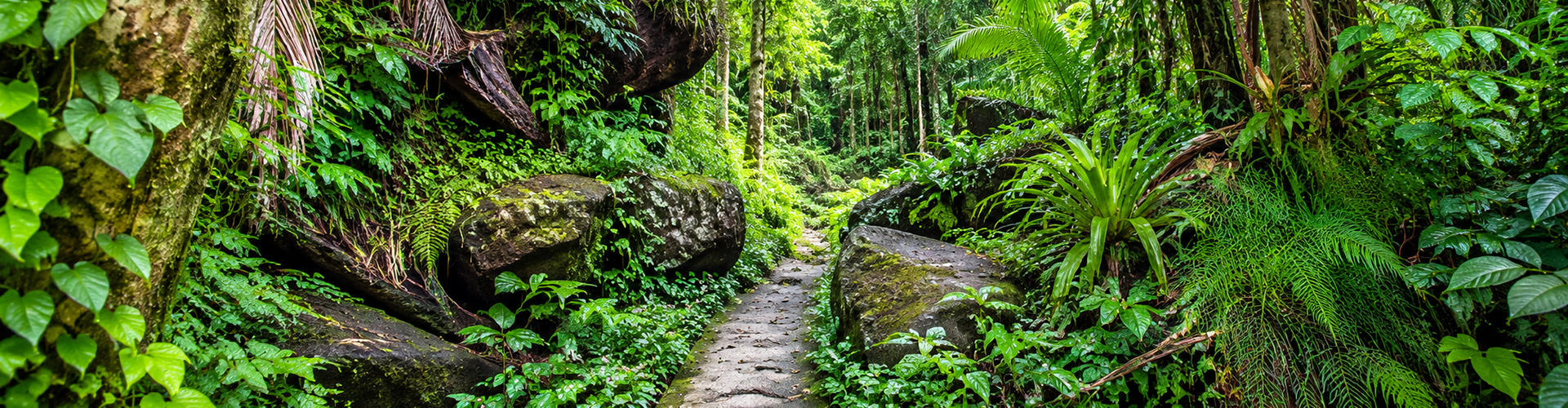
El Yunque National Forest
El Yunque National Forest, formerly known as the Caribbean National Forest, is located in the rugged Sierra de Luquillo mountains, in northeastern Puerto Rico, about 40 km (25 miles) southeast of San Juan (latitude 18'19"N, longitude 65'45"W). Covering more than 28,000 acres (11,270 hectares), it is the only tropical rainforest in the U.S. National Forest System and one of the oldest protected forests in the Western Hemisphere, originally designated as a reserve by the Spanish Crown in 1876 (the oldest reserves in the Western Hemisphere.).
The forest spans several municipalities including Canóvanas, Las Piedras, Luquillo, Fajardo, Ceiba, Naguabo, and Rio Grande. Its name comes from the Indian spirit Yuquiyu (Yokahú), meaning "Forest of Clouds", believed to inhabit the mountain peaks that dominate the landscape.
Despite being one of the smallest rainforests, El Yunque is an extraordinary biodiversity hotspot. The forest contains more than 240 species, including 26 species are found nowhere else in the world, along with hundreds of trees, plants, animal and bird species. Approximately 75% of Puerto Rico's remaining virgin forest is found here (1,270 ha).
Quick Answer: Visiting El Yunque
Location: Sierra de Luquillo, northeastern Puerto Rico.
Best for: Hiking, waterfalls, rainforest scenery, wildlife, and photography.
Getting there: A rental car or organized tour is generally the most convenient option.
Time to allow: Approximately 3–5 hours for a shorter visit; longer for hiking.
Weather: Warm, humid, and frequently rainy throughout the year.
Why Visit El Yunque?
El Yunque is one of Puerto Rico's most distinctive natural destinations. Its tropical mountain forests receive abundant rainfall, creating a landscape of towering trees, dense vegetation, streams, waterfalls, and cloud-covered peaks.
Visitors can explore scenic roads, observation towers, and hiking trails while discovering the plants and animals that make this ecosystem unique. The forest is also an important center for scientific research, watershed protection, and conservation.
Whether you spend a few hours enjoying the scenery or a full day exploring the trails, El Yunque provides a memorable contrast to Puerto Rico's beaches and historic towns.
Top Attractions & Things to Do
El Yunque offers a variety of scenic stops, hiking opportunities, and educational experiences. Some attractions are accessible from the main forest road, while others require hiking.
Access to individual attractions may change because of weather, maintenance, or restoration projects. Check current conditions before visiting.
Yokahú Observation Tower
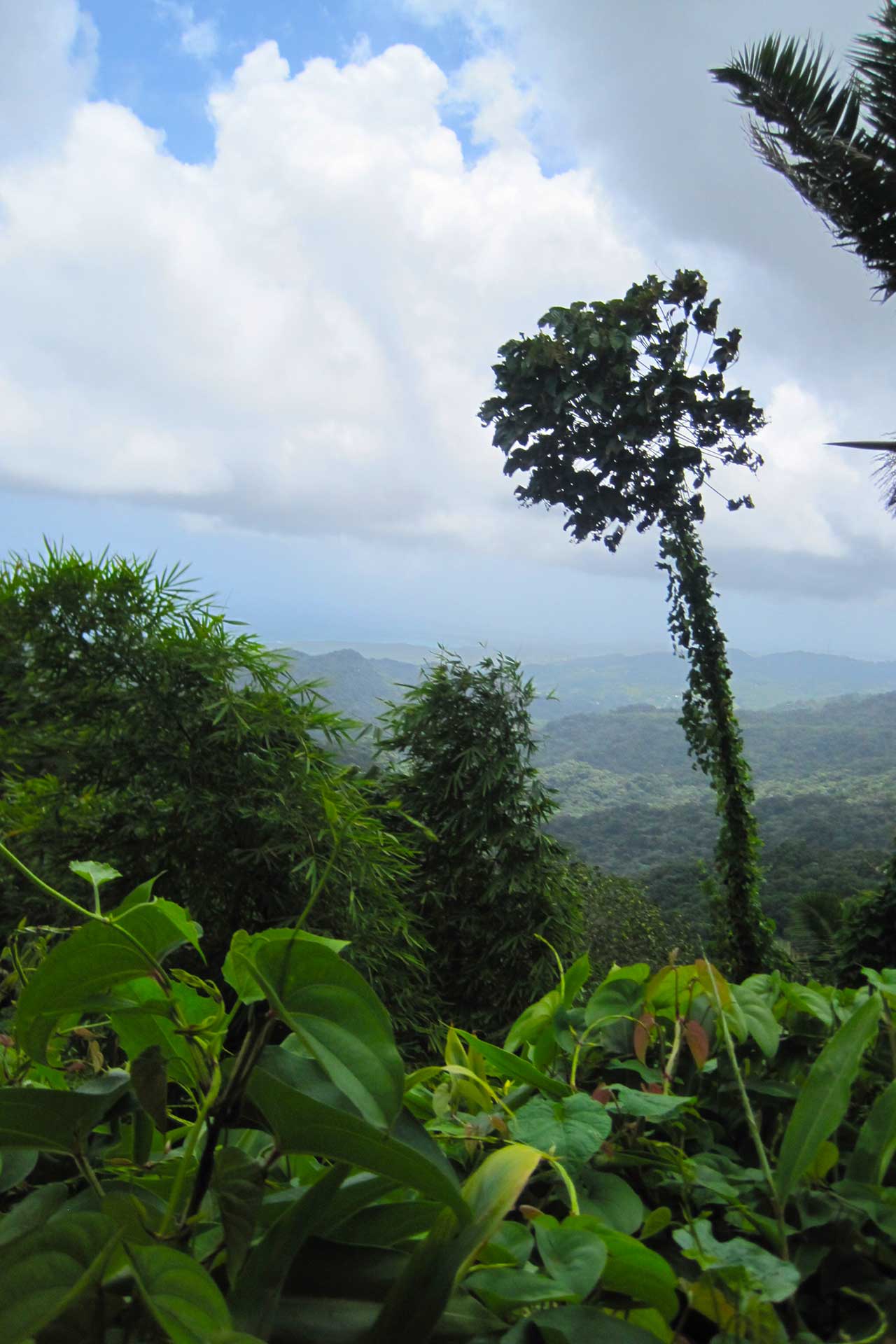
One of El Yunque's most recognizable landmarks, Yokahú Tower offers panoramic views of the rainforest, mountains, and northeastern coastline on clear days.
La Coca Falls
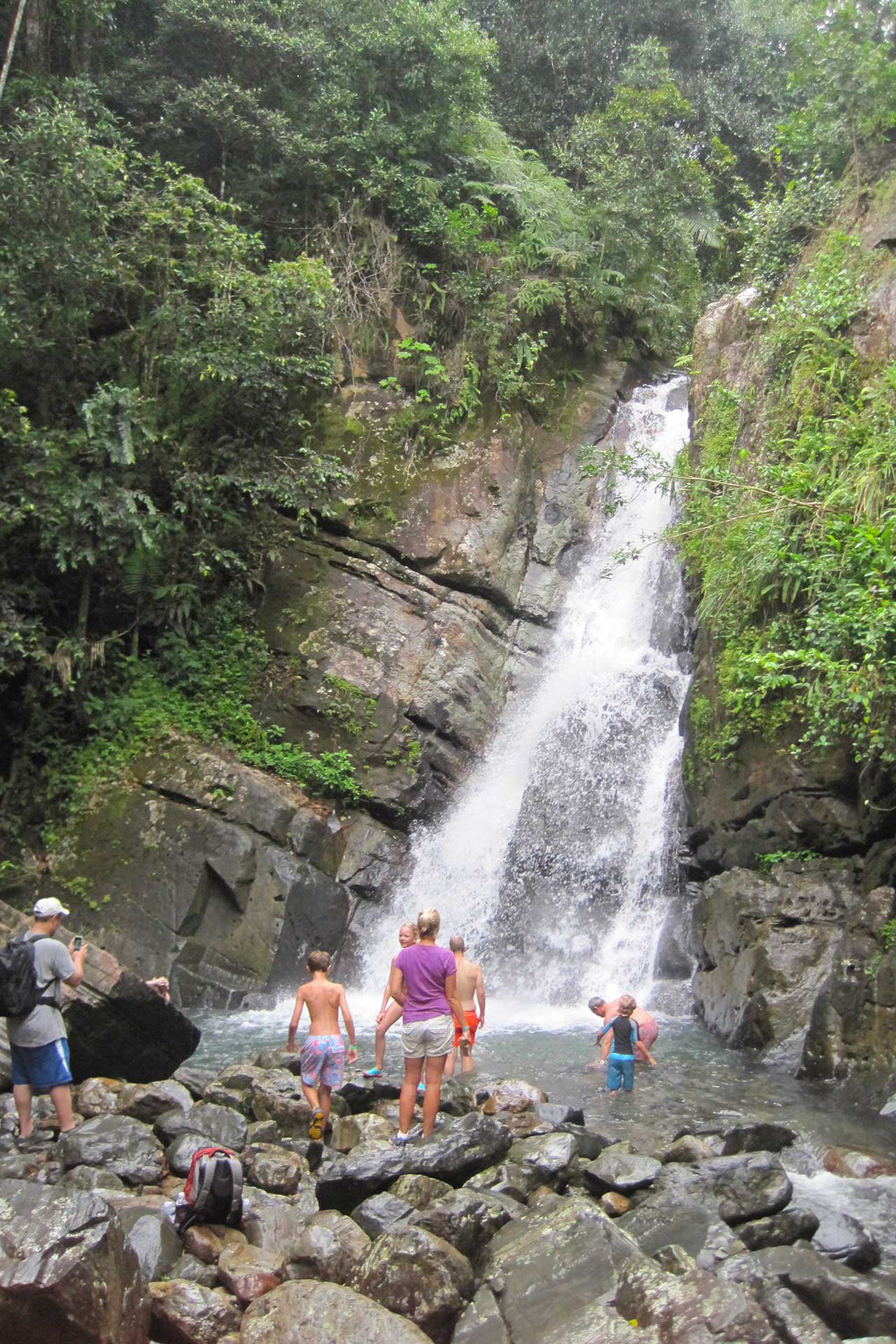
Located beside the main forest road, La Coca Falls
is one of the forest's most photographed waterfalls.
Its cascading water flows over a large rock formation
surrounded by tropical vegetation.
Baño Grande
This historic stone-lined pool was constructed as
part of the forest's early recreational development.
Today, it is a scenic landmark where visitors can
appreciate the surrounding rainforest. Swimming is
not permitted.
El Portal de El Yunque
The forest's visitor center features educational
exhibits about El Yunque's ecology, wildlife,
history, and conservation. It is a useful stop
for visitors interested in learning more about
the rainforest.
Rainforest Hiking
Hiking trails offer opportunities to experience
the forest's vegetation, mountain landscapes,
streams, and wildlife. Trail difficulty and
accessibility vary, and some routes may be
temporarily closed.
Hiking Trails
Hiking is one of the best ways to experience El Yunque's tropical rainforest. Trails range from relatively short walks to more challenging routes through steep, mountainous terrain.
Popular trails and hiking areas include:
- El Yunque Trail: A mountain trail through lush vegetation toward higher elevations, offering opportunities to experience the forest's changing ecosystems.
- Mount Britton Trail: A steep, scenic route leading toward the Mount Britton observation tower.
- Angelito Trail: A shorter rainforest trail leading toward the Río Mameyes recreation area.
- La Mina Trail: Historically one of the forest's most popular waterfall trails, but access has been affected by storm damage and restoration work.
Rain can make trails slippery, and weather conditions may change quickly. Wear appropriate footwear, carry drinking water, and avoid entering streams during heavy rain or when flash flooding is possible.
For current trail access and closures, consult the U.S. Forest Service's El Yunque website.
Plan Your Visit
Getting There
El Yunque National Forest is located in the Sierra de Luquillo mountains of northeastern Puerto Rico, approximately 30 miles (48 km) east of San Juan. Most visitors access the forest's main recreation corridor through Río Grande using PR-191.
A rental car is generally the most convenient way to explore the forest, although organized tours are available from San Juan and other tourist areas.
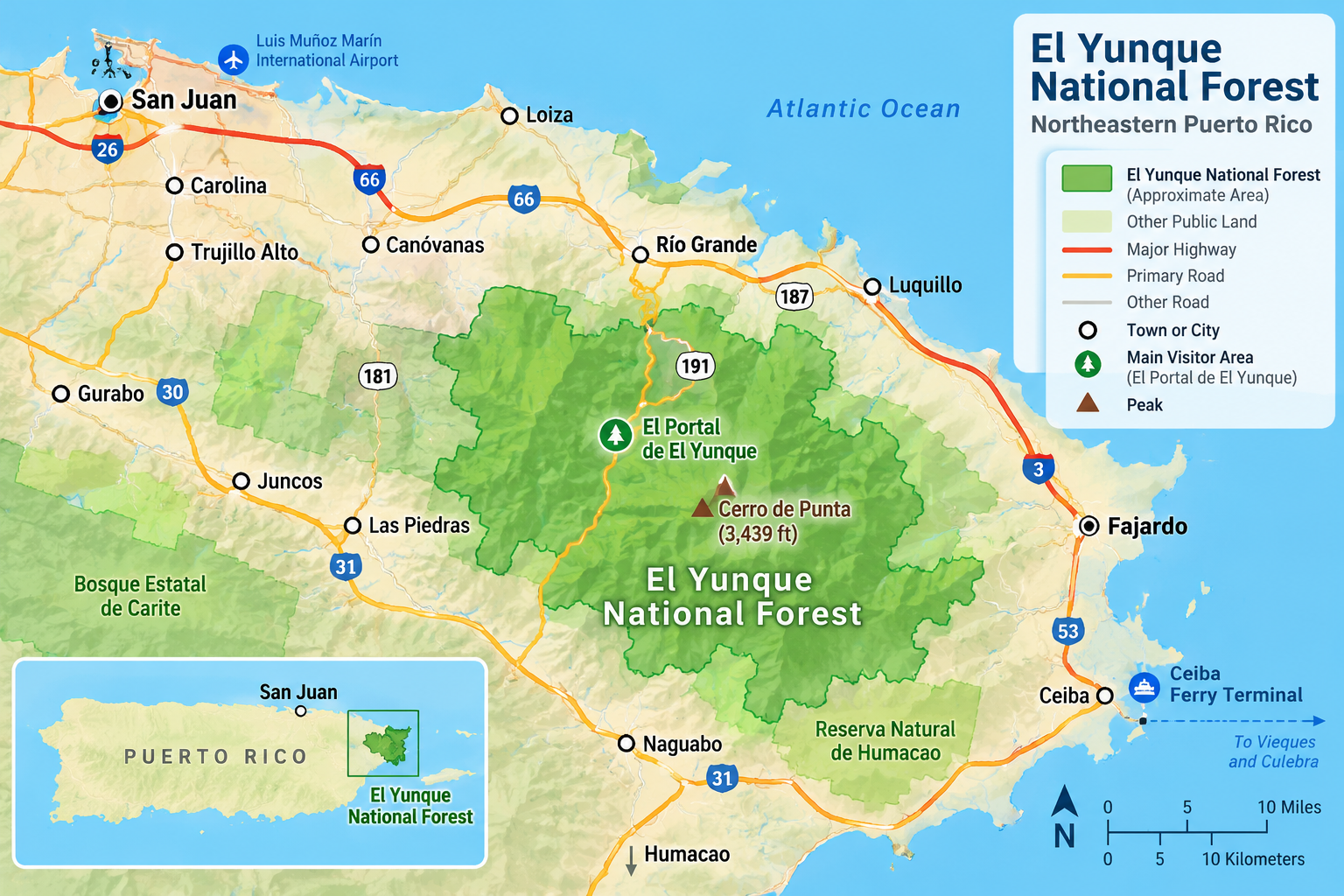
Get directions to El Yunque National Forest
Entrance and Visitor Information
Access requirements vary by recreation area. El Portal de El Yunque, the forest's visitor center, has separate admission policies from the main forest recreation corridor.
Visitors should confirm current operating hours, entrance requirements, road access, and trail conditions before traveling.
Weather and What to Bring
El Yunque receives abundant rainfall throughout the year. Conditions can change quickly, even when the weather is sunny along the coast.
Comfortable walking shoes, drinking water, rain protection, insect repellent, and a camera are recommended. Visitors planning to hike should wear shoes with good traction.
Safety and Accessibility
Mountain roads, trails, and recreation areas vary in accessibility. Some trails include steep slopes, uneven surfaces, and slippery rocks.
Never enter streams or swimming areas during heavy rain or when water levels are rising. Flash flooding can occur with little warning.
Check official visitor information for current accessible facilities and trail conditions.
Guided Tours
Guided excursions are available for visitors who prefer organized transportation and an introduction to the rainforest's natural history. Tour itineraries vary, so confirm which areas and activities are included before booking.
Book A Trip to El Yunque
Small Group El Yunque Half Day Tour with Transport: Waterslide
Rivers and Water Resources
El Yunque's mountains receive over 200 inches of rainfall annually, one of the highest rainfall levels in Puerto Rico. This abundant rainfall — more than 100 billion gallons each year—supports a variety of ecosystems ranging from lush rainforest environments to drier subtropical zones within short distances.
Eight major rivers originate in El Yunque, supplying fresh water to nearly 20% of Puerto Rico's population. In 2002, the U.S. Congress designated the Mameyes, La Mina, and Icacos Rivers as part of the Federal Wild and Scenic River System, recognizing their ecological importance.
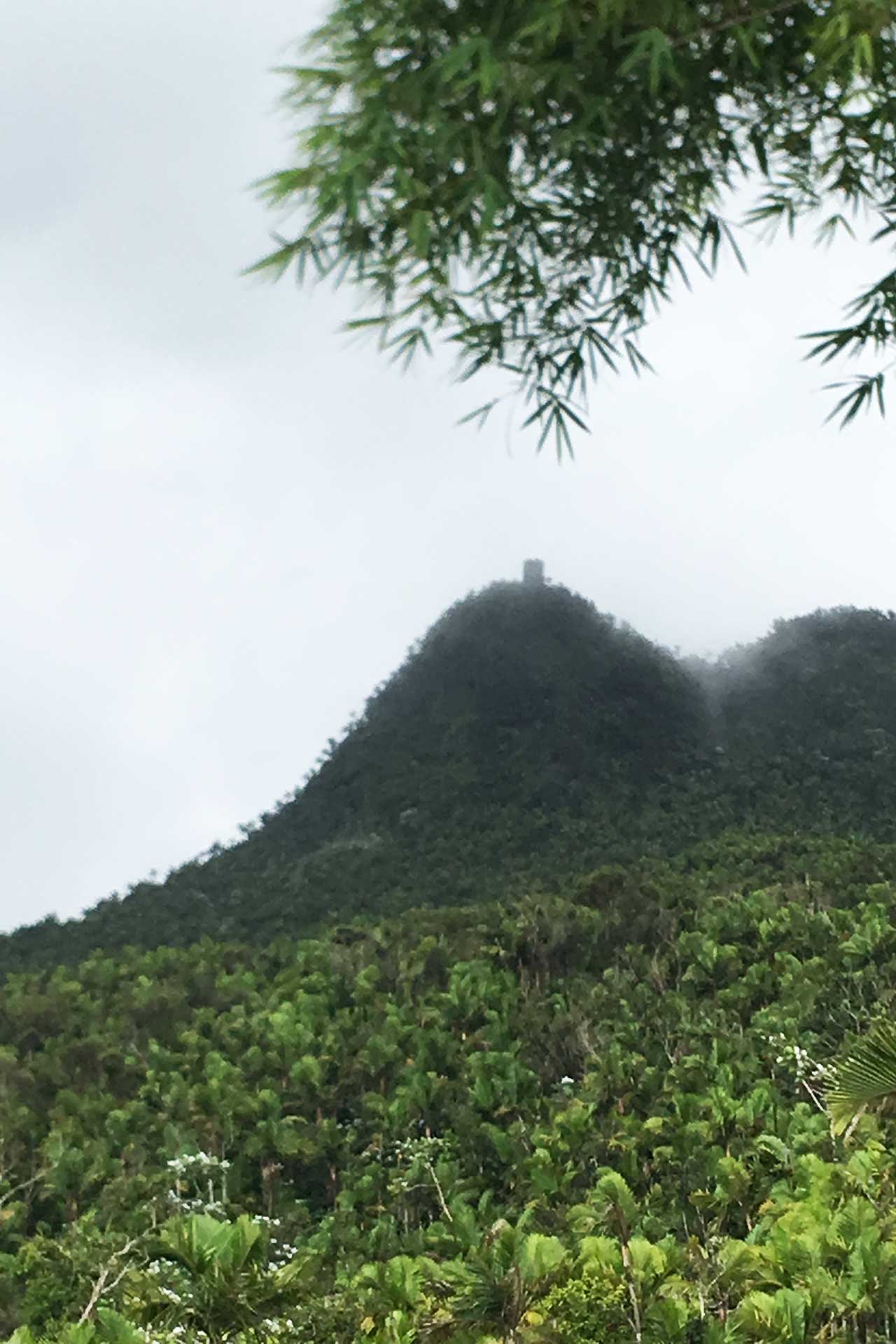
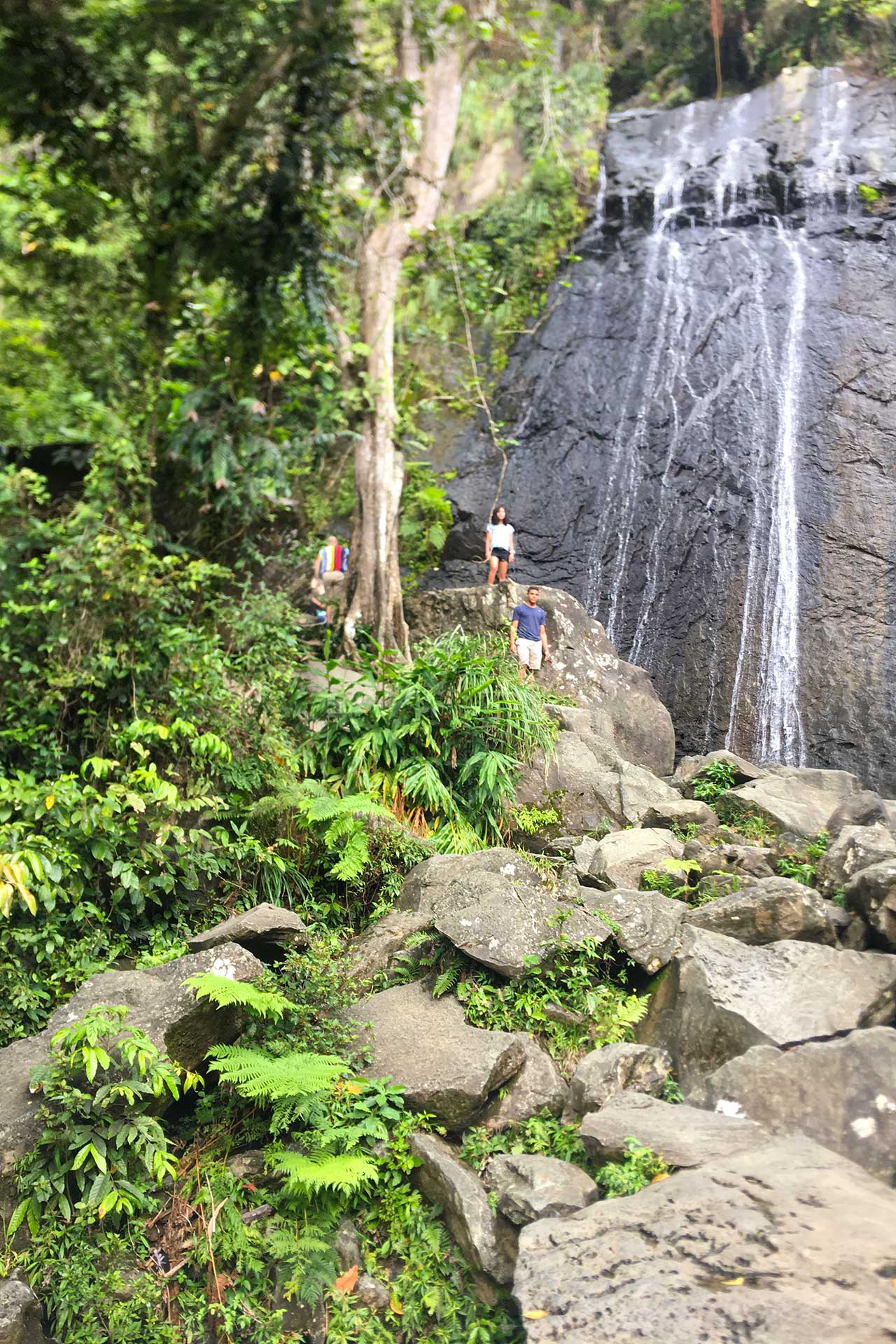
Photos: Eva Rivera
Flora and Fauna
El Yunque is home to remarkable wildlife and plant diversity. Visitors may encounter over 240 tree species, 50 species of ferns, 20 varieties of wild orchids, and countless tropical plants.
The Puerto Rican Coquí
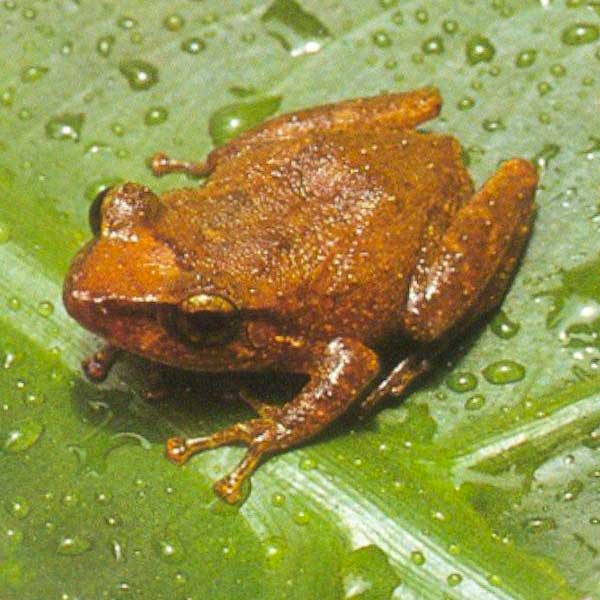
One of the forest's most beloved inhabitants is the coquí, a tiny tree frog measuring less than an inch in size. Named for its distinctive "ko-kee" chirp, the coquí is a cherished symbol of Puerto Rico and can be heard singing throughout the island at night.
Several coquí species inhabit El Yunque, occupying different elevations and forest environments.
The Puerto Rican Parrot
The forest also provides critical habitat for endangered species such as the Puerto Rican Parrot (Amazona vittata), one of the rarest birds in the world. This bright green parrot, with its red forehead and blue wing feathers, lives primarily in the upper elevations of the Luquillo Mountains.
Conservation and captive-breeding programs have played an important role in efforts to restore this species.
In total, about 50 bird species can be found in the forest. As a protected wildlife refuge, hunting is prohibited within El Yunque.
Forest Ecosystems
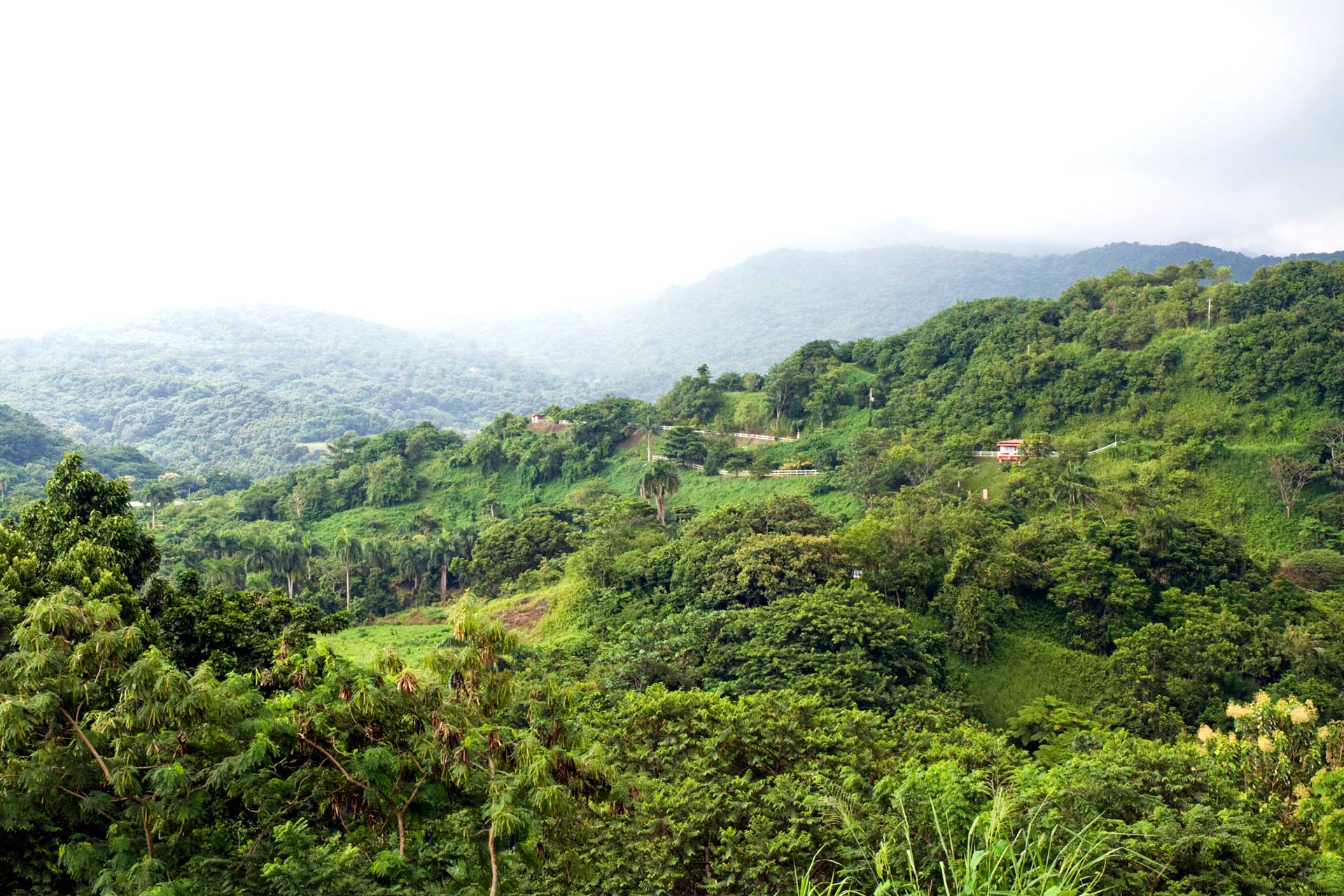
El Yunque contains four major forest types, each shaped by differences in elevation, temperature, rainfall, and exposure to wind.
Tabonuco Forest
Found primarily at lower elevations, this forest is characterized by tall trees, dense vegetation, and a richly layered tropical canopy.
Palo Colorado Forest
Located at higher elevations, this forest features trees adapted to wetter conditions and cooler mountain temperatures.
Sierra Palm Forest
Dominated by sierra palms, this forest type
is often found on steep slopes and in
areas exposed to heavy rainfall.
Dwarf Forest
Also called elfin woodland, this ecosystem
occurs near the highest elevations.
Persistent clouds, strong winds, and
saturated soils produce shorter,
compact vegetation.
History and Conservation
El Yunque has a long history of cultural, ecological, and scientific importance. The forest's mountains and rivers have been part of Puerto Rico's landscape and cultural traditions for centuries.
Formal forest protection began during the Spanish colonial period, when land in the Sierra de Luquillo was designated for conservation in the nineteenth century.
Following Puerto Rico's transfer to United States administration, the forest became part of the federal forest system. Today, it is managed by the U.S. Forest Service.
After Hurricane María
Hurricane María caused extensive damage to El Yunque in September 2017. Powerful winds and heavy rainfall damaged trees, trails, roads, and recreational facilities.
The forest has undergone a long process of natural recovery and restoration. While vegetation has regenerated in many areas, some trails and facilities have required extensive repairs.
El Yunque continues to serve as an important location for research into tropical forest recovery, biodiversity, and the effects of major hurricanes.
Frequently Asked Questions
Where is El Yunque National Forest located?
El Yunque National Forest is located in the Sierra de Luquillo mountains of northeastern Puerto Rico, approximately 30 miles (48 km) east of San Juan.
Do you need a reservation to visit El Yunque?
Reservation requirements depend on the recreation area and current Forest Service policies. Visitors should check official information before traveling.
How much time do you need at El Yunque?
Allow approximately 3–5 hours for a shorter visit that includes scenic stops and easy walks. Visitors planning longer hikes may want to spend most of the day exploring.
Can you swim in El Yunque?
Swimming may be possible in certain designated or permitted natural areas, but not all waterfalls and pools are
open for swimming. Conditions can be dangerous after heavy rain, so always follow posted restrictions.
What should you bring to El Yunque?
Bring comfortable walking shoes,
drinking water, rain protection,
insect repellent, and a camera.
Hikers should wear shoes with good
traction because trails can be wet
and slippery.
Is El Yunque worth visiting?
Yes. El Yunque offers a distinctive
opportunity to experience Puerto Rico's
tropical rainforest, waterfalls,
mountain scenery, wildlife,
and hiking trails.
Continue Exploring Puerto Rico
Río Grande
Explore Río Grande, one of the gateways to El Yunque National Forest, with nearby attractions, accommodations, and local experiences.
Luquillo
Discover Luquillo, known for its beaches, food kiosks, and beautiful northeastern coastline.
Puerto Rico's Mountains
Learn about Puerto Rico's mountain landscapes, including the Cordillera Central and the island's natural regions.
Other Resources
Did You Know?
Puerto Rico has trained physicians practicing throughout the United States.
Get Our Newsletter
Discover new places, local flavors, upcoming events, cultural stories, and some of our favorite finds from around the island.Read the Latest ¡La Isla! Newsletter
Follow Along


