
Las Piedras, Puerto Rico
(lahs pee-AI-drahs)
Las Piedras known as "La Ciudad de los Artesanos" (artesian city). Its name means "The Rocks," a reference to the large stones found throughout the area. Some of these natural formations became closely connected with the Indigenous history of the region and remain part of Las Piedras' identity today. Las Piedras was founded in 1773.
Overview
Why Visit Las Piedras?
Las Piedras offers visitors a blend of mountain scenery, traditional Puerto Rican culture, and small-town charm. Located in Puerto Rico's eastern interior, the municipality is known for its artisan community, scenic countryside, local festivals, and easy access to nearby nature preserves and attractions throughout the East Region.
Top Things to Do in Las Piedras
Plaza de Recreo de Las Piedras
The town's central plaza serves as the heart of the municipality, surrounded by historic buildings, local businesses, cafés, and the beautiful Parroquia Nuestra Señora de la Asunción.
Parroquia Nuestra Señora de la Asunción
Originally established during the Spanish colonial era, the parish church remains one of Las Piedras' most recognizable landmarks and an important center of religious and community life. The parish church dedicated to the Immaculate Conception reflects the religious origins of Las Piedras. The municipality's patron saint and official coat of arms are both connected with this devotion.
Paseo Artesanal
Celebrating the municipality's nickname as the "City of Artisans," this area showcases handcrafted woodwork, ceramics, jewelry, paintings, and other creations by local artists throughout the year.
Charco El Hippie
Located along the Las Piedras–San Lorenzo border, this popular natural swimming hole features waterfalls, clear pools, and lush tropical scenery. It is a favorite destination for hiking, photography, and cooling off on warm days.
Bosque de Carite (Nearby)
A short drive from Las Piedras, this protected forest offers hiking trails, birdwatching, mountain scenery, and opportunities to experience Puerto Rico's rich biodiversity.
Ruta de los Artesanos
Explore workshops and studios where local artisans continue traditions in woodworking, carving, painting, and handcrafted gifts that reflect Puerto Rico's cultural heritage.
Museo Histórico de Las Piedras
The Museo Histórico de Las Piedras introduces visitors to the municipality's development, cultural traditions, notable residents, and everyday life during earlier generations.
Plan your Visit
Located in Puerto Rico's eastern interior, Las Piedras is best explored by car, offering easy access to artisan workshops, scenic countryside, and nearby nature attractions.
Getting There
By Air
Luis Muñoz Marín International Airport (SJU) is approximately 50 minutes west of Las Piedras. José Aponte de la Torre Airport (RVR) in Ceiba and Antonio Rivera Rodríguez Airport (VQS) also provide regional access.
By Car
Las Piedras is easily reached via PR-30, which connects the municipality with Caguas, Juncos, Humacao, and the rest of Puerto Rico's eastern region.
Getting Around
Rental Car
A rental car is the most convenient way to explore Las Piedras, nearby mountain communities, artisan workshops, and surrounding attractions.
Taxis & Rideshare
Taxis and rideshare may be available, but service can be limited compared with San Juan.
Walking
Downtown Las Piedras is pedestrian-friendly, allowing visitors to comfortably explore the plaza, local shops, cafés, and historic church.
Nature & Resources
Geography
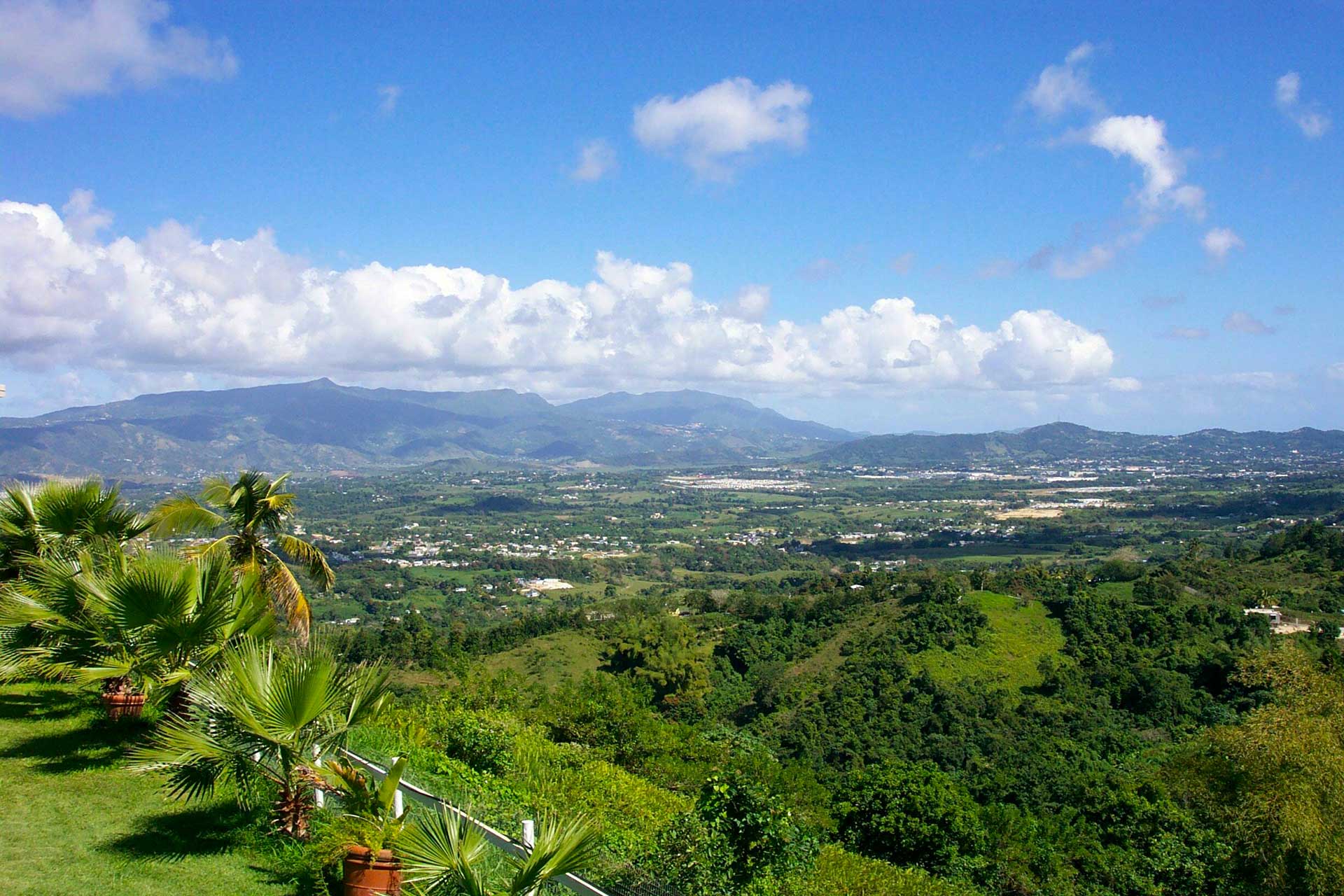
Located between Puerto Rico's coastal plain and the foothills of the Sierra de Cayey, north of Yabucoa; south of Canóvanas and Río Grande; east of Juncos and San Lorenzo; and west of Naguabo and Humacao. Las Piedras offers rolling hills, fertile valleys, rivers, and lush tropical vegetation. The municipality has long supported agriculture, particularly sugarcane, citrus, and livestock, while today balancing residential growth with the preservation of its rural character.
Several rivers, including the Río Grande de Loíza, Río Valenciano, and Río Gurabo, pass through or near the municipality, providing important natural resources and supporting local ecosystems. Nearby forests, rivers, and recreational areas offer opportunities for hiking, birdwatching, photography, and nature exploration.
Neighborhoods & Barrios
Las Piedras is made up of 8 barrios (PDF) (wards/districts):
- Arenas
- Boquerón
- Ceiba
- Collores
- Montones
- Pueblo
- Quebrada
- Tejas
Climate
Las Piedras enjoys a warm tropical climate throughout the year, with average daytime temperatures ranging from the upper 70s to upper 80s°F (25–31°C). The municipality receives abundant rainfall, especially from May through November, contributing to its lush green landscapes and fertile agricultural lands.
The drier months from December through April provide excellent conditions for outdoor recreation, artisan festivals, and exploring nearby nature attractions.
10 Day Forecast from weather.com
Where to Stay
- Parador Palmas de Lucía (Yabucoa)
- Wyndham Palmas Beach & Golf Resort
- Park Royal Homestay Club Cala
- Four Points by Sheraton Caguas
- Casa de Campo rentals
Vacation Rentals
Vacation rentals are popular with families, groups, and travelers planning extended beach vacations.
Local Flavors & Festivities
Where to Eat
- Restaurante El Artesano
- La Casona de Las Piedras
- El Rancho de Apa
- La Cocina Criolla
- Tijuana's Las Piedras (Mexican)
- Costa Rican Cantina (Costa Rican)
- Fu Sing (Chinese)
- Mario's Pizza (Italian-American)
- Panadería La Nueva
- Panadería Las Piedras
- Café Colao
Festivals and Events
Displaying 6 results.
-
Festival del Güiro
- March
Annual festival celebrating Puerto Rico's traditional güiro instrument with live music, artisan exhibits, folkloric performances, local cuisine, cultural demonstrations, and family activities in downtown Las Piedras.(787) 733-8122
-
Fiestas de Cruz
- May
Traditional religious and cultural celebration honoring the Holy Cross with decorated crosses, rosaries, music, community gatherings, and Puerto Rican folk traditions observed throughout the municipality.(787) 733-8122
-
Fiestas de la Juventud
- July
Community celebration dedicated to local youth featuring live entertainment, sports activities, concerts, food kiosks, games, and family-friendly events.(787) 733-8122
-
Festival Tipico
- September
Festival showcasing Puerto Rican traditions through artisan displays, traditional foods, live jíbaro music, cultural presentations, and family activities celebrating the municipality's rural heritage.(787) 733-8122
-
Festival del Lechon Asado
- November
Popular culinary festival featuring Puerto Rico's famous roasted pork, traditional cuisine, live music, artisan vendors, and cultural entertainment attracting visitors from across the island.(787) 733-8122
-
Fiestas Patronales de Nuestra Senora de la Asuncion
- December
Las Piedras' patron saint festival honoring Nuestra Senora de la Asuncion with religious processions, live music, amusement rides, artisan fairs, traditional food, sporting events, and community celebrations.(787) 733-8122
History
The area now known as Las Piedras was originally inhabited by the Taíno people, who were drawn to its rivers, fertile valleys, and distinctive volcanic rock formations that eventually inspired the municipality's name. Archaeological evidence suggests the region served as an important ceremonial and agricultural area long before the arrival of the Spanish.
Spanish settlers established the community during the eighteenth century as Ribera de Las Piedras. Historical records indicate that Fray Íñigo Abbad y Lasierra documented the settlement in 1773, making it one of Puerto Rico's early inland communities. Because of its strategic location between Caguas and Humacao, the parish eventually served a vast territory extending across much of eastern Puerto Rico.
Throughout the nineteenth century, agriculture became the municipality's economic foundation. Sugarcane, coffee, citrus fruits, tobacco, and livestock supported the local economy, while artisans and skilled craftsmen earned Las Piedras the nickname "La Ciudad de los Artesanos" (The City of Artisans).
Today, Las Piedras continues to balance its agricultural heritage with manufacturing, commerce, and residential development while preserving its traditions through artisan festivals, cultural events, and community celebrations.
Moments in History
Taíno communities establish settlements and ceremonial sites throughout the region, taking advantage of its rivers and fertile lands.
Fray Íñigo Abbad y Lasierra documents the settlement known as Ribera de Las Piedras, providing one of the earliest historical references.
Las Piedras is officially established as an independent municipality.
Agriculture flourishes with sugarcane, coffee, tobacco, citrus, and livestock becoming the primary economic activities.
Manufacturing industries and improved transportation diversify the local economy while artisan traditions continue to thrive.
Las Piedras is recognized for its artisans, scenic countryside, growing economy, and cultural festivals.
Notable People
The people of Las Piedras have contributed to Puerto Rico's government, literature, religion, entertainment, and public service. These individuals have helped shape both their municipality and the island's broader cultural and civic life.
Famous Pedreños
Miguel Hernández Agosto
1927–2016
Politics
Attorney and longtime public servant who served as President of the Senate of Puerto Rico from 1988 to 1992. He was one of the island's most influential political leaders during the late twentieth century.
Nicky Cruz
1938–
Author • Evangelist
Internationally known Christian evangelist and bestselling author of Run Baby Run. His remarkable life story of transformation has inspired millions worldwide.
Juan Manuel Lebrón
1947–
Comedy • Television
Popular Puerto Rican comedian, actor, and television personality whose career has entertained audiences for decades through comedy and variety programs.
City Symbols
Flag
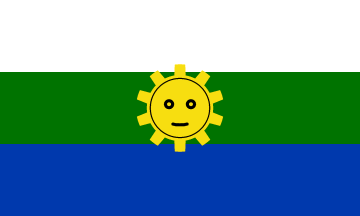
The flag features three horizontal stripes in white, green, and blue with a golden Taíno sun at its center, representing the municipality's Indigenous heritage, fertile lands, and natural beauty.
Coat of Arms
The coat of arms honors Las Piedras' religious heritage, Indigenous roots, and historic identity. Seven silver stones symbolize the municipality's name, while the Taíno sun reflects its pre-Columbian past.
Anthem
"Somos de la Ribera" celebrates the pride, traditions, artisan heritage, and strong community spirit of the people of Las Piedras.
Human & Capital Resources
Economy
Las Piedras has traditionally relied on agriculture, producing sugarcane, coffee, tobacco, citrus fruits, and livestock. Today the municipality has developed a more diversified economy that includes manufacturing, retail commerce, healthcare, education, professional services, and small businesses.
Manufacturing continues to play an important role, particularly in pharmaceutical production, electronics, and light industrial operations. Local artisans also contribute to the economy through handcrafted woodwork, ceramics, paintings, jewelry, and traditional Puerto Rican crafts, reinforcing the municipality's identity as the "City of Artisans."
Education
Public education in Las Piedras is administered by the Puerto Rico Department of Education, serving students from elementary through high school. Several private educational institutions also operate within the municipality.
Residents have convenient access to colleges and universities throughout eastern Puerto Rico, including campuses in Humacao, Caguas, Gurabo, and San Juan. Continuing education and vocational training programs support workforce development across the region.
Demographics *
Population
35,180
Land Area: 33.88 sq mi
Density: 1,099 per sq mi
Median Age: 41.1
Sex: 52% female
Economics **
$12,093
Median household income: $22,848
Puerto Rico: $21,058
Persons below poverty line: 37.8%
Housing, families and educational attainment *
Number of households
12,143
Housing units density:
479.6 (2013)
Persons per household: 3.06
High school grad or higher: 78.8%
Marital status: 41% married
* U.S. Census Bureau 2020 data, unless otherwise noted - Source: Quick Facts Puerto Rico.
** U.S. Census Bureau 2016-2020
Map References
Coordinates: 18.1831° N, 65.8664° W
ZIP Code: 771
Driving Distance from San Juan: 28.1 miles
Driving Time: 59 minutes
Frequently Asked Questions
Where is Las Piedras located?
Las Piedras is located in eastern Puerto Rico, about 28 miles (45 km) southeast of San Juan. It borders Juncos, San Lorenzo, Humacao, Yabucoa, Canóvanas, and Río Grande.
Why is Las Piedras called the City of Artisans?
Las Piedras is known as La Ciudad de los Artesanos because of its long tradition of skilled artisans who create wood carvings, ceramics, paintings, jewelry, and other handcrafted works that celebrate Puerto Rican culture.
What is Las Piedras known for?
Las Piedras is known for its artisan heritage, scenic countryside, agricultural traditions, local festivals, and its convenient location near El Yunque National Forest and Puerto Rico's eastern coast.
What are the top attractions in Las Piedras?
Popular attractions include Plaza de Recreo de Las Piedras, Parroquia Nuestra Señora de la Asunción, Paseo Artesanal, Charco El Hippie (nearby), and the surrounding mountain landscapes.
What festivals are celebrated in Las Piedras?
Major celebrations include the Festival del Güiro, Festival del Lechón Asado, Festival Típico Cultural, Fiestas de Cruz, Fiestas de la Juventud, and the Fiestas Patronales de Nuestra Señora de la Asunción.
What are people from Las Piedras called?
Residents of Las Piedras are known as pedreños (men) and pedreñas (women).
What is the best time to visit Las Piedras?
Las Piedras can be visited year-round. The cooler months from December through April are especially pleasant, while the municipality's festivals and artisan events offer unique experiences throughout the year.
Is Las Piedras a good base for exploring eastern Puerto Rico?
Yes. Its central location provides easy access to Humacao, Juncos, San Lorenzo, Yabucoa, El Yunque National Forest, and many attractions along Puerto Rico's eastern coast.
How far is Las Piedras from El Yunque National Forest?
Depending on your destination within the forest, El Yunque is approximately 30 to 40 minutes from Las Piedras, making it an excellent day trip for hiking, waterfalls, and nature experiences.
What is the economy of Las Piedras based on?
Las Piedras has traditionally been an agricultural community known for sugarcane, coffee, citrus, and livestock. Today its economy also includes manufacturing, healthcare, retail, professional services, and a thriving artisan community.
Did You Know?
Caguas is nicknamed La Ciudad Criolla because of its strong connection to Puerto Rican traditions, music, cuisine, and culture.
Get Our Newsletter
Discover new places, local flavors, upcoming events, cultural stories, and some of our favorite finds from around the island.Read the Latest ¡La Isla! Newsletter
Follow Along


