
Fajardo, Puerto Rico
(fah-HAHR-do)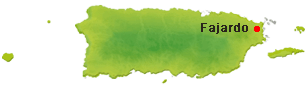
Fajardo is one of Puerto Rico's most popular coastal destinations, known for its marinas, island excursions, bioluminescent bay, beaches, nature reserves, and access to nearby cays. Located on the island's eastern coast, north of Ceiba and east of Luquillo. Fajardo is a favorite base for sailing, snorkeling, kayaking, scuba diving, and day trips to Icacos, Palomino, Culebra, and Vieques. With its mix of natural beauty, ocean adventures, seafood restaurants, and scenic coastal views, Fajardo is ideal for travelers who want to experience Puerto Rico by land and sea.
Fajardo is known as "La Metrópolis del Sol Naciente" (the city that guards the sun of the Caribbean). Fajardo was founded in 1772. It was originally named Santiago de Fajardo.
Overview
Why Visit Fajardo?
Fajardo is Puerto Rico's gateway to unforgettable ocean adventures. From kayaking through a glowing bioluminescent bay and sailing to pristine offshore cays to snorkeling coral reefs and relaxing on beautiful beaches, Fajardo offers some of the island's best outdoor experiences. Its marinas, nature reserves, and coastal scenery make it a must-visit destination for beach lovers and adventure seekers alike.
Before You Go
If you're visiting Fajardo, make time for at least one day on the water. Whether you choose a catamaran to Icacos, a snorkeling excursion, or an evening kayak tour through Laguna Grande, those experiences are what make Fajardo unlike anywhere else on the island.
Top Things to Do in Fajardo
Laguna Grande Bioluminescent Bay
One of Puerto Rico's famous bioluminescent bays, best experienced by kayak at night when microscopic organisms glow as the water moves.Las Cabezas de San Juan Nature Reserve
A protected coastal reserve featuring mangroves, lagoons, coral reefs, dry forest, beaches, and the historic Fajardo lighthouse. It is one of the most important natural areas in Puerto Rico. Las Cabezas, which means "headlands," refer to 3 promontories that extend into the Atlantic Ocean. Impressive representation of seven different ecological systems including coral reefs, beaches, lagoons, mangroves and dry forest within its 316 acres/128 hectares. The preserve is also a scientific research center, which serve as a home of many endangered species. Visitors can explore the reserve along a network of trails and board-walks.The Nature Reserve is open for general and school group tours on Wednesday, Thursday and Friday morning and open to the public Wednesday through Sunday. Special rates are available for groups of 20 or more. Reservations are required for all visitors. Tours lasting two- and one-half hours, are scheduled four times daily: 9:30am, 10am, 10:30am and 2pm. An English tour is available at 2pm. Located on Route 987, (787) 722-5882 or (787) 860-2560.
Seven Seas Beach
A calm, family-friendly beach known for clear water, picnic areas, snorkeling, and easy access to nearby coastal trails.Icacos Island
A small uninhabited cay with white sand and turquoise waters, popular for catamaran trips, snorkeling, swimming, and beach excursions.Puerto del Rey Marina
One of the largest marinas in the Caribbean and a major departure point for boating, sailing, fishing, and island-hopping tours.Fajardo Lighthouse
Located inside Las Cabezas de San Juan Nature Reserve, this historic lighthouse offers panoramic views of the Atlantic Ocean and nearby islands. It is the island's second oldest lighthouse, built in 1880. The lighthouse is owned by the Conservation Trust, who carefully restored this lighthouse to its original and beautiful neoclassical style. The lighthouse has an information center and observation deck, on a clear day, reaches distant Caribbean islands.
Explore Fajardo
Plan your Visit
Whether you are arriving by air at Luis Muñoz Marín International Airport (SJU) or docking at the bustling cruise port, the city serves as the ultimate gateway to the Puerto Rican experience.
Getting There
By Air
Luis Muñoz Marín International Airport (SJU) in San Juan is the closest major airport, located about 45 minutes to 1 hour from Fajardo by car, depending on traffic.
By Sea
Fajardo is a major boating and marina destination. Many snorkeling, sailing, fishing, and island-hopping tours depart from the marina areas, especially to Icacos and nearby cays.
By Car
Fajardo is easily reached from San Juan via PR-66 and PR-3. A rental car is recommended, especially for visiting beaches, Las Cabezas de San Juan, Las Croabas, and nearby towns.
Entry Requirements
As a U.S. territory, Puerto Rico requires no passport for U.S. citizens — a government-issued ID suffices. International visitors follow standard U.S. entry requirements.
Getting Around
Rental Car
A rental car is the easiest way to explore Fajardo and the surrounding east coast, including Luquillo, El Yunque, Ceiba, and Río Grande.
Boat Tours
Many of Fajardo's best experiences happen on the water, including sailing, snorkeling, fishing, kayaking, and day trips to nearby islands and cays.
Taxis & Rideshare
Taxis and rideshare may be available, but service can be limited compared with San Juan. Hotels and tour operators can often help arrange transportation.
Nature & Resources
Geography
Located on Puerto Rico's northeastern coast, north of Ceiba and east of Luquillo. Fajardo overlooks the Atlantic Ocean and the Caribbean Sea. Offshore are several small coral cays—including Icacos, Palomino, Palominito, and Diablo—that form part of La Cordillera Nature Reserve, one of Puerto Rico's most important marine ecosystems. These protected islands are popular destinations for snorkeling, scuba diving, sailing, and day cruises.
Neighborhoods & Barrios
Fajardo is divided into 9 barrios (PDF) (wards or districts), each offering its own unique character. From lively beachfront communities known for surfing and nightlife to quiet residential and rural areas, the barrios help define the diverse landscapes and experiences found throughout the municipality.
- Cabezas
- Demajagua
- Florencio
- Naranjo
- Quebrada Fajardo
- Quebrada Vueltas
- Pueblo
- Río Arriba
- Sardinera
Climate
Located on Puerto Rico's northeastern coast, Fajardo enjoys a warm tropical maritime climate with sunshine, ocean breezes, and comfortable temperatures throughout the year. Average daytime highs range from the low to upper 80s°F (27–31°C), while evenings typically cool into the low to mid-70s°F (23–25°C). Thanks to the steady trade winds from the Atlantic Ocean, coastal areas often feel more comfortable than inland locations.
Rainfall is possible year-round, with the wettest months generally occurring from August through November, while December through April tends to be drier and especially popular for outdoor activities, boating, and island excursions. As a coastal municipality, Fajardo is also within the Atlantic hurricane season, which runs from June through November.
Fajardo's consistently warm weather makes it one of Puerto Rico's premier destinations for beachgoers and outdoor enthusiasts. Visitors can enjoy snorkeling, diving, sailing, kayaking, and island-hopping to nearby Icacos, Palomino, and Culebra in almost any season.
Local Tip
Mornings are typically the calmest time for visiting offshore cays or taking snorkeling and catamaran tours. Afternoon showers are common during the warmer months but are often brief, with sunshine returning shortly afterward.
10 Day Forecast from weather.com
Where to Stay
- El Conquistador Resort
- Las Casitas Village
- Fajardo Inn
- Local inns
- Guesthouses
- Condos near Seven Seas
- Vacation rentals near Las Croabas
- Small guesthouses
- Apartments
- Stays near downtown Fajardo
Fajardo offers a wide range of accommodations, from oceanfront resorts and marina-view villas to family-friendly condos, guesthouses, and vacation rentals.
Featured Tours
Local Flavors & Festivities
Where to Eat
- La Estación
- Sal & Pimienta
- El Varadero Seaside Grill
- Costa Mia
- La Ola
- Cinco Nudos
- Bakeries
- Food kiosks
- Cafés
- Local roadside restaurants
Own a restaurant in Fajardo? Send me a note to have your business considered for inclusion.
Festivals and Events
Displaying 7 results.
-
Festival Cocolia
- November
One of Puerto Rico's most distinctive food festivals celebrating the Caribbean cocolía sea snail with traditional seafood dishes, cooking demonstrations, live music, artisan vendors, and cultural entertainment.
-
Festival de Bomba y Plena
- May
Celebration of Puerto Rico's African heritage featuring live Bomba and Plena performances, traditional dancing, artisan vendors, local cuisine, and cultural demonstrations.
-
Festival de Chiringas
- April
Annual kite festival where families and visitors fill the skies with colorful handmade kites while enjoying live music, artisan vendors, food kiosks, and children's activities.
-
Fiestas del Paraiso
- August
Community festival celebrating Fajardo's coastal lifestyle with live music, family entertainment, local food, artisan vendors, and cultural activities.
-
Fiestas Patronales de Santiago Apostol
- July
Fajardo's patron saint festival honoring Santiago Apostol with religious processions, live concerts, artisan vendors, carnival rides, traditional Puerto Rican food, parades, and family entertainment in the town plaza.
-
La Bicicletada Fajardena
- April
Community cycling event promoting healthy living and outdoor recreation with riders of all ages exploring scenic routes throughout Fajardo.
-
Regata de Veleros Copa Kelly
- April
Prestigious sailing regatta attracting competitive sailboats from across Puerto Rico and the Caribbean to race along Fajardo's beautiful coastline.
Moments in History
Fajardo is officially founded as a municipality.
The town grows as a coastal and agricultural community, supported by fishing, farming, and maritime trade.
The Fajardo lighthouse is built at Las Cabezas de San Juan to help guide ships navigating Puerto Rico's eastern coast.
Fajardo becomes increasingly known for boating, fishing, beaches, and tourism.
Fajardo is one of Puerto Rico's leading marine tourism destinations, known for marinas, bioluminescent kayaking, nature reserves, and island excursions.
Notable People
Fajardo has produced influential politicians, artists, and entertainers whose accomplishments have helped shape Puerto Rico's political and cultural history.
Famous Fajardeños
Antonio R. Barceló
1882–1938
Politics
Antonio Rafael Barceló was one of Puerto Rico's most influential political leaders during the early twentieth century. A lawyer, journalist, and statesman, he served as President of the Puerto Rico Senate from 1917 until his death in 1938 and was a leading advocate for greater self-government for Puerto Rico. Today, he is remembered as one of the island's most important political figures.
Marquita Rivera
1922–2002
Entertainment
Marquita Rivera was a singer, dancer, actress, and television personality who became the first Puerto Rican actress to appear in a major Hollywood motion picture. During the 1940s and 1950s, she performed alongside many of the biggest stars of her era, helping introduce Puerto Rican talent to international audiences and becoming a pioneer for Hispanic entertainers.
City Symbols

Flag
Fajardo's flag consists of three horizontal stripes—red, white, and blue—with the municipal coat of arms displayed at the center. The red stripe represents the border of the coat of arms, the white symbolizes purity and the principal heraldic elements, while the blue reflects the sky and the Atlantic waters that have shaped Fajardo's maritime heritage.
Coat of Arms
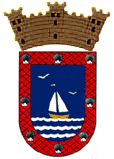
The coat of arms reflects Fajardo's rich coastal history and Spanish heritage. Two dolphins support the shield, symbolizing the municipality's close relationship with the sea, while a sailing vessel (balandro) represents navigation and commerce. A fishing net honors the community's long-standing fishing tradition, and scallop shells pay tribute to Saint James the Apostle (Santiago Apóstol), the municipality's patron saint. A mural crown above the shield signifies Fajardo's status as one of Puerto Rico's municipalities.
Anthem
The official anthem of Fajardo begins with the words "Fajardo que aquí en el oriente…" and celebrates the municipality's history, maritime heritage, beautiful coastline, and the pride of its people. Performed during civic ceremonies and community celebrations, the anthem honors Fajardo's role as "La Metrópolis del Sol Naciente" (The Metropolis of the Rising Sun) and its enduring connection to the sea.
Fajardo que aqui en el oriente...
Human & Capital Resources
Economy
Fajardo's economy has long been shaped by its strategic location on Puerto Rico's northeastern coast. During the nineteenth and early twentieth centuries, the municipality prospered through its commercial port, sugar cane plantations, cattle ranching, and fishing industry. As the sugar industry declined in the mid-twentieth century, Fajardo successfully reinvented itself as one of Puerto Rico's premier tourism destinations.
Today, tourism is the driving force behind the local economy. Fajardo is home to some of the Caribbean's largest marinas and serves as the primary gateway to Icacos, Palomino, Culebra, and Vieques. Catamaran excursions, sport fishing charters, scuba diving, snorkeling, kayaking, and eco-tours attract visitors year-round. Major attractions such as Las Cabezas de San Juan Nature Reserve, the Fajardo Bioluminescent Bay, and nearby beach resorts support a vibrant hospitality industry that includes hotels, restaurants, retail shops, transportation services, and tour operators.
Beyond tourism, Fajardo's economy also includes healthcare, education, retail, manufacturing, marine services, construction, and government operations. The municipality's marinas, shipyards, and boating industry continue to make it one of Puerto Rico's most important centers for recreational boating and nautical tourism.
Education
Education has played an important role in Fajardo's development for more than a century. The municipality is served by numerous public and private schools that provide educational opportunities from elementary through high school. These schools prepare students for careers in business, tourism, marine sciences, healthcare, and other professions that support the region's growing economy.
Fajardo is also home to several institutions of higher education, including campuses of the Inter American University of Puerto Rico and the University of Puerto Rico–Fajardo, which offer undergraduate programs in business, education, natural sciences, hospitality, technology, and marine-related fields. These institutions serve students from across Puerto Rico's eastern region while supporting workforce development and research.
Beyond the classroom, Fajardo's coastal environment provides unique opportunities for experiential learning. Nature reserves, marine ecosystems, and conservation organizations offer educational programs focused on environmental stewardship, marine biology, coastal ecology, and sustainable tourism, helping preserve the natural resources that make the municipality one of Puerto Rico's most visited destinations.
Demographics *
Population
32,124
Land Area: 29.86 sq mi
Density: 1,012 per sq mi
Median Age: 42.4
Sex: 53% female
Economics **
$12,913
Median household income: $19,957
Puerto Rico: $21,058
Persons below poverty line: 44.3%
Housing, families and educational attainment *
Number of households
4,268
Housing units density:
649.4 (2013)
Persons per household: 2.69
High school grad or higher: 81.3%
Marital status: 36% married
* U.S. Census Bureau 2020 data, unless otherwise noted - Source: Quick Facts Puerto Rico.
** U.S. Census Bureau 2016-2020
Map References
Coordinates: 18.3258° N, 65.6525° W
ZIP Code: 00738, 00740
Driving Distance from San Juan: 29.1 miles
Driving Time: 54 minutes
Frequently Asked Questions
Where is Fajardo located?
Fajardo is located on Puerto Rico's northeastern coast, about 40 miles (64 km) east of San Juan.
What is Fajardo known for?
Fajardo is known for its marinas, bioluminescent bay, beautiful beaches, snorkeling, sailing, and as the gateway to Icacos, Culebra, and Vieques.
Can you visit a bioluminescent bay in Fajardo?
Yes. Laguna Grande is one of Puerto Rico's three bioluminescent bays and is best experienced on a guided nighttime kayak tour.
What are the best beaches in Fajardo?
Popular beaches include Seven Seas Beach, Playa Escondida, Playa Colora, and nearby Icacos Cay, known for its crystal-clear waters and excellent snorkeling.
Is Fajardo a good place to stay?
Yes. Fajardo offers beachfront resorts, boutique hotels, vacation rentals, and easy access to beaches, island excursions, El Yunque National Forest, and the eastern coast.
Do you need a rental car in Fajardo?
Yes. A rental car is recommended for exploring Fajardo's beaches, marinas, nature reserves, and nearby attractions.
What islands can you visit from Fajardo?
Boat tours depart regularly for Icacos Cay, Palomino Island, Palominito, and other islands within La Cordillera Nature Reserve. Passenger ferries to Vieques and Culebra depart from nearby Ceiba.
How far is Fajardo from San Juan?
Fajardo is approximately 1 hour from San Juan by car, depending on traffic.
Other Resources
- Fajardo Map by TravelMaps.com
Did You Know?
The Cross of Burgundy still flies at El Morro and San Cristóbal as a reminder of Puerto Rico's Spanish military history.
Get Our Newsletter
Discover new places, local flavors, upcoming events, cultural stories, and some of our favorite finds from around the island.Read the Latest ¡La Isla! Newsletter
Follow Along


