
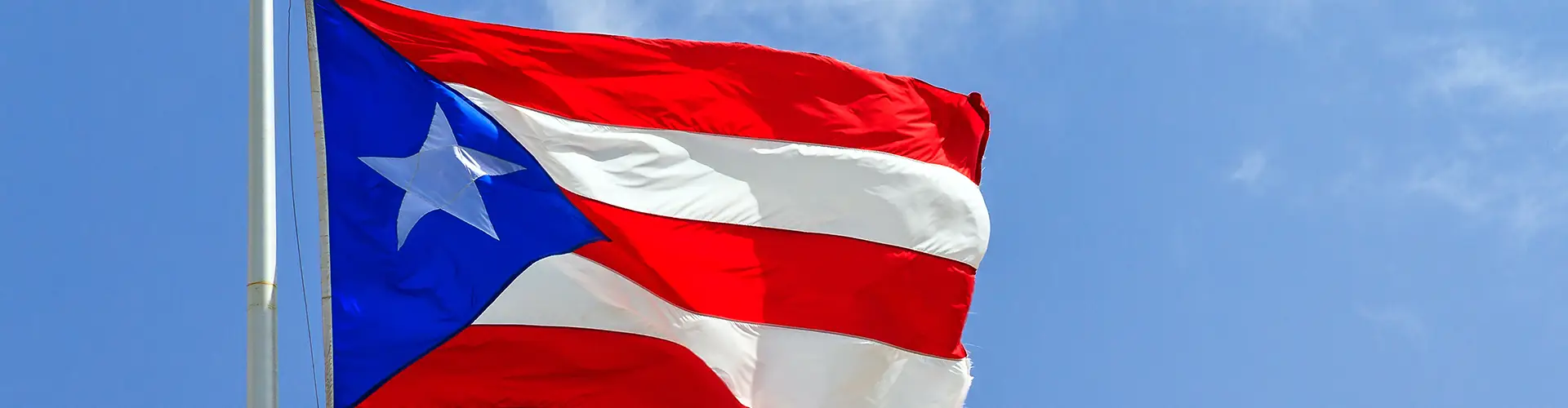
Symbols of Puerto Rico
Puerto Rico's symbols tell the story of an island shaped by Taíno heritage, Spanish colonization, African influences, political change, migration, and a strong sense of cultural identity.
Some, such as the Puerto Rican flag, coat of arms, and anthem, are official emblems of Puerto Rico. Others—the coquí, flor de maga, flamboyán, and traditional foods and drinks—have become cultural symbols through generations of Puerto Rican tradition.
Together, they represent how Puerto Ricans see their history, landscape, culture, and identity—both on the island and throughout the diaspora.
Overview
Official Symbols
Flag of Puerto Rico
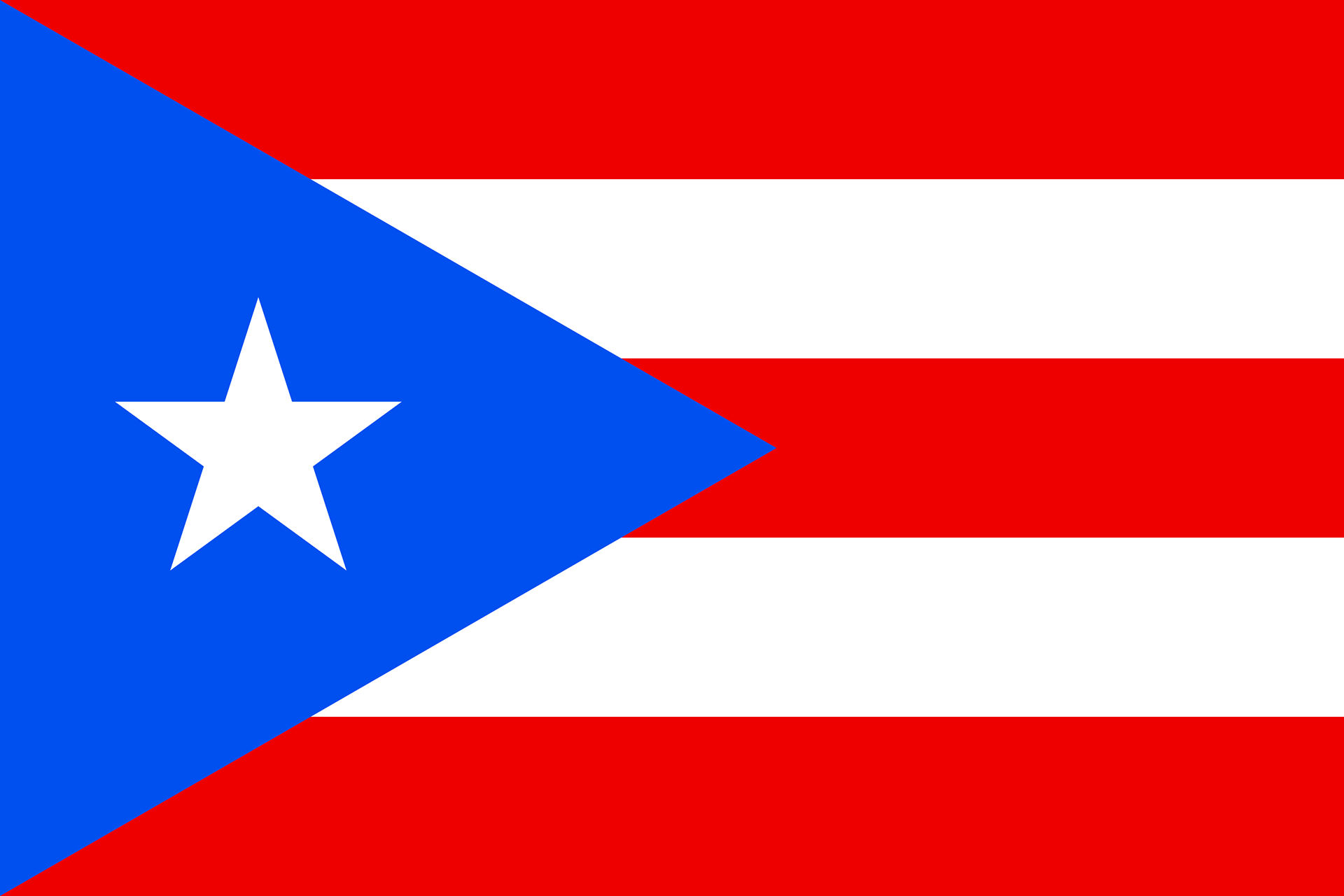
The Puerto Rican flag is one of the island's most recognizable symbols. Its current design originated in 1895 among Puerto Rican revolutionaries living in New York and was inspired by the Cuban flag, with the colors reversed. The single white star represents Puerto Rico, while the triangle and alternating red and white stripes have acquired meanings associated with government, liberty, equality, and the principles of a republic. Although the flag existed for decades, it was formally adopted by the government of Puerto Rico in 1952. Today, La Monoestrellada is much more than a government emblem—it is a powerful expression of Puerto Rican identity around the world.
Explore the History of the Puerto Rican Flag →
Coat of Arms
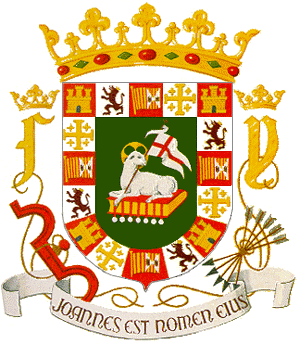
Puerto Rico's coat of arms dates to 1511, when it was granted by the Spanish Crown, making it one of the oldest heraldic emblems associated with a territory in the Americas. Its central image is the Lamb of God, or Agnus Dei, resting on a book and carrying a banner marked with a cross.
The border contains castles, lions, crosses, and other elements connected to Spain's royal and religious traditions. Its Latin motto, Joannes Est Nomen Eius — "John is his name" — refers to San Juan Bautista, the name originally given to the island by the Spanish.
Seal of Puerto Rico
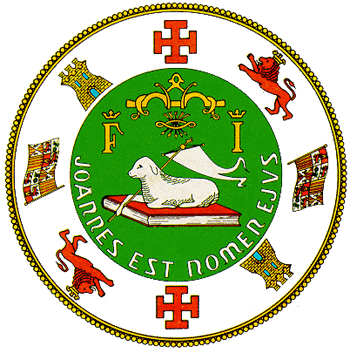
The Great Seal of Puerto Rico is an official governmental symbol based upon the island's historic coat of arms. It is used to authenticate important government documents and represents the authority of the government of Puerto Rico. Although the Great Seal and coat of arms share much of the same imagery, they serve different purposes: the coat of arms is Puerto Rico's historic heraldic emblem, while the seal is primarily used in an official governmental capacity.
Coat of Arms vs. Great Seal
The coat of arms and Great Seal of Puerto Rico share much of the same imagery, but they serve different purposes. The coat of arms is primarily a historic and heraldic symbol, while the Great Seal is used as an official instrument of government.
| Coat of Arms | Great Seal | |
|---|---|---|
| Purpose | Heraldic and civic emblem | Government authentication |
| Origin | Granted in 1511 | Developed for official governmental use |
| Used on | Civic, historical, and symbolic applications | Official documents and government acts |
| Main imagery | Lamb of God, flag, book, castles, lions, crosses, and heraldic border | Based on Puerto Rico's historic coat of arms |
La Borinqueña — Puerto Rico's Anthem
La Borinqueña is Puerto Rico's official anthem and takes its name from Borinquen, a variation of the Taíno name for the island. Its melody developed during the 19th century and is generally associated with musician Félix Astol Artés. Revolutionary lyrics written by Lola Rodríguez de Tió transformed the song into a call for freedom during a period of political unrest under Spanish rule. The official lyrics used today were later written by Manuel Fernández Juncos and are considerably less revolutionary, celebrating instead Puerto Rico's natural beauty and the arrival of Christopher Columbus.
The revolutionary version of La Borinqueña is very different in tone from the official lyrics used today.
Natural Symbols of Puerto Rico
Puerto Rico's natural symbols reflect the island's remarkable biodiversity and the deep connection Puerto Ricans have with their landscape. Native flowers, birds, frogs, and trees appear throughout Puerto Rican art, music, folklore, and everyday life.
Some have been officially designated as symbols, while others—such as the coquí and flamboyán—have become cultural icons because of how strongly Puerto Ricans associate them with home.
Puerto Rico's Bird — Puerto Rican Spindalis
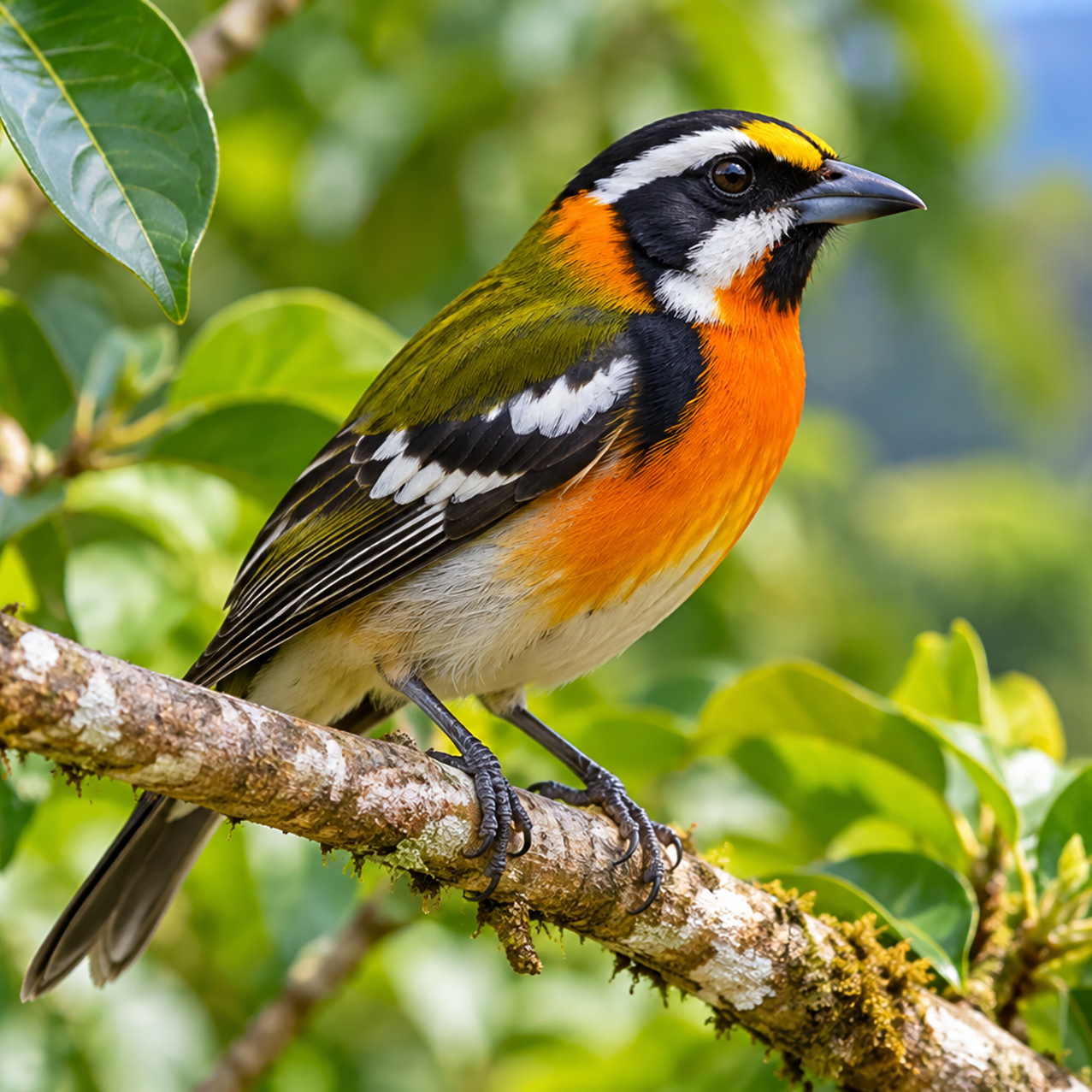
Reina Mora
The Puerto Rican spindalis (Spindalis portoricensis), commonly known as the reina mora, is one of the island's most distinctive native birds and has been officially designated Puerto Rico's national bird. The male is particularly colorful, with striking orange, black, white, and green plumage. Found in forests, plantations, and wooded areas throughout the island, the species is endemic to Puerto Rico and has become an important symbol of the island's unique wildlife.
Puerto Rico's Flower — Flor de Maga
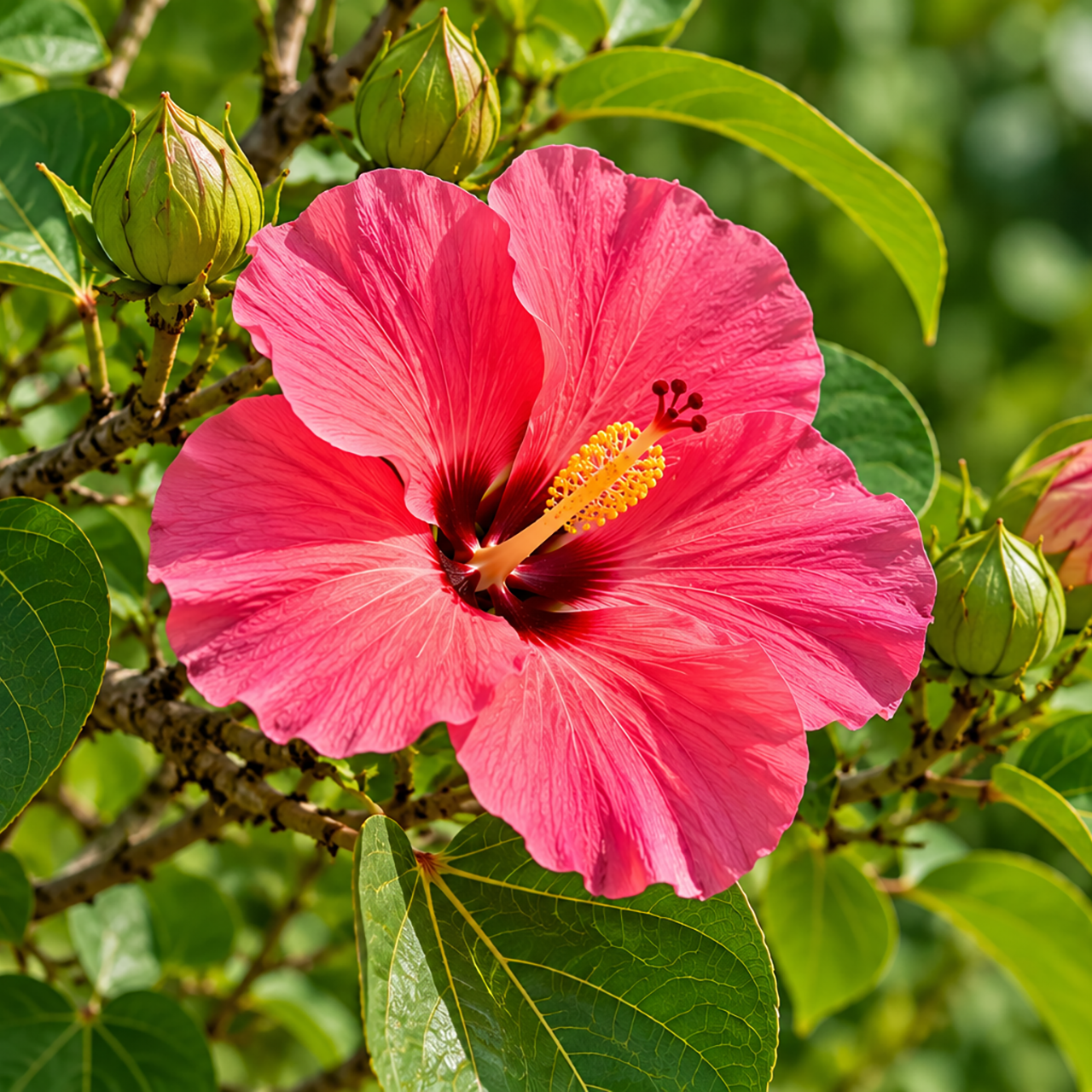
Thespesia grandiflora
The beautiful flor de maga (Thespesia grandiflora) is Puerto Rico's official flower. Native to the island, the tree produces large pink to reddish flowers that resemble hibiscus blossoms, although the maga belongs to a different species. Its striking flowers can be seen in forests, gardens, and landscaped areas around Puerto Rico. The maga's native origins and distinctive appearance have made it an enduring botanical symbol of the island.
Puerto Rico's Tree — Ceiba
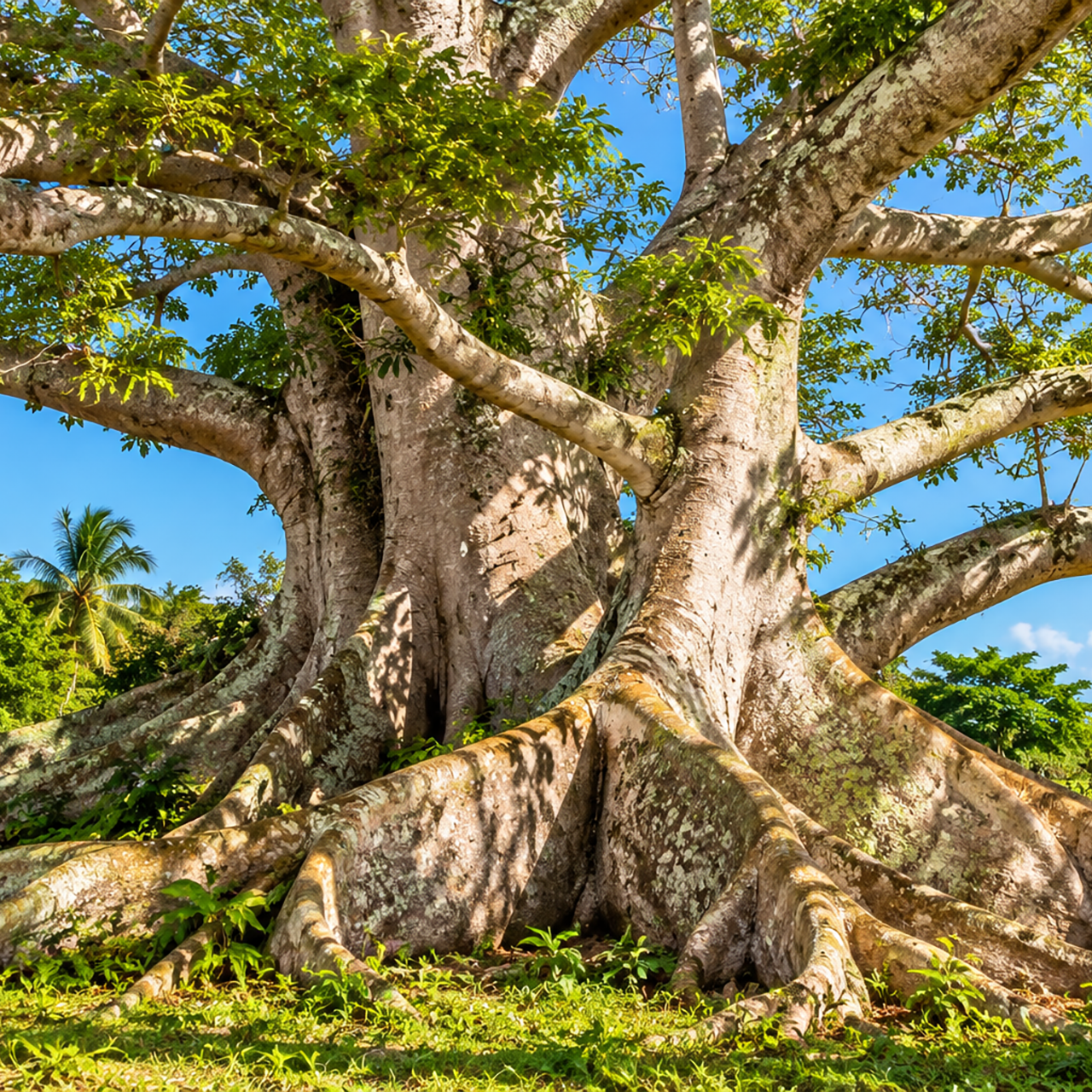
Few trees in Puerto Rico carry as much historical and cultural symbolism as the ceiba. These enormous tropical trees can live for centuries and were significant to Indigenous cultures throughout the Caribbean long before Europeans arrived. Their massive trunks, spreading canopies, and distinctive roots make mature ceibas natural landmarks. One of the island's best-known examples is the historic ceiba on Vieques. The tree remains a powerful symbol of longevity, strength, and Puerto Rico's connection to its natural environment.
Flamboyán
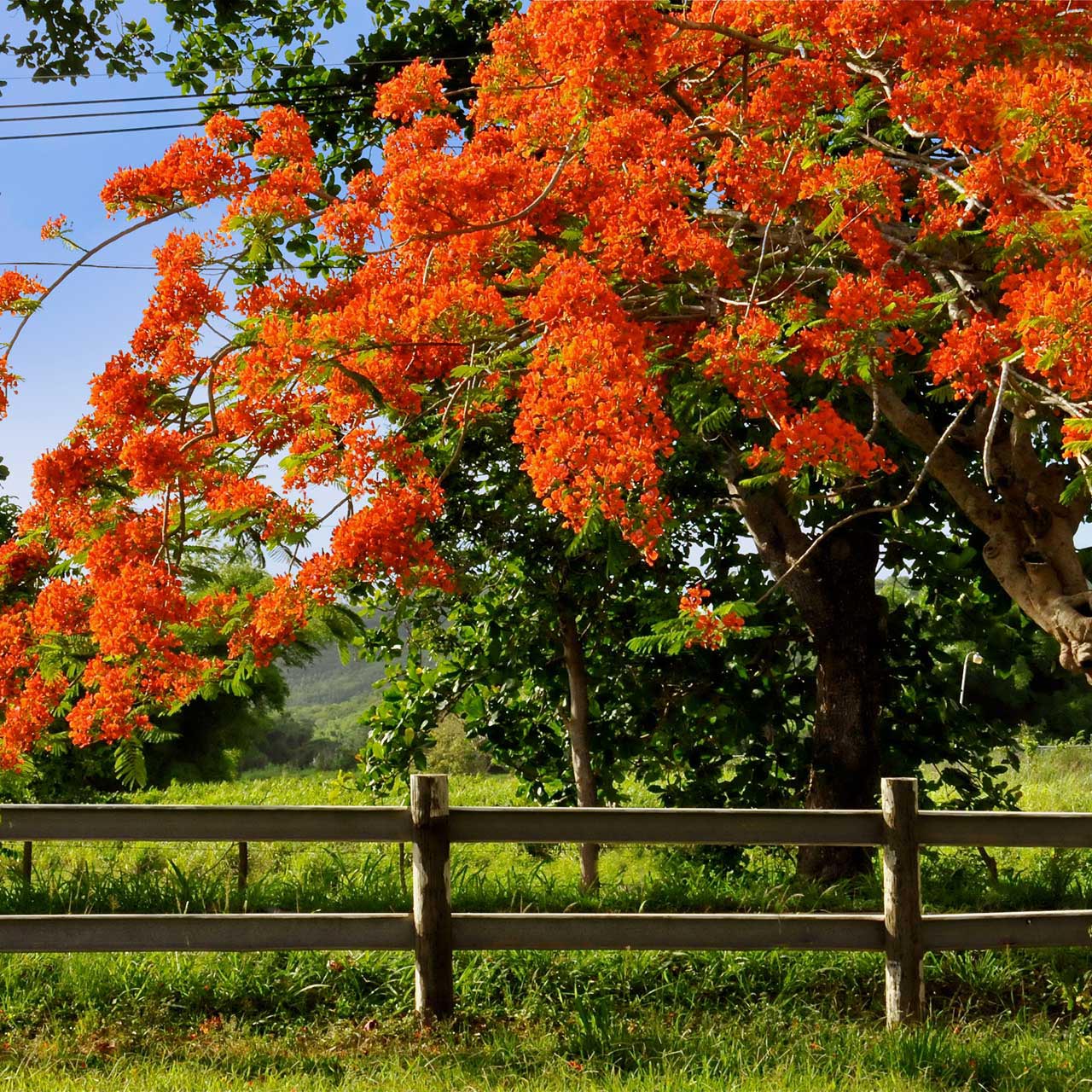
Few trees are as visually associated with Puerto Rico as the flamboyán. During the warmer months, its broad canopy bursts into brilliant red and orange flowers, transforming roadsides, plazas, and countryside landscapes across the island.
Although the flamboyán is not native to Puerto Rico and is not the island's official tree, it has become one of its most beloved cultural symbols. Images of flowering flamboyanes frequently appear in Puerto Rican paintings, photography, crafts, and memories of island life.
The Coquí: The Sound of Puerto Rico
Puerto Rico's Coquí
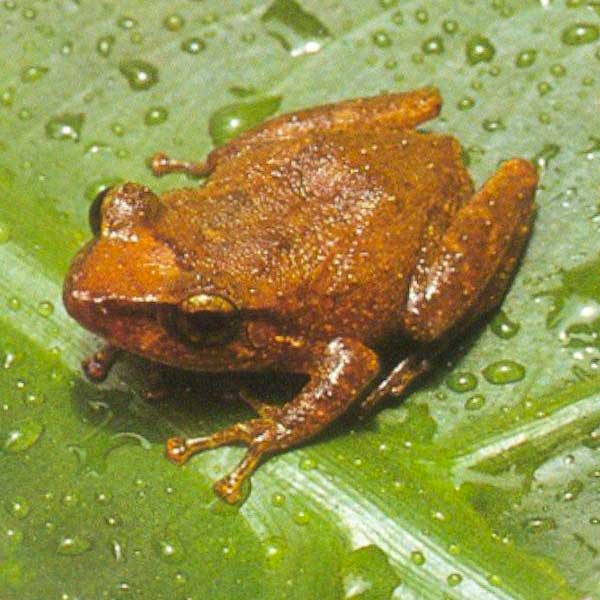
Few sounds are as closely associated with Puerto Rico as the nighttime call of the coquí. The tiny frog takes its common name from the distinctive "co-quí" call of the male Eleutherodactylus coqui. Puerto Rico is home to several species of coquí, many of which are found nowhere else in the world. Over generations, the frog has become an unofficial but deeply beloved symbol of Puerto Rican identity, appearing in art, music, jewelry, souvenirs, and popular expressions. Its cultural importance also reaches back to the island's Indigenous past, with frog-like images appearing in Taíno art and petroglyphs. For many Puerto Ricans, the familiar phrase "De aquí como el coquí" expresses a deep sense of belonging to the island.
Food & Cultural Symbols
Not every Puerto Rican symbol comes from an official decree. Many have become symbols because generations of Puerto Ricans have embraced them through food, music, celebrations, sports, and everyday traditions.
From rum and piña coladas to baseball, boxing, Christmas coquito, and internationally recognized cultural figures, these traditions help express what Puerto Rican identity looks, sounds, and tastes like.
Fruits of Puerto Rico
Puerto Rico's tropical climate supports an abundance of fruits that have become part of the island's cuisine and everyday life. Mangoes, coconuts, guavas, pineapples, acerolas, breadfruit, plantains, bananas, papayas, and passion fruit—or parcha—appear in everything from roadside fruit stands to traditional desserts and refreshing drinks. Rather than representing Puerto Rico through a single fruit, together they reflect the island's tropical landscape, agricultural history, and culinary traditions.
Iconic Drinks of Puerto Rico
Piña Colada
The piña colada is Puerto Rico's official drink and one of the island's most internationally recognized creations. Made with pineapple juice, coconut cream, and rum, the tropical cocktail became famous during the 20th century. Competing origin stories connect its creation to establishments in San Juan, adding another layer to its cultural history.
Puerto Rican Rum
Rum has been part of Puerto Rico's history for centuries and remains one of the island's most important products. Puerto Rican distilleries produce some of the world's best-known rum brands, while traditional cocktails and celebrations have made rum an enduring part of the island's culinary culture.
Coquito
Christmas in Puerto Rico would be difficult to imagine without coquito. Usually made with coconut milk, coconut cream, condensed milk, spices, and rum, the creamy holiday drink is traditionally prepared at home and shared with friends and family throughout Puerto Rico's famously long Christmas season.
Sports & Popular Culture
Baseball, boxing, and basketball occupy an important place in Puerto Rican culture. Baseball has produced legendary players such as Roberto Clemente, while Puerto Rico's extraordinary boxing tradition has produced numerous world champions. Basketball also inspires passionate support through the island's professional league and international teams.
Puerto Rican athletes frequently compete under the island's own flag in international events, making sports an especially visible expression of Puerto Rican identity and pride.
Sports and Puerto Rican Identity
Sports are an important part of Puerto Rican culture, with baseball, boxing, and basketball holding particularly prominent places in island life. Baseball has produced legendary Puerto Rican players, including Roberto Clemente, and remains deeply woven into local communities and professional competition. Puerto Rico also has one of the world's richest boxing traditions, producing numerous world champions, while basketball attracts passionate fans through the island's Baloncesto Superior Nacional league and international competition. Puerto Rican athletes frequently become cultural ambassadors, carrying the island's flag onto some of the world's largest sporting stages.
Symbols of Puerto Rico's 78 Municipalities
Puerto Rico's identity is not represented by a single set of island-wide symbols. Each of the island's 78 municipalities has its own history, traditions, flag, and coat of arms, creating a remarkable visual record of Puerto Rico's regional diversity.
These municipal symbols incorporate everything from Taíno imagery and patron saints to coffee, sugarcane, mountains, rivers, ships, historic families, and local industries. Together, they tell 78 individual stories within the larger story of Puerto Rico.
Municipal Flags
Each of Puerto Rico's 78 municipalities has its own flag, creating a colorful visual record of local identity across the island. Their designs frequently incorporate elements from municipal history, geography, Indigenous heritage, patron saints, agriculture, local industries, and important historical events. Coffee branches, sugarcane, mountains, rivers, crosses, crowns, Taíno imagery, and Spanish heraldic symbols all appear among the designs. Together, the 78 flags demonstrate how strongly local identity remains connected to Puerto Rico's municipalities.
Municipal Coats of Arms
Like their flags, Puerto Rico's municipal coats of arms tell the stories of individual communities. Many use traditional European heraldry combined with imagery specific to Puerto Rico, including Indigenous symbols, tropical crops, mountains, rivers, churches, ships, and references to important local families or historical events. Exploring the coats of arms of all 78 municipalities provides a fascinating visual journey through Puerto Rico's history and regional diversity.
Historic Flags of Puerto Rico
Puerto Rico's history can also be traced through the flags that have flown over or represented the island. Spanish flags reflected more than four centuries of colonial rule, while the revolutionary flag of Lares became associated with the 1868 Grito de Lares uprising against Spain. Puerto Rican revolutionaries later adopted the familiar single-star flag in New York in 1895. Following the Spanish-American War in 1898, the United States flag became the sovereign flag over Puerto Rico, while the Puerto Rican flag eventually gained official recognition in 1952. These flags reveal the island's complex political history and changing expressions of Puerto Rican identity.
Explore Historic Flags of Puerto Rico →
Symbols Through History
Puerto Rico's symbols have changed alongside the island's political and cultural history. Spanish colonial flags once represented imperial rule, while revolutionary movements created new symbols expressing Puerto Rican identity and aspirations for political change.
From the Grito de Lares flag of 1868 to the Puerto Rican flag created by revolutionaries in New York in 1895, historic flags provide a visual timeline of Puerto Rico's changing relationship with Spain, the United States, and its own evolving sense of nationhood and cultural identity.
The Spanish Crown grants Puerto Rico its coat of arms, making it one of the oldest heraldic emblems in the Americas.
The flag associated with the Grito de Lares becomes one of Puerto Rico's most important revolutionary symbols.
Puerto Rican revolutionaries in New York adopt the design that becomes today's Puerto Rican flag.
Puerto Rico passes from Spanish to United States sovereignty following the Spanish-American War.
The Puerto Rican flag is officially adopted with the establishment of the Commonwealth of Puerto Rico.
The flag, coquí, flor de maga, music, food, and other cultural symbols continue to express Puerto Rican identity both on the island and throughout the diaspora.
Frequently Asked Questions
What are the official symbols of Puerto Rico?
Puerto Rico's principal official symbols include its flag, coat of arms, anthem, and Great Seal. The island also has officially recognized natural and cultural symbols, including the flor de maga and the piña colada.
What is the national animal or symbol of Puerto Rico?
The coquí is one of Puerto Rico's most recognizable natural and cultural symbols. This tiny native frog is famous for its distinctive "co-quí" call and has become closely associated with Puerto Rican identity, although not every commonly called "national" symbol has an official legal designation.
What is Puerto Rico's national flower?
The flor de maga (Thespesia grandiflora) is Puerto Rico's official flower. Native to the island, it produces large pink to reddish blossoms and is an important symbol of Puerto Rico's natural heritage.
What is Puerto Rico's national bird?
The Puerto Rican spindalis (Spindalis portoricensis), known locally as the reina mora, is commonly recognized as Puerto Rico's national bird. It is endemic to Puerto Rico and is known for the male's distinctive orange, black, white, and green plumage.
What tree represents Puerto Rico?
The ceiba has deep historical and cultural significance in Puerto Rico and throughout the Caribbean, while the flamboyán is one of the trees most visually associated with the island. The flamboyán's brilliant red-orange flowers have made it a beloved symbol in Puerto Rican art and landscapes, even though it is not native to Puerto Rico.
Why is the coquí a symbol of Puerto Rico?
The coquí is strongly associated with Puerto Rico because several species are native to the island and its distinctive nighttime call is part of the Puerto Rican landscape. The frog also appears throughout Puerto Rican art, music, crafts, and popular culture, becoming a symbol of home and identity.
What do the symbols on Puerto Rico's coat of arms mean?
Puerto Rico's coat of arms features the Lamb of God, a book, a banner, castles, lions, crosses, and other heraldic imagery connected to the island's Spanish colonial history. Granted in 1511, it is one of the oldest coats of arms associated with a territory in the Americas.
Does every municipality in Puerto Rico have its own flag?
Yes. Each of Puerto Rico's 78 municipalities has its own flag and coat of arms. Their designs often represent local history, geography, patron saints, agriculture, Indigenous heritage, industries, and other characteristics of the municipality.
What is the difference between Puerto Rico's coat of arms and Great Seal?
The coat of arms is Puerto Rico's historic heraldic emblem, while the Great Seal is used by the government for official purposes and to authenticate certain government documents. The Great Seal is based on imagery from Puerto Rico's historic coat of arms.
Did You Know?
The Río de la Plata is Puerto Rico's longest river.
Get Our Newsletter
Discover new places, local flavors, upcoming events, cultural stories, and some of our favorite finds from around the island.Read the Latest ¡La Isla! Newsletter
Follow Along


