
Spanish Heritage in Puerto Rico
More Than Four Centuries of History and Cultural Influence
Spanish influence is woven deeply into Puerto Rican culture. It can be heard in the language, seen in centuries-old churches and plazas, tasted in traditional foods, and experienced in music, festivals, family traditions and everyday life.
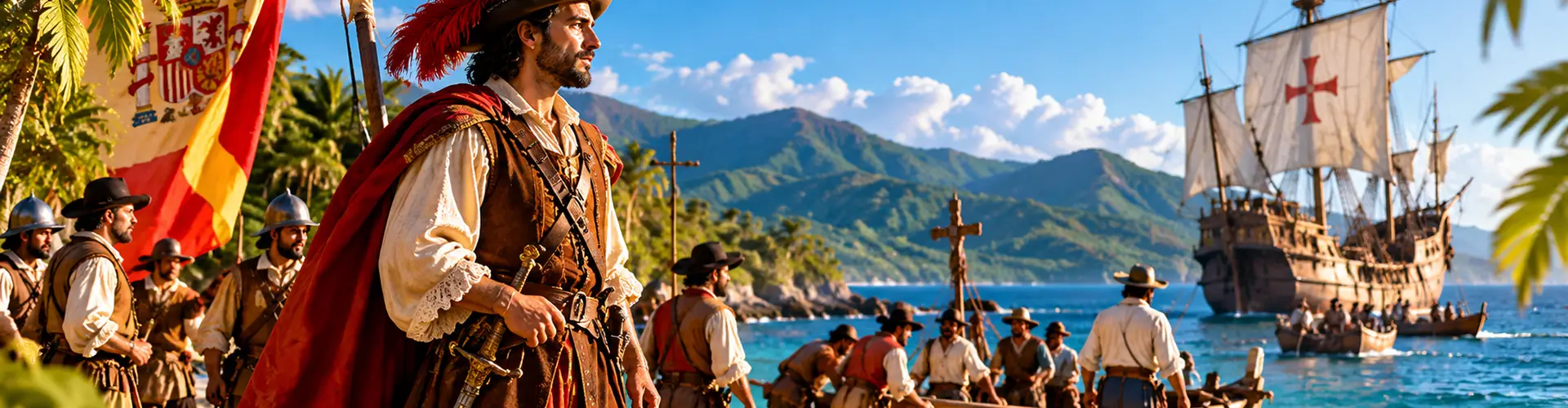
That legacy began with colonization. Christopher Columbus arrived in Puerto Rico in 1493, beginning a period of Spanish expansion that profoundly disrupted the Indigenous societies already living on the island. Juan Ponce de León established Caparra in 1508, and Puerto Rico remained under Spanish rule until 1898.
Over those four centuries, Spanish customs mixed with Indigenous Taíno and African traditions, as well as influences brought by later immigrants. The result was not simply Spanish culture transplanted to the Caribbean, but a distinctly Puerto Rican culture shaped by generations of exchange, adaptation and resistance.
The Spanish Arrival
Columbus reached Puerto Rico during his second voyage to the Americas in November 1493. Spanish settlement followed in the early 1500s, with Juan Ponce de León establishing Caparra near present-day Guaynabo.
The arrival of Spanish colonists transformed life on the island. Indigenous communities faced warfare, disease, displacement, forced labor and efforts to impose Christianity and Spanish social structures. The encomienda system compelled Indigenous people to labor for Spanish colonists while also subjecting them to conversion and cultural assimilation.
This difficult history became the beginning of more than four centuries of Spanish colonial rule.
Spanish Language
Perhaps Spain's most visible legacy is the Spanish language.
Puerto Rican Spanish developed over centuries and became distinctly its own. Taíno vocabulary survived within it, African languages contributed additional influences, and later contact with English added another layer.
The result is a Spanish dialect with vocabulary, pronunciation and expressions that reflect Puerto Rico's unique history. The Library of Congress describes contemporary Puerto Rican language and identity as the product of these intersecting Taíno, African, Spanish and later U.S. influences.
| Taíno-derived word | Meaning today |
|---|---|
| Hamaca | Hammock |
| Canoa | Canoe |
| Huracán | Hurricane |
| Barbacoa | Barbecue |
| Iguana | Iguana |
| Maraca | Percussion instrument |
| Güiro | Scraped percussion instrument |
Explore the Spanish Language in Puerto Rico →
Religion & Faith
Spanish colonization brought Roman Catholicism to Puerto Rico, and the church became a major institution in colonial society.
Catholic influence remains visible in historic churches, religious art, municipal patron saints, Christmas traditions, Holy Week observances and the Fiestas Patronales celebrated throughout the island.
Every Puerto Rican municipality traditionally has a patron saint, and these celebrations evolved into community festivals combining faith with music, food, artisans, rides and entertainment.
Architecture & Town Plazas
Spanish colonial influence is especially visible in Old San Juan and historic town centers throughout Puerto Rico.
Municipalities traditionally developed around a central plaza, with the Catholic church and important civic buildings nearby. Thick masonry walls, interior courtyards, balconies, wooden doors and shutters became familiar architectural features.
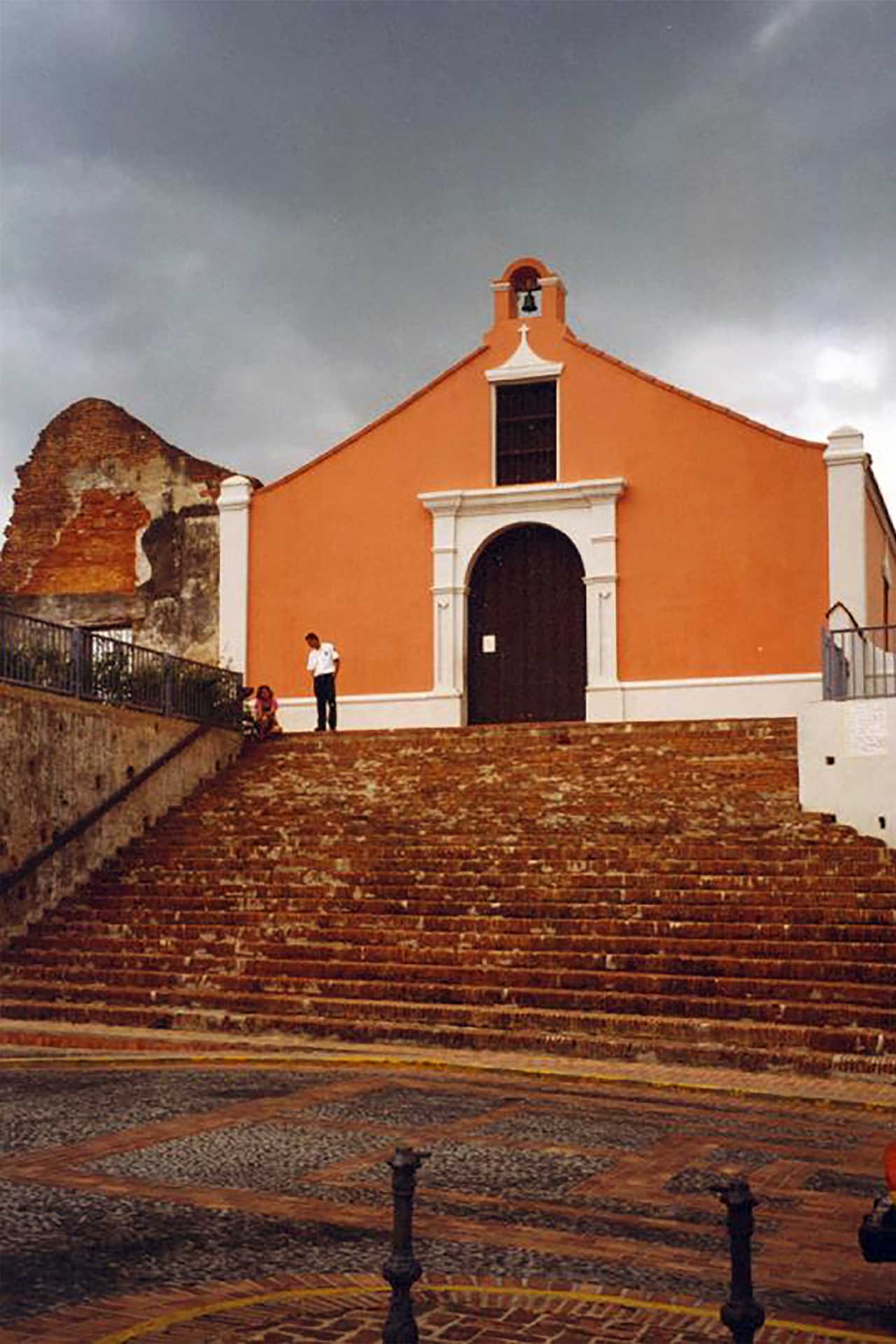
San Juan
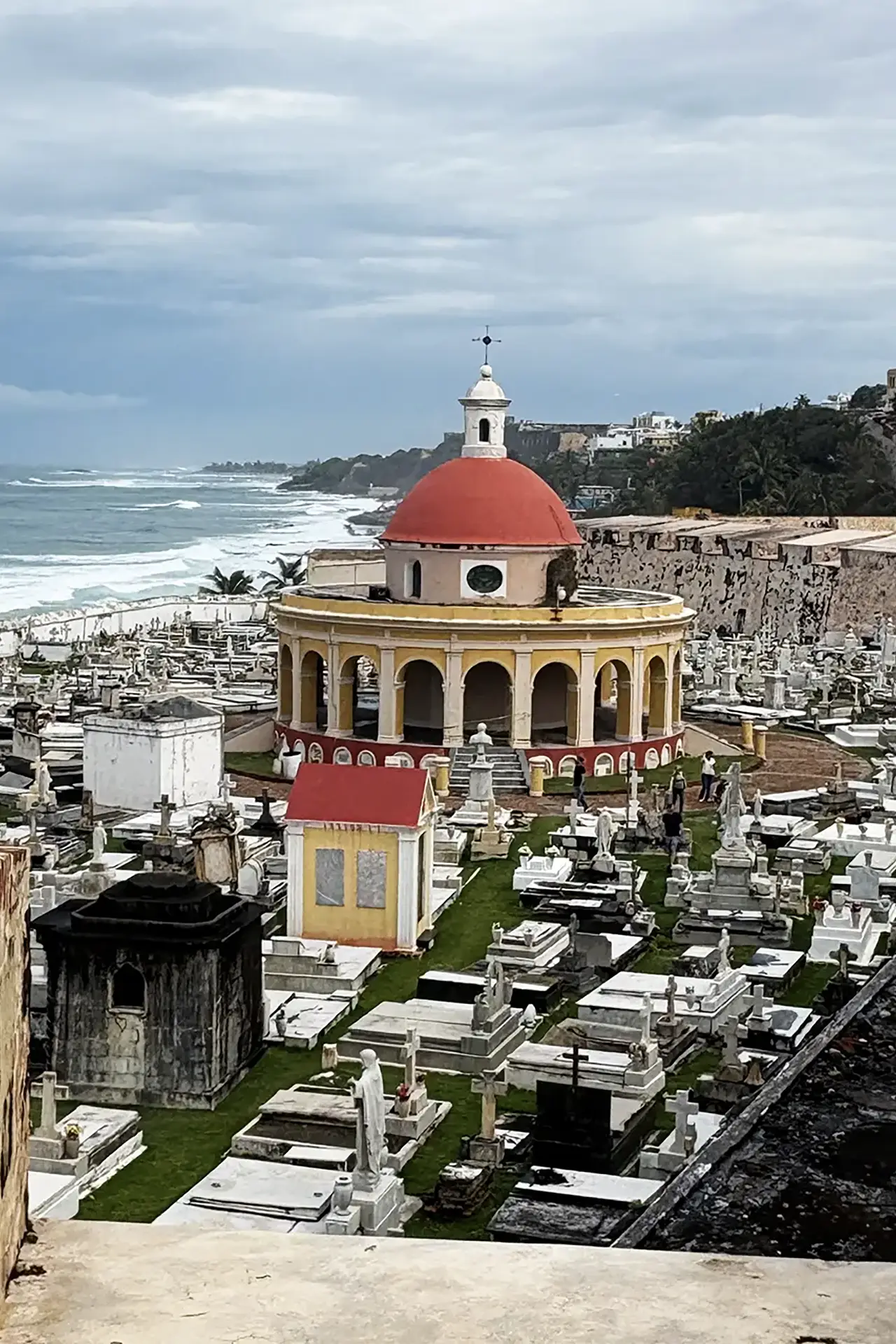
Old San Juan Cemetary
Ponce
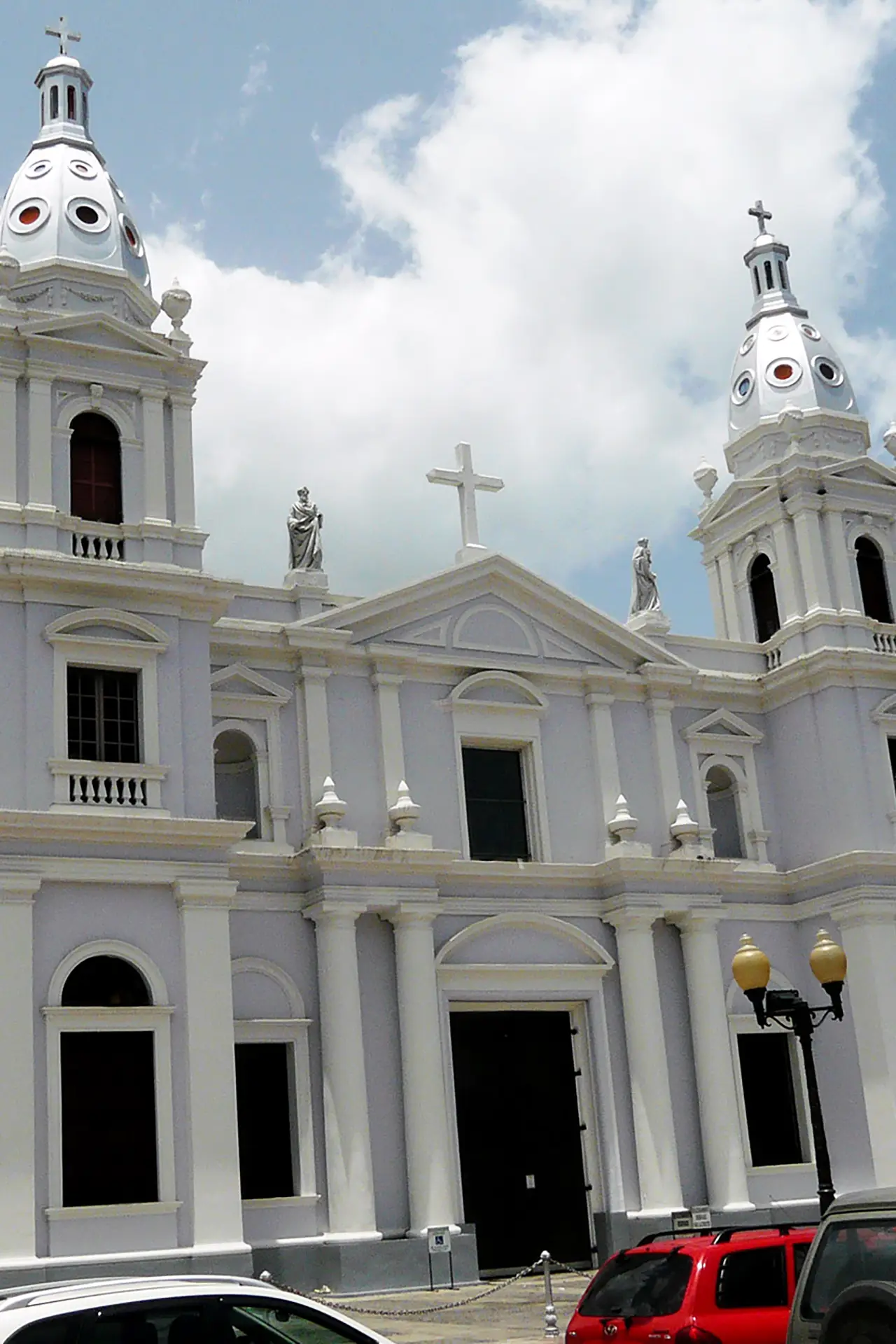
Cathedral of Our Lady of Guadalupe
From the Spanish Table to Cocina Criolla
Spanish colonization profoundly changed what was grown, raised, cooked and eaten in Puerto Rico. Settlers brought European livestock, crops, ingredients and cooking traditions to the island, adding them to foods and techniques already used by the Taíno and, later, those brought and developed by Africans and their descendants.
Among the most important Spanish contributions were pork and other livestock, rice, wheat, olive oil, garlic, onions and European herbs and seasonings. Spanish cooking traditions also brought stews, rice preparations and the Iberian foundation of sofrito—the aromatic mixture that would evolve in Puerto Rico using ingredients available on the island.
Pork became particularly important. Over time, roasted pork became central to Puerto Rican celebrations and family gatherings, especially during Christmas, when lechón asado remains one of the season's signature foods.
Sofrito: An Old Idea Made Puerto Rican
The idea behind sofrito came from the Iberian Peninsula: aromatic ingredients slowly cooked to create a flavorful base for other dishes. In Puerto Rico, however, sofrito evolved into something distinctly local.
Garlic and onions joined Caribbean peppers, herbs such as culantro and other ingredients to create the intensely aromatic foundation used in arroz con gandules, beans, stews, soups and countless home-cooked meals.
Even mofongo illustrates this cultural exchange. Its history incorporates African foodways and pounding techniques, Indigenous use of the pilón, Caribbean plantains and Spanish ingredients such as garlic and sofrito.
A Cuisine Becomes Puerto Rican
Puerto Rican cuisine cannot be neatly divided into Taíno, Spanish and African dishes. Ingredients and techniques interacted for centuries.
Rice might meet pigeon peas. European pork might be seasoned with Caribbean herbs. African plantain traditions might be prepared using a Taíno-style pilón and flavored with Spanish garlic.
From those encounters emerged cocina criolla — a cuisine shaped on the island and unmistakably Puerto Rican.
Pork · Rice · Garlic · Olive Oil · Sofrito Traditions
Yuca · Corn · Peppers · Pilón · Local Ingredients
Plantains · Root Crops · Frying · Pounding Traditions · Coastal Foodways
Music & Dance
Spanish musical traditions contributed string instruments, poetic forms and melodies that developed into distinctly Puerto Rican forms.
The Spanish guitar influenced Puerto Rican string traditions, while the cuatro evolved into an instrument strongly identified with Puerto Rico.
The décima, a ten-line poetic form with Spanish origins, became deeply associated with Puerto Rican jíbaro music and improvisational singing.
From Spain to Puerto Rico: Migration
Spanish migration wasn't one single event.
From Spain to Puerto Rico: Centuries of Migration
Puerto Rico's Spanish heritage did not arrive in a single migration. During more than four centuries of Spanish rule, people came to the island from different regions of Spain and at different moments in its history.
Some arrived as soldiers, government officials, clergy and merchants during the early colonial period. Others came seeking land, commercial opportunities or a new life. These successive migrations helped shape Puerto Rico's population, agriculture, commerce, language and customs.
The Canary Islands
Canary Islanders—or Isleños—formed an important stream of Spanish migration to Puerto Rico. The Canary Islands' position between Europe, Africa and the Americas made them an important part of Spain's Atlantic world.
Canarian families settled in Puerto Rico over generations, contributing to rural communities and the growth of towns across the island. The depth of this migration is reflected in historical and genealogical records; Library of Congress collections identify thousands of nineteenth-century Canary Island immigrants to Puerto Rico.
The Royal Decree of Graces of 1815
A major turning point came with the Real Cédula de Gracias, or Royal Decree of Graces, issued by the Spanish Crown in 1815.
Spain was losing colonies throughout the Americas and wanted to strengthen Puerto Rico's population, economy and loyalty to the Crown. The decree encouraged immigration and commercial agriculture and helped open Puerto Rico more widely to newcomers.
The nineteenth century consequently became a period of extraordinary demographic change. Puerto Rico's population grew from roughly 183,000 in 1812 to around half a million by the middle of the century. Spanish migration contributed substantially to that growth.
From Across Spain
The newcomers did not all come from the same part of Spain.
Historical records document nineteenth-century immigrants from the Canary Islands, Galicia, Asturias, Catalonia, Valencia, the Balearic Islands, the Basque Country, Navarre, Aragón and other Spanish regions.
Some became merchants and tradespeople. Others entered agriculture, government or the military. Families settled throughout the island, and their surnames, customs and regional traditions became part of Puerto Rican society.
Immigration Beyond Spain
The Royal Decree also encouraged Catholic immigrants from elsewhere in Europe. French, Corsican, Irish, Italian and other newcomers settled in Puerto Rico during the nineteenth century. Migration from Corsica, Mallorca and Catalonia became particularly significant in some agricultural areas.
Many became involved in the growing coffee, sugar and commercial economies, leaving visible legacies in places such as the central and western mountain regions.
Becoming Puerto Rican
Over generations, these immigrants and their descendants did not simply reproduce Spain in the Caribbean.
They lived alongside people of Indigenous, African, mixed and other European ancestry. Regional customs blended. Spanish changed. Foods changed. Music changed. New identities developed.
By the nineteenth century, Puerto Rico had developed its own increasingly distinct criollo culture and Puerto Rican identity. The island was Spanish territory—but its people and culture had become unmistakably Puerto Rican.
The End of Spanish Rule
Spanish rule ended in 1898 following the Spanish-American War.
Puerto Rico was ceded by Spain to the United States under the Treaty of Paris, beginning another major political and cultural transition.
Yet four centuries of Spanish influence did not disappear with the change in sovereignty. Language, architecture, religion, law, food, music, customs and family traditions remained deeply embedded in Puerto Rican life.
Spanish Heritage Today
Spanish heritage in Puerto Rico is visible everywhere, but it no longer exists in isolation. Over centuries, Spanish traditions blended with Indigenous, African, Caribbean and later U.S. influences to become something distinctly Puerto Rican.
Explore the Roots of Puerto Rican Culture
Taino Hericage ·
Spanish Heritage ·
African Heritage
Did You Know?
Barranquitas is the only municipality in Puerto Rico that is the birthplace of both Luis Muñoz Rivera and Luis Muñoz Marín—father and son—two of the most influential political leaders in Puerto Rican history. Their ideas helped shape the island's government, economy, and identity for generations.
Get Our Newsletter
Discover new places, local flavors, upcoming events, cultural stories, and some of our favorite finds from around the island.Read the Latest ¡La Isla! Newsletter
Follow Along


