
Christmas Traditions in Puerto Rico
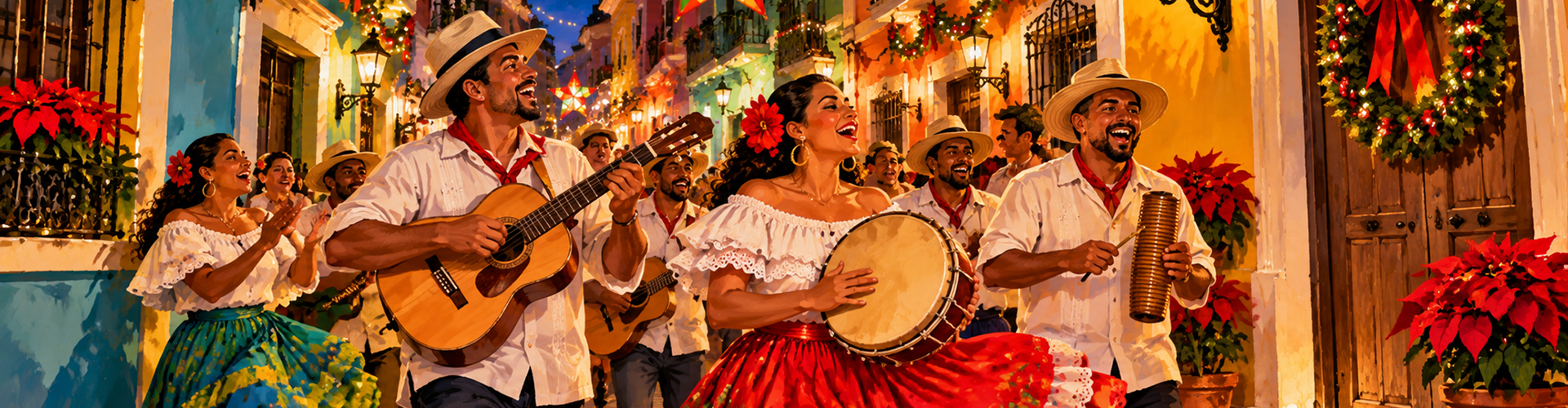
Puerto Rico celebrates Christmas as a season rather than a single day. Holiday traditions begin in late November and often continue into mid-January, bringing together family, music, food, faith, community celebrations, and customs that have been passed down for generations. Parrandas, Nochebuena, Three Kings Day, Las Octavitas, and the Fiestas de la Calle San Sebastián all contribute to what is often described as one of the longest Christmas seasons in the world.
Whether you're visiting Puerto Rico during the holidays or keeping Puerto Rican traditions alive away from the island, Navidad offers a window into the warmth, creativity, and sense of community that define Puerto Rican culture.
The Puerto Rican Christmas Season
Christmas in Puerto Rico is more than a single holiday. It is an extended season of music, family gatherings, religious observances, traditional foods, and community celebrations. Festivities often begin after Thanksgiving and continue through Three Kings Day on January 6, Las Octavitas, and the Fiestas de la Calle San Sebastián in mid-January.
What makes a Puerto Rican Christmas especially memorable is the way traditions come together: the lively music of parrandas, the flavors of pasteles and arroz con gandules, the excitement of Three Kings Day, and the warmth of family celebrations.
Homes, plazas, and businesses begin decorating for Navidad. Parrandas, holiday gatherings, festivals, and Christmas music fill the season.
Christmas Eve is one of the season's most important family celebrations, centered around food, music, faith, and gathering together.
Christmas Day continues the celebration with family, meals, gifts, and time together.
Puerto Ricans welcome the new year with parties, family gatherings, music, food, and local New Year's traditions.
Three Kings Day is one of Puerto Rico's most treasured holiday traditions, particularly for children.
Celebrations continue after Three Kings Day and often culminate with the Fiestas de la Calle San Sebastián in Old San Juan.
What I Love About Christmas in Puerto Rico
What I love most about Christmas in Puerto Rico is how long the season lasts. Growing up on the island, Christmas wasn't just one day of celebration. It was weeks of excitement, music, family gatherings, and traditions that seemed to go on forever.
As a child, one of my favorite things was getting presents not once, but twice! Santa Claus brought gifts on Christmas Day, and then came the excitement of Three Kings Day on January 6, when Los Tres Reyes Magos brought more presents. It made the magic of Christmas last just a little longer.
Looking back, what I treasure most isn't just the presents, but the joy of growing up in a place where Christmas felt like an entire season rather than a single holiday.
Nochebuena: Christmas Eve
For many Puerto Rican families, Nochebuena on December 24 is one of the most important gatherings of the Christmas season.
Families come together for a long evening of food, music, conversation, and celebration. Traditional holiday dishes may include pernil, arroz con gandules, pasteles, and other family favorites, while coquito and desserts such as tembleque and arroz con dulce complete the table.
For some families, Nochebuena also includes religious observances such as Christmas Eve Mass. Others focus primarily on the family gathering itself. As with many Puerto Rican traditions, the details differ from household to household, but the emphasis on being together remains central.
Parrandas: Puerto Rican Christmas Caroling
A parranda, also called an asalto or trulla navideña, is Puerto Rico's lively version of Christmas caroling—but calling it simply caroling doesn't quite capture the experience.
A group of friends and relatives arrives unexpectedly at someone's home, often late at night, playing instruments and singing aguinaldos and other Christmas songs. The surprised household welcomes the group inside with food and drinks. Then the homeowners may join the parranda as it moves on to the next house.
The group can continue traveling from home to home well into the night—or until sunrise.
Instruments of a Parranda
A Puerto Rican parranda wouldn't sound the same without its traditional instruments. The music is meant to be lively, portable, and easy for a group to carry from house to house. At the center is often the Puerto Rican cuatro, whose bright, distinctive sound is closely associated with jíbaro and traditional Puerto Rican music. Guitars provide rhythm and harmony, while percussion instruments such as the güiro, maracas, panderos, and palitos keep everyone moving and singing together.
Cuatro — Puerto Rico's best-known traditional stringed instrument. The modern cuatro has ten strings arranged in five pairs and produces the bright melodic sound heard in much of Puerto Rican folk and Christmas music.
Güiro — A hollow, ridged percussion instrument traditionally made from a gourd. A stick is scraped across its grooves to create its distinctive rhythmic sound.
Panderos — Hand-held frame drums closely associated with plena. Different sizes produce different tones and rhythms, adding energy and percussion to a parranda.
Maracas — Shaken percussion instruments traditionally made from dried gourds filled with seeds or small objects. Their sound adds another rhythmic layer to the music.
Guitar — The guitar provides chords and rhythm beneath the singers and other instruments and is easy to carry as the parranda moves from one home to another.
Palitos / Claves — Simple wooden sticks struck together to maintain a steady rhythm. Sometimes the simplest instrument is all someone needs to join the parranda.
And, of course, voices are perhaps the most important instrument of all. A parranda is participatory—people sing choruses, clap, play whatever instruments are available, and new people may join as the group travels from house to house.
Santa Claus in Puerto Rico
Although the Three Kings (Los Tres Reyes Magos) have traditionally played a central role in Puerto Rican Christmas celebrations, Santa Claus, also known as Santa Clós, has become a familiar part of the island's holiday traditions.
During the 20th century, American cultural influences, advertising, television, and commercial celebrations helped popularize Santa Claus in Puerto Rico. Today, many families incorporate Santa into their Christmas festivities, with children receiving gifts on Christmas morning.
Unlike colder destinations traditionally associated with Santa Claus, Puerto Rico celebrates Christmas in a tropical setting. Santa can be seen at shopping centers, holiday parades, community events, and Christmas displays, sometimes surrounded by palm trees and Caribbean-inspired decorations.
For many Puerto Rican families, Santa Claus and the Three Kings coexist as part of the holiday season. Children may receive gifts on December 25 and again on January 6, when Puerto Rico celebrates Three Kings Day (Día de Reyes).
When Santa Claus Was Mistaken for the Devil
In Puerto Rican literature, Santa Claus once caused more fear than excitement. A famous 1947 short story humorously explores what happened when an unfamiliar Christmas figure appeared in a rural mountain community.
Santa Claus was not always a familiar figure in Puerto Rico. Before American cultural influences became widespread, Puerto Rican Christmas celebrations centered on Nochebuena, religious observances, and the arrival of the Three Kings on January 6.
Following Puerto Rico's transition to United States rule in 1898, American Christmas customs gradually became more visible through schools, advertising, commerce, and popular culture.
One of the most memorable literary accounts of this cultural encounter appears in "Santa Clo va a La Cuchilla", a short story by Puerto Rican writer Abelardo Díaz Alfaro, published in his 1947 collection Terrazo.
In the story, an American teacher decides to introduce Santa Claus to children in a rural Puerto Rican community. He dresses as Santa, wearing his unfamiliar costume, and makes a surprise appearance during a Christmas celebration.
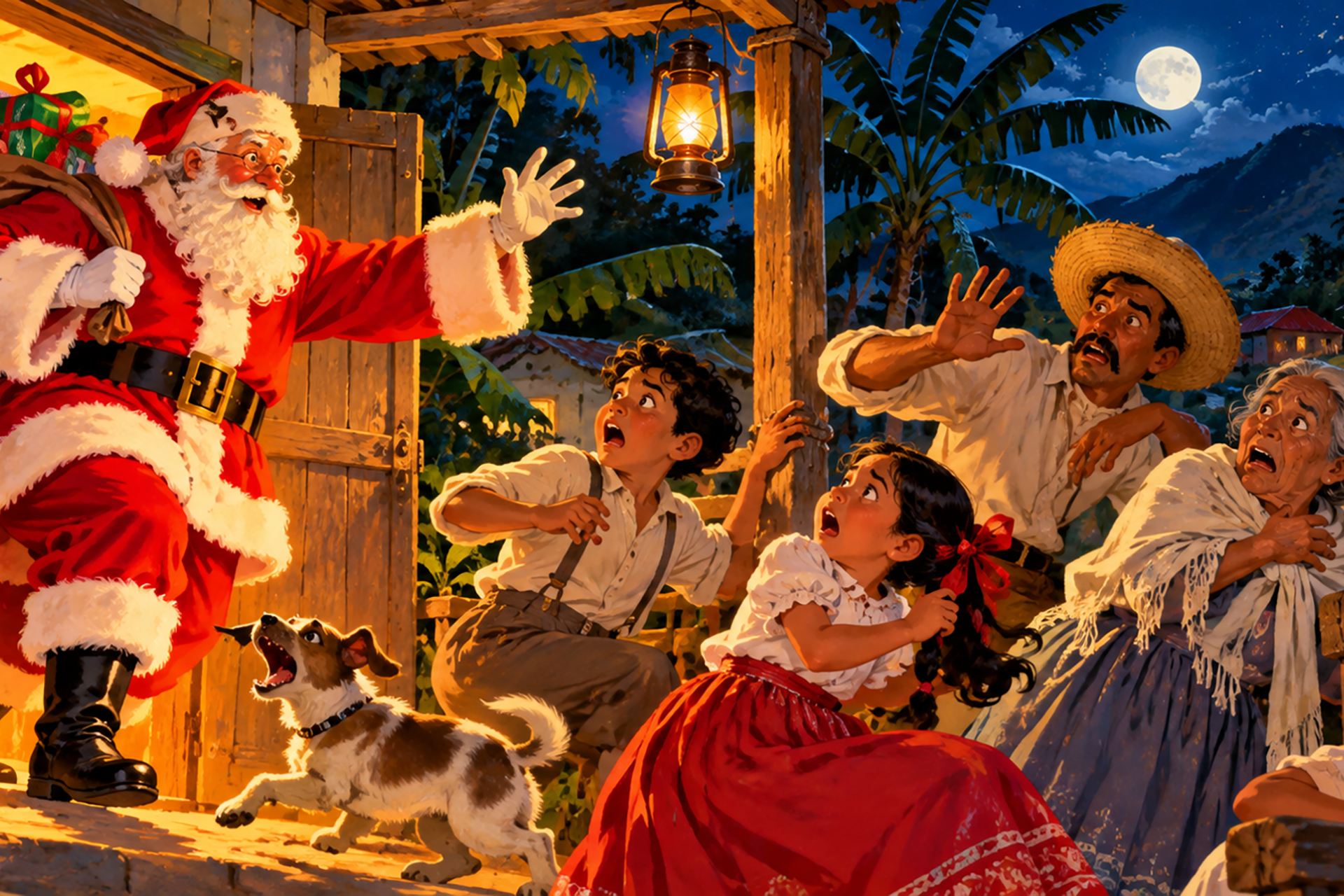
An artistic interpretation of "Santa Clo va a La Cuchilla," a 1947 short story by Abelardo Díaz Alfaro depicting a rural community's fearful encounter with Santa Claus.
Instead of welcoming him, the children and some adults react with fear. Unfamiliar with Santa's appearance, they mistake the strange, red-clad visitor for the devil. Panic spreads as people attempt to escape.
The humorous scene carries a deeper meaning. Díaz Alfaro uses the misunderstanding to illustrate the cultural tensions between traditional Puerto Rican customs and American influences introduced during the early twentieth century.
Did you know? The story is a work of literature rather than a documented account of Santa Claus's first appearance in Puerto Rico. It remains a memorable example of how Puerto Rican writers explored cultural identity, education, and Americanization through humor and folklore.
Santa Claus vs. Three Kings: Two Christmas Traditions
Puerto Rican children may celebrate both Santa Claus and the Three Kings, reflecting the island's blend of longstanding traditions and American cultural influences.
| Tradition | Santa Claus | Three Kings |
|---|---|---|
| Gift-giving | December 24–25 | January 5–6 |
| Cultural origins | Popularized through American cultural influences | Rooted in Spanish and Christian traditions |
| Children's customs | Christmas trees, stockings, and gifts | Leaving grass for the Kings' animals |
| Celebration | Christmas Day, December 25 | Three Kings Day, January 6 |
| Puerto Rican significance | A familiar part of modern Christmas celebrations | A longstanding tradition and official public holiday |
The Music of Navidad
Christmas music in Puerto Rico includes aguinaldos, villancicos, música jíbara, plena, and other traditional and popular holiday songs.
Music isn't simply background entertainment during Navidad. It accompanies parrandas, family gatherings, festivals, church celebrations, and community events.
Christmas Decorations in Puerto Rico
Christmas decorations in Puerto Rico combine familiar holiday imagery with the color and warmth of the Caribbean. Homes are decorated with Christmas trees, lights, wreaths, Nativity scenes, and ornaments, while balconies, patios, and yards may glow with elaborate light displays. Los Tres Reyes Magos are especially prominent, appearing as wooden santos, figurines, paintings, and decorations alongside more familiar images of Santa Claus.
Town plazas also become part of the celebration, with large Christmas trees, illuminated displays, Nativity scenes, and decorations transforming public spaces into gathering places for concerts, festivals, artisan markets, and family celebrations. Against a backdrop of palm trees and warm tropical evenings, Christmas in Puerto Rico may look different from the snowy holiday scenes seen elsewhere—but it is no less festive.
Puerto Rican Christmas Food
Holiday Favorites
Pernil
Slow-roasted pork, often seasoned with garlic and herbs.
Arroz con Gandules
Rice with pigeon peas, a familiar centerpiece of Puerto Rican holiday meals.
Pasteles
Seasoned masa traditionally made with green banana and root vegetables, filled and wrapped in banana leaves.
Coquito
A creamy coconut holiday drink, commonly flavored with spices and often rum.
Tembleque
A coconut pudding traditionally dusted with cinnamon.
Arroz con Dulce
Sweet rice pudding flavored with coconut, cinnamon, cloves, and other spices.
Explore Puerto Rican Christmas Recipes
Pasteles: A Holiday Tradition of Their Own
Making pasteles can be a family project. Preparing the masa, seasoning the filling, cutting banana leaves, wrapping each pastel, and tying them creates the kind of work that is easier—and often more enjoyable—when several generations participate.
Families frequently make large batches during the Christmas season, preserving recipes and techniques that may have been passed down through generations.
Coquito Season
Coquito is strongly associated with Puerto Rican Christmas.
While recipes vary from family to family, it generally combines coconut ingredients, spices, and often rum. Homemade bottles are frequently shared with friends and relatives during the holiday season.
Coquito or eggnog?
Coquito is often compared with eggnog because both are rich holiday drinks, but Puerto Rican coquito is coconut-based and has its own distinct flavor and tradition.
New Year's Eve: Despedida de Año
Christmas celebrations are still in full swing when Puerto Rico prepares to say goodbye to the old year. Despedida de Año, or New Year's Eve, is another major night for family, friends, food, music, and celebration. Families may gather at home for a special dinner, attend parties or community celebrations, and stay awake until midnight to welcome Año Nuevo.
The Christmas feast often continues into New Year's Eve, so tables may once again be filled with pernil, arroz con gandules, pasteles, desserts, and coquito. Music is rarely far away, whether it's salsa, plena, merengue, reggaetón, or traditional Christmas music. As midnight approaches, attention turns to the countdown and the arrival of the new year.
At midnight, hugs, kisses, cheers, music, and fireworks welcome January 1. But Puerto Rico also has a collection of New Year's customs and superstitions associated with good luck, leaving the old year behind, and starting fresh.
Discover New Year's Traditions
Three Kings Day
Día de Reyes — January 6
Three Kings Day, or Día de Reyes, is one of Puerto Rico's most cherished Christmas traditions. On the night of January 5, children traditionally gather grass and place it in boxes for the animals carrying Los Tres Reyes Magos. By the next morning, the grass is gone and gifts have appeared.
Celebrations around the island include parades, religious observances, music, food, artisans, and appearances by Melchor, Gaspar, and Baltasar.
Remember gathering grass for Los Reyes?
Discover the origins, childhood traditions, Juana Díaz celebration, Puerto Rican folk art, and the story of Los Tres Reyes Magos.
Explore Three Kings Day in Puerto Rico
Las Octavitas
After January 6, Puerto Rico's Christmas season continues.
The Octavitas refer to the eight days following Día de Reyes. Historically associated with religious observances honoring the Three Kings and Jesus, the period evolved into an extension of the Christmas season with continued music, gatherings, parties, and parrandas.
Fiestas de la Calle San Sebastián
For many Puerto Ricans, the famous Fiestas de la Calle San Sebastián, or SanSe, serve as the grand finale of the holiday season.
Held in Old San Juan in mid-January, the multi-day celebration fills the historic streets with live music, dancing, artisans, food, vejigantes, and enormous crowds. Discover Puerto Rico describes SanSe as the unofficial closing celebration of Puerto Rico's extended Christmas season.
Where to Experience Christmas in Puerto Rico
Old San Juan
Decorations, historic streets, holiday events, and San Sebastián later in January.
Caguas
Family-oriented holiday activities and municipal celebrations.
Cayey & Guavate
Pair Christmas festivities with La Ruta del Lechón and traditional holiday food.
Juana Díaz
Puerto Rico's most famous destination for Día de Reyes.
Town Plazas Across Puerto Rico
Many municipalities host Christmas lights, music, festivals, tree-lighting ceremonies, artisan markets, and Reyes events.
Frequently Asked Questions
How is Christmas celebrated in Puerto Rico?
Christmas in Puerto Rico is celebrated with family gatherings, traditional foods, music, parrandas, religious observances, festivals, and community celebrations. The season includes Nochebuena, Christmas Day, New Year's Eve, Three Kings Day, Las Octavitas, and festivities that continue into January.
How long does Christmas last in Puerto Rico?
Puerto Rico is famous for its long Christmas season. Celebrations often begin in late November and continue through Three Kings Day on January 6, Las Octavitas, and the Fiestas de la Calle San Sebastián in mid-January.
What is Nochebuena in Puerto Rico?
Nochebuena is Christmas Eve, celebrated on December 24. For many Puerto Rican families, it is one of the most important gatherings of the holiday season, bringing together family, traditional foods, music, and, for some, religious observances such as Misa de Gallo.
What is a Puerto Rican parranda?
A parranda is Puerto Rico's lively version of Christmas caroling. Groups of friends and relatives surprise a household with music and singing, are welcomed inside for food and drinks, and then continue to another home, often with new people joining along the way.
What instruments are used in a Puerto Rican parranda?
Parrandas often feature traditional instruments such as the Puerto Rican cuatro, guitar, güiro, maracas, and panderos. Singing, clapping, and other percussion also help create the lively sound associated with Puerto Rican Christmas music.
What foods are traditionally eaten at Christmas in Puerto Rico?
Popular Puerto Rican Christmas foods include pernil, arroz con gandules, pasteles, and holiday desserts such as tembleque and arroz con dulce. Coquito, a coconut-based holiday drink often made with rum, is another seasonal favorite.
What is coquito?
Coquito is a traditional Puerto Rican Christmas drink made with coconut ingredients and spices and often prepared with rum. Recipes vary from family to family, and homemade bottles are commonly shared with friends and relatives during the holidays.
What are some Puerto Rican New Year's Eve traditions?
Puerto Rican New Year's traditions may include eating twelve grapes for good luck, throwing water outside to symbolically wash away the old year's troubles, sprinkling sugar outside the home for good fortune, cleaning the house for a fresh start, and, for some celebrating near the beach, entering the waves backward at midnight.
What happens on Three Kings Day in Puerto Rico?
Three Kings Day, or Día de Reyes, is celebrated on January 6. On the night before, children traditionally gather grass for the animals carrying Los Tres Reyes Magos and wake the next morning to find gifts. Festivals, music, religious observances, and community celebrations are also held around the island.
What are Las Octavitas?
Las Octavitas extend Puerto Rico's Christmas season beyond Three Kings Day. Historically rooted in religious celebrations, the period is also associated with continued gatherings, music, parrandas, and festivities during January.
When does the Christmas season end in Puerto Rico?
There is no single ending date for every family, but celebrations commonly continue beyond Three Kings Day. The Fiestas de la Calle San Sebastián in Old San Juan, held in mid-January, are often considered the grand finale of Puerto Rico's extended holiday season.
Continue Exploring Puerto Rico
Puerto Rico's Christmas traditions are part of a rich cultural heritage shaped by history, music, folklore, and centuries of celebration. Discover more about the customs that make the island unique.
Puerto Rican Folklore
Explore the island's fascinating legends, Taíno mythology, traditional beliefs, and family customs passed down through generations.
Explore Puerto Rican Folklore »
Festivals & Traditions
Discover the colorful festivals, music, and cultural celebrations that bring Puerto Rican communities together throughout the year.
Explore Festivals & Traditions »
Three Kings Day
Learn about one of Puerto Rico's most cherished holiday traditions, from leaving grass for the Kings' animals to festive community celebrations.
Discover Three Kings Day »
Did You Know?
There are multiple species of coquí frogs native to Puerto Rico, and some exist nowhere else in the world.
Get Our Newsletter
Discover new places, local flavors, upcoming events, cultural stories, and some of our favorite finds from around the island.Read the Latest ¡La Isla! Newsletter
Follow Along


