
Puerto Rico's Average Temperatures
Puerto Rico enjoys a warm, tropical climate year-round, making it an ideal destination for travelers seeking sunshine and outdoor adventures. Temperatures remain consistently comfortable throughout the year, with only slight seasonal variations. Below you'll find average temperatures, humidity levels, rainfall, and wind patterns to help you plan the best time to visit the island.
Best Time to Visit: December through April for drier weather and comfortable humidity. Summer months are warmer with higher humidity and occasional rain.
Weather Overview
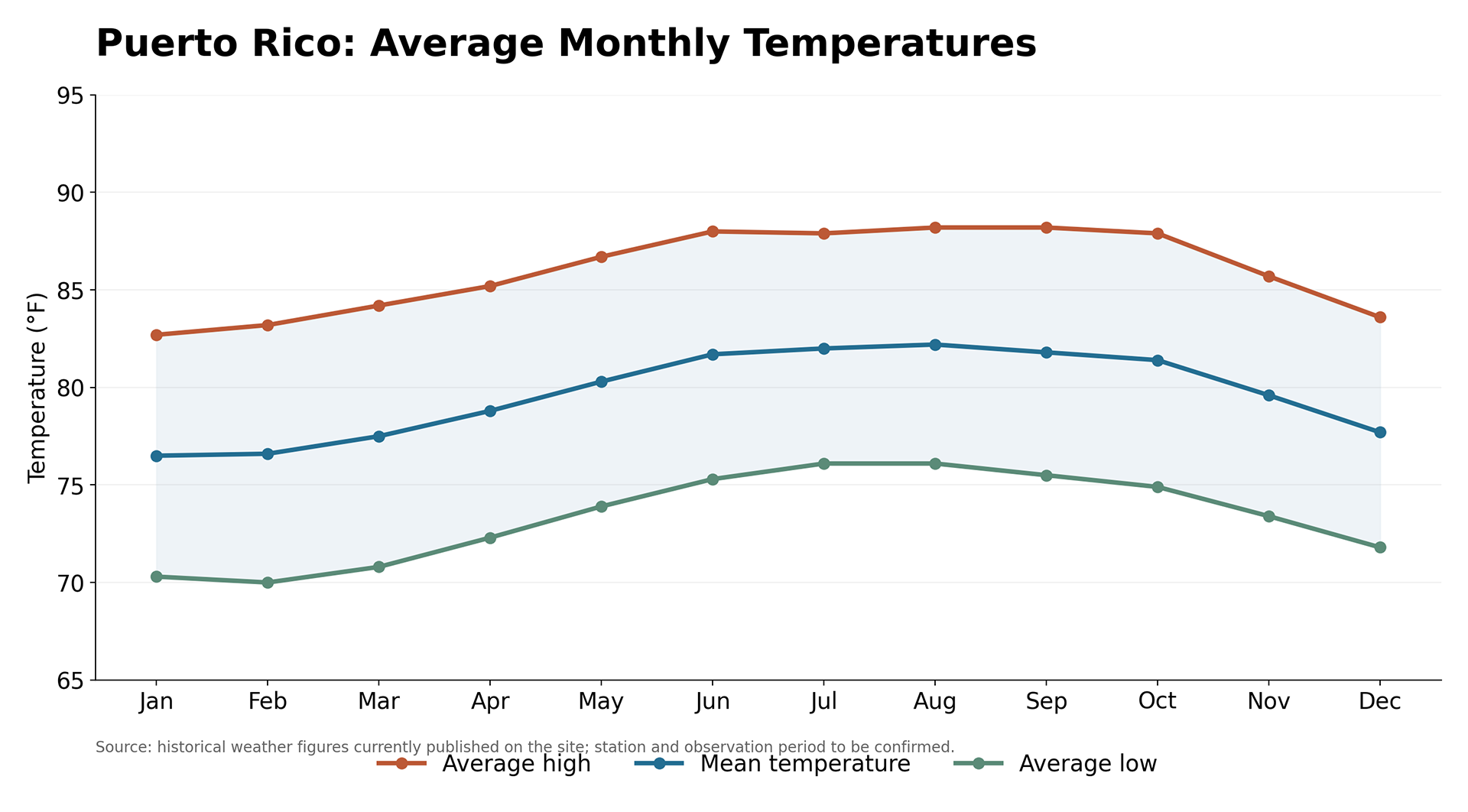
79.7°F
53.99 in
August
82.2°F averageFebruary
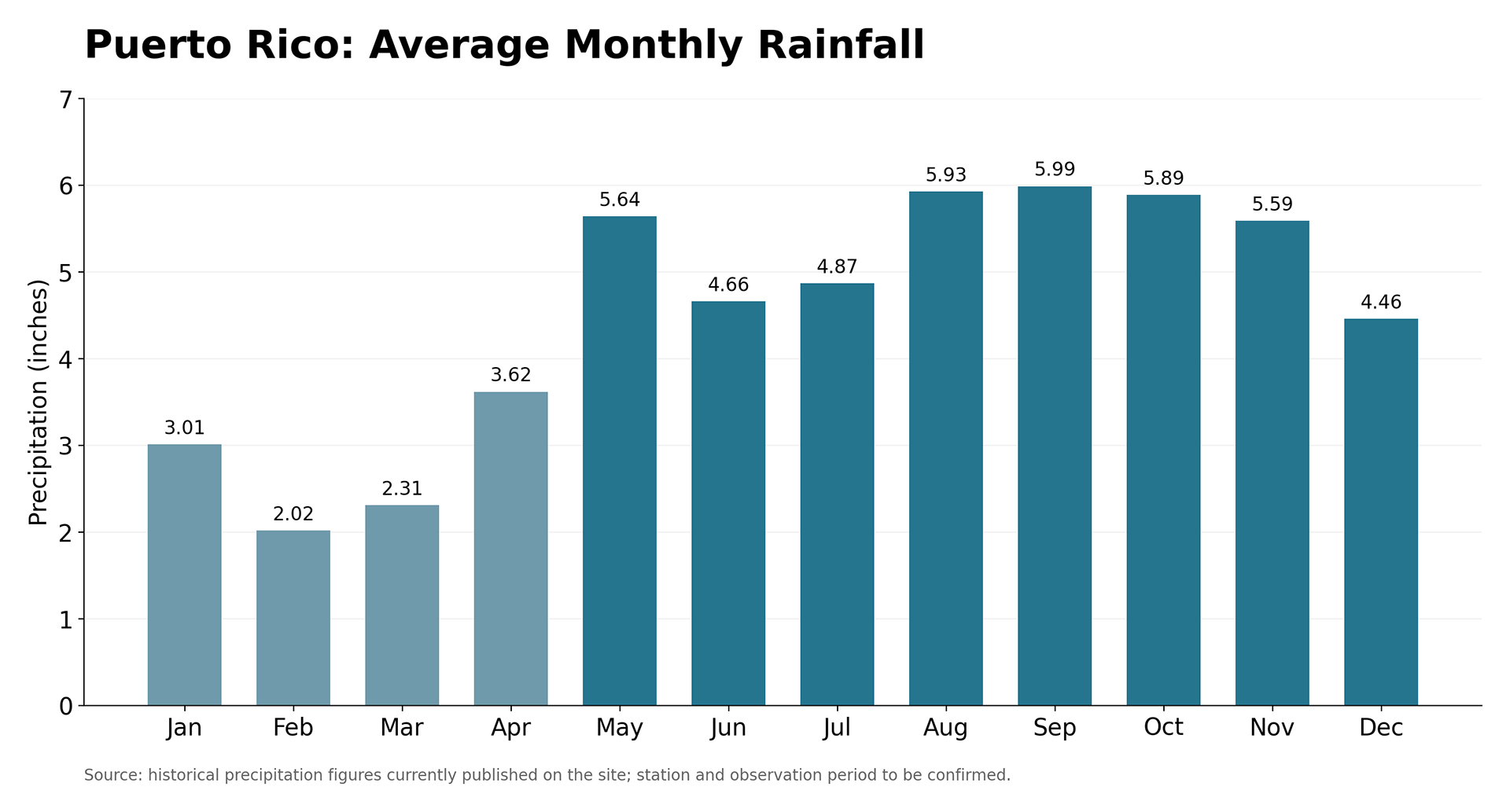
2.02 inches of rainAverage Monthly Temperatures
Temperatures remain warm throughout the year. The chart compares average daily highs, mean temperatures, and daily lows.
Average Monthly Rainfall (Precipitation)
Rainfall varies considerably throughout the year. February and March are among the driest months in the dataset, while rainfall generally increases during late spring and remains elevated through much of the summer and fall.
September records the highest monthly rainfall average at 5.99 inches, followed closely by August and October.
Rainfall also varies significantly by location. Puerto Rico's mountainous interior generally receives more precipitation than some coastal areas, so conditions can differ depending on where you travel.
Relative Humidity by Month
Puerto Rico's tropical climate brings relatively high humidity throughout the year. Humidity often changes over the course of a day, with higher readings during the nighttime and early morning hours and lower readings during the afternoon.
The table below shows average relative humidity at four different times of day. Values are expressed as percentages. Higher humidity can make warm temperatures feel hotter, particularly during outdoor activities.
| Time | Jan | Feb | Mar | Apr | May | Jun | Jul | Aug | Sep | Oct | Nov | Dec | Year |
|---|---|---|---|---|---|---|---|---|---|---|---|---|---|
| 2:00 AM | 80% | 79% | 79% | 79% | 83% | 84% | 83% | 84% | 84% | 84% | 83% | 81% | 82% |
| 2:00 PM | 63% | 62% | 60% | 61% | 65% | 66% | 66% | 66% | 67% | 66% | 66% | 66% | 65% |
| 6:00 PM | 80% | 79% | 76% | 74% | 77% | 78% | 78% | 79% | 79% | 80% | 81% | 80% | 78% |
| 8:00 PM | 75% | 73% | 72% | 73% | 76% | 77% | 77% | 77% | 78% | 79% | 77% | 76% | 76% |
Average Monthly Wind Speed
Puerto Rico benefits from prevailing easterly trade winds that help moderate the tropical heat, especially along exposed coastal areas. Wind conditions vary throughout the year and can differ considerably between beaches, mountain valleys, and urban locations.
The table below shows average monthly wind speeds in miles per hour (mph). These figures describe typical conditions in the source dataset and should not be confused with wind gusts or tropical storm conditions.
| Measure | Jan | Feb | Mar | Apr | May | Jun | Jul | Aug | Sep | Oct | Nov | Dec | Year |
|---|---|---|---|---|---|---|---|---|---|---|---|---|---|
| Wind speed (mph) | 8.6 | 9.0 | 9.4 | 9.2 | 8.4 | 8.9 | 9.7 | 9.0 | 7.5 | 6.8 | 7.5 | 8.5 | 8.5 |
About This Weather Data
The temperature, precipitation, humidity, and wind statistics presented on this page are based on historical weather records. These figures illustrate typical seasonal patterns but do not represent current weather conditions or guarantee conditions during a particular visit.
Weather varies across Puerto Rico. Coastal communities, mountain regions, and the island's southern and northern areas may experience different temperatures and rainfall patterns.
For current forecasts and weather advisories, consult the National Weather Service in San Juan.
Weather Data Sources and Notes
The monthly temperature, precipitation, relative humidity, and wind speed figures presented on this page are based on historical weather records. These averages provide a general overview of Puerto Rico's tropical climate and seasonal weather patterns.
Understanding the Data
- Temperature: Monthly averages of daily high, low, and mean temperatures, measured in degrees Fahrenheit (°F).
- Precipitation: Average monthly rainfall, expressed in inches.
- Relative Humidity: Average humidity percentages recorded at selected times of day.
- Wind Speed: Average monthly wind velocity, measured in miles per hour (mph).
Regional Weather Variations
Weather conditions vary across Puerto Rico. Coastal areas generally experience warmer temperatures, while the central mountains tend to be cooler and receive more rainfall. The northern and southern regions can also experience different precipitation patterns.
These historical averages should be used as a general reference rather than a forecast. Actual conditions may vary by location, season, and year.
Additional Weather Resources
For current forecasts, historical climate records, and tropical weather information, visit:
- National Weather Service - San Juan - Local forecasts, weather advisories, and alerts.
- NOAA National Centers for Environmental Information - Historical climate observations and datasets.
- National Hurricane Center - Tropical cyclone forecasts, advisories, and hurricane tracking.
Data Note: The original weather station, observation period, and dataset used for the historical averages on this page have not yet been verified. The resources listed above are provided for additional reference and should not be interpreted as the confirmed sources of the displayed statistics.
Frequently Asked Questions
What is the average temperature in Puerto Rico?
The annual mean temperature in the dataset shown above is
79.7°F (26.5°C). Conditions vary by location and elevation.
What is the hottest month in Puerto Rico?
August has the highest mean temperature in this dataset,
at 82.2°F (27.9°C).
What is the rainiest month in Puerto Rico?
September has the highest monthly precipitation in this dataset, averaging 5.99 inches.
When is hurricane season in Puerto Rico?
The Atlantic hurricane season runs from June 1 through November 30. Travelers should monitor official forecasts, particularly during the late summer and fall.
Does Puerto Rico have different climates?
Yes. Temperatures and rainfall vary across the island. Higher mountain elevations are generally cooler, while rainfall differs substantially between windward, leeward, and coastal areas.
Continue Exploring Puerto Rico
Puerto Rico's Geography
Discover the mountains, coastal plains, rivers, and natural regions that shape Puerto Rico's landscapes and local weather conditions.
EHurricanes in Puerto Rico
Learn about hurricane season, the island's history of major storms, and important considerations when planning a visit.
Plan Your Visit
From choosing the right season to packing for tropical weather, explore practical tips for planning your Puerto Rico getaway.
Did You Know?
Contrary to popular belief the Puerto Rican flag is not based on the American Flag, but the Cuban flag. Puerto Rico adopted the same flag design, which was unveiled in 1895. In 1952, the blue field was changed from a light blue to a darker blue, like the American flag.
Get Our Newsletter
Discover new places, local flavors, upcoming events, cultural stories, and some of our favorite finds from around the island.Read the Latest ¡La Isla! Newsletter
Follow Along


