
Puerto Rico's Coastal Geography
Explore Puerto Rico's coastal plains, mangrove forests, salt flats, coral reefs, beaches, estuaries, and sea cliffs.
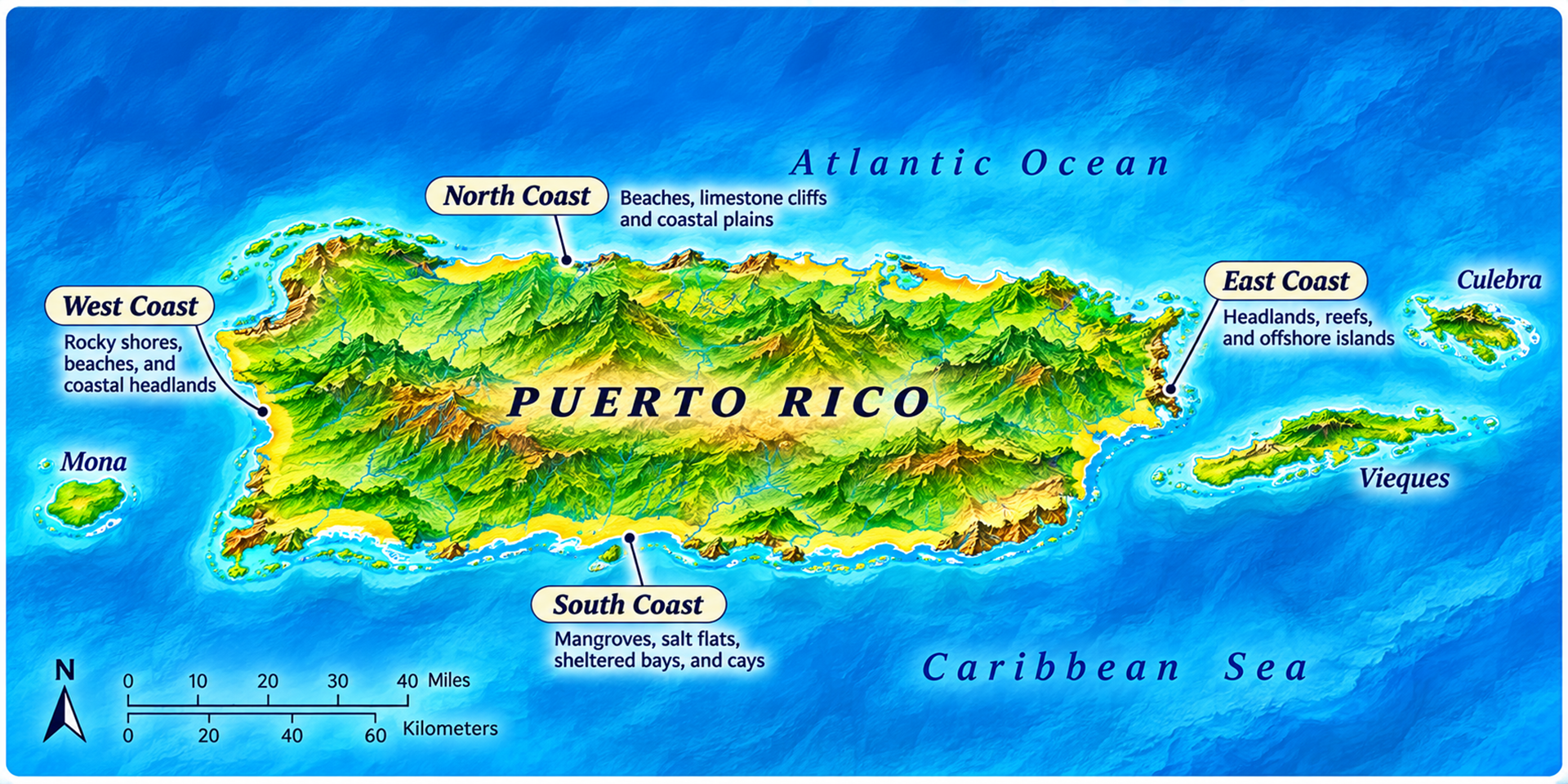
Coastal Plains
The coastal lowlands extend about 13 to 19 km (8 to 12 mi) inland along the northern coast and 3 to 13 km (2 to 8 mi) along the southern coast. A series of smaller valleys lie perpendicular near the west and east coasts. This region was originally formed by the erosion of the island's interior mountains.
Coastal Features
- North Coast: Atlantic-facing beaches and karst limestone formations
- South Coast: Drier Caribbean-facing coast with mangroves
- East Coast: Palm-lined beaches and El Yunque rainforest
- West Coast: Rugged cliffs and coastal valleys
Coastal Landscapes
Puerto Rico's coastline is far more diverse than many visitors expect. Beyond its beaches, the island is home to mangrove forests, rocky cliffs, coral reefs, sand dunes, salt flats, estuaries, and protected lagoons. These coastal environments help protect the shoreline from storms, support marine life, and create many of the scenic landscapes that define Puerto Rico's coast.
Mangrove Forests
Mangrove forests grow where land meets the sea, forming dense networks of salt-tolerant trees that protect the coastline from erosion and storm surge. Their tangled roots provide nurseries for fish, crabs, shrimp, and countless bird species.
Where to experience them:
- Piñones State Forest
- Boquerón Wildlife Refuge
- Humacao Nature Reserve
- Jobos Bay National Estuarine Research Reserve
Salt Flats
Puerto Rico's salt flats are shallow coastal basins where seawater naturally evaporates, leaving behind mineral-rich salt deposits. For centuries, these areas played an important role in the island's economy and continue to attract photographers, birdwatchers, and nature enthusiasts.
Best known location: Cabo Rojo Salt Flats (Las Salinas de Cabo Rojo)
Coral Reefs
Surrounding much of Puerto Rico are vibrant coral reef ecosystems that shelter hundreds of marine species while helping reduce wave energy before it reaches the shore. These reefs create ideal conditions for snorkeling, diving, and marine conservation.
Popular reef destinations: Culebra, Vieques, La Parguera, Fajardo, and Mona Island.
Beaches
Puerto Rico's beaches vary dramatically from one coast to another. The Atlantic shoreline features stronger waves favored by surfers, while the Caribbean coast is known for calm turquoise waters ideal for swimming. Visitors can also discover black-sand beaches formed by volcanic minerals, brilliant white-sand beaches created from coral and shells, and even the rare red-sand beach on Vieques.
Because of this diversity, no two beach experiences on the island are exactly alike.
Why Puerto Rico Has So Many Different Beaches
One of the biggest surprises for first-time visitors is that Puerto Rico doesn't have just one type of beach. The island's geography, exposure to both the Atlantic Ocean and Caribbean Sea, coral reefs, offshore cays, and diverse coastal ecosystems have created an incredible variety of shorelines. Whether you're looking for powerful surf, calm turquoise waters, secluded coves, or mangrove-lined lagoons, you'll find a beach to match your style.
Atlantic Coast
The beaches along Puerto Rico's north coast face the Atlantic Ocean, where stronger waves and seasonal swells create ideal conditions for surfing, bodyboarding, and dramatic coastal scenery. These beaches tend to have golden sand, limestone cliffs, sea caves, and more active surf.
Best examples: Isabela, Aguadilla, Arecibo, Camuy, and Manatí.
Caribbean Beaches
Along the south and southwest coast, the Caribbean Sea is generally calmer and more protected. The water is often clearer, making these beaches excellent for swimming, snorkeling, paddleboarding, and relaxing with the family.
Best examples: Cabo Rojo, Guánica, Lajas, and Ponce.
White Sand Beaches
Most of Puerto Rico's famous beaches feature brilliant white or cream-colored sand created from crushed coral, shells, and marine organisms over thousands of years.
Best examples: Flamenco Beach, Playa Caracas, Playa Escondida, Playa Buyé, and Seven Seas Beach.
Golden Sand Beaches
Many beaches along the north coast feature soft golden sand formed primarily from quartz and limestone sediments carried by rivers into the Atlantic.
Best examples: Ocean Park, Isla Verde, Luquillo Beach, and Balneario de Dorado.
Black Sand Beaches
Puerto Rico's volcanic history created a handful of black sand beaches where dark volcanic minerals mixed with coastal sediments.
Best examples: Playa Negra (Vieques)
Unlike Hawaii or Iceland, Puerto Rico has only a few black sand beaches, making them especially unique.
Red Sand Beaches
One of Puerto Rico's rarest coastal features is Playa Roja near the Cabo Rojo National Wildlife Refuge.
The beach gets its distinctive reddish hue from tiny particles of iron-rich sediment eroded from the surrounding limestone cliffs and mixed with the sand. The nearby pink salt flats further contribute to the area's striking landscape.
Offshore Islands & Cays
Puerto Rico's nearby islands and cays offer some of the Caribbean's most spectacular beaches. Their shallow reefs protect crystal-clear waters, creating postcard-perfect settings with powdery white sand and exceptional snorkeling.
Best examples: Culebra, Vieques, Icacos, Palomino, and Cayo Aurora (Gilligan's Island).
Mangroves & Lagoons
Not every shoreline is defined by sand. Puerto Rico's mangrove forests, estuaries, and coastal lagoons are vital ecosystems that protect the coastline, support wildlife, and provide peaceful places for kayaking, birdwatching, and nature photography.
Best examples: Piñones, La Parguera, Torrecilla Lagoon, Boquerón, Las Cabezas de San Juan, and Jobos Bay.
Every Beach Has Its Own Personality
Some beaches are known for world-class surfing, while others are perfect for families with young children. You'll also find black volcanic sand, secluded coves, long stretches of golden sand, natural pools, and beaches where sea turtles nest each year. Exploring different regions of Puerto Rico means discovering an entirely different coastal experience every time.
Estuaries
Estuaries are places where rivers meet the ocean, creating nutrient-rich environments that support fish, birds, mangroves, and countless other species. These transitional ecosystems act as natural filters, improve water quality, and provide important breeding grounds for marine life.
Notable estuaries include: San Juan Bay Estuary, Jobos Bay, and Río Espíritu Santo Estuary.
Sea Cliffs
Along portions of Puerto Rico's coastline, waves have carved dramatic limestone and volcanic cliffs that rise directly above the ocean. These rugged landscapes provide breathtaking viewpoints, nesting sites for seabirds, and some of the island's most photographed scenery.
Famous cliff landscapes:
- Cabo Rojo National Wildlife Refuge
- Cueva Ventana area (overlooking the Río Grande de Arecibo valley)
- Survival Beach near Aguadilla
- Guajataca Cliffs (Isabela–Quebradillas)
A Landscape That Never Stops Changing
One of the things I've come to appreciate most after living away from Puerto Rico is how quickly the coastline changes as you travel around the island. In a single day, you can walk through a quiet mangrove forest, snorkel above a coral reef, photograph the pink salt flats of Cabo Rojo, relax on a white-sand Caribbean beach, and finish by watching waves crash against towering sea cliffs on the Atlantic coast. That incredible diversity is one of the reasons Puerto Rico's coastline remains one of its greatest natural treasures—and why no two coastal towns feel exactly the same.
Frequently Asked Questions About Puerto Rico's Coastal Geography
What types of coastal landscapes are found in Puerto Rico?
Puerto Rico has a diverse coastline featuring sandy beaches, rocky cliffs, mangrove forests, coral reefs, coastal lagoons, estuaries, salt flats, and offshore islands and cays. These landscapes vary considerably between the Atlantic and Caribbean coasts.
How are Puerto Rico's Atlantic and Caribbean coasts different?
Puerto Rico's northern coast faces the Atlantic Ocean and is generally more exposed to powerful waves and seasonal swells. The southern coast faces the Caribbean Sea, where many sheltered bays and beaches experience calmer conditions. However, wave conditions vary by location, season, and weather.
Why does Puerto Rico have different colors of beach sand?
The color of beach sand depends on its mineral composition and the materials deposited by waves, rivers, and marine organisms. Puerto Rico has white and cream-colored beaches rich in shell and coral fragments, golden beaches containing mineral sediments, and darker beaches where heavy minerals accumulate.
Where can you find mangrove forests in Puerto Rico?
Mangrove forests grow along protected shorelines, lagoons, and coastal wetlands. Notable locations include Piñones, Boquerón, Humacao Nature Reserve, and Jobos Bay. These ecosystems help protect coastlines from erosion and provide important habitats for fish, birds, and other wildlife.
Where are Puerto Rico's salt flats located?
Puerto Rico's best-known salt flats are Las Salinas de Cabo Rojo, in the southwestern part of the island. These shallow coastal basins are known for their colorful landscapes, salt-producing history, and importance as habitat for migratory birds.
Why are coral reefs important to Puerto Rico's coastline?
Coral reefs help reduce wave energy, support marine biodiversity, and provide habitat for fish and other marine organisms. They also contribute to Puerto Rico's snorkeling and diving opportunities, particularly around Culebra, Vieques, La Parguera, Fajardo, and Mona Island.
Did You Know?
Puerto Rico has half the per capita income of America's poorest state, Mississippi.
Get Our Newsletter
Discover new places, local flavors, upcoming events, cultural stories, and some of our favorite finds from around the island.Read the Latest ¡La Isla! Newsletter
Follow Along


