
Cataño, Puerto Rico
(kah-TAH-no)
Set along the southern shore of San Juan Bay, Cataño is a compact waterfront municipality where maritime history, working-class neighborhoods, local restaurants, and one of the world's most famous rum distilleries meet. Known as "La Antesala de la Capital" (prelude of the capital), Cataño sits directly across the bay from Old San Juan and is connected to the historic city by a short ferry ride.
Most visitors arrive to tour Casa BACARDÍ, but Cataño deserves more than a quick stop. Its waterfront offers memorable views of Old San Juan, while its neighborhoods tell a more personal story of families who built their lives around the bay, the docks, nearby factories, fishing, and local commerce.
Overview
Why Visit Cataño?
Cataño offers one of the easiest and most interesting escapes from Old San Juan. Visitors can cross the bay by ferry, walk along the waterfront, enjoy Puerto Rican food with views of the capital, and tour the world's largest premium rum distillery—all within a relatively small area.
Beyond its best-known attractions, Cataño presents a less polished but deeply authentic side of the metropolitan area. It is a place shaped by water, industry, migration, and close-knit neighborhoods. The contrast between the Old San Juan skyline across the bay and Cataño's working waterfront gives the municipality a character unlike anywhere else in Puerto Rico.
Why Cataño Is Special to Me
My connection to Cataño is personal. This is where my mother was raised and where my parents first met. I also remember visiting my grandfather at his old wooden house. To me as a child, it almost felt like a small hut, with simple wooden planks beneath our feet instead of finished floors. Looking back, I understand that the house represented a very different Puerto Rico—one built through sacrifice, modest means, and strong family ties.
Whenever I think about Cataño, I do not see only the ferry, the waterfront, or the Bacardí distillery. I remember my grandfather's home and the community where part of my family's story began. Those memories remind me that the history of a municipality is not found only in monuments and official records; it also lives inside ordinary homes and the families who passed through them.
Top Things to Do in Cataño
Casa BACARDÍ
Known as the ""Cathedral of Rum"," Casa BACARDÍ is the world's largest premium rum distillery, processing some 100,000 gallons daily and ships 21 million cases per year worldwide. The distillery complex opened in Cataño in 1956, and today, the plan produces around 85% of Bacardi's total rum production (others distilleries located in Mexico and India).
It is Cataño's most internationally recognized attraction. Visitors can explore the history of the Bacardí family, learn about rum production, participate in tastings or mixology experiences, and enjoy views of Old San Juan from across the bay. Located on Carr. 165 Km. 6.2.
Cataño Ferry
The Lancha de Cataño provides a scenic connection between the Cataño waterfront and Old San Juan. The brief journey across San Juan Bay offers striking views of the fortified city, harbor, cruise ships, and surrounding metropolitan landscape. More than transportation, the ferry is part of Cataño's identity and its long relationship with the capital. The ferry operates 7 days a week: Monday-Friday 6 am to 7 pm; Saturday, Sunday and Holidays 8 am to 8 pm.
Malecón de Cataño
The Cataño waterfront promenade is one of the municipality's most enjoyable public spaces. Visitors can walk along the bay, watch ferries cross toward San Juan, photograph the historic skyline, and stop at nearby restaurants and bars. The area becomes especially lively during festivals, weekends, and sunset hours.
Parque Recreativo La Esperanza
Located near the waterfront, Parque Recreativo La Esperanza provides open spaces for walking, recreation, family outings, and community activities. Its views across the bay and proximity to the ferry district make it a pleasant addition to a day in Cataño.
Plaza Pública de Cataño
Cataño's traditional town plaza serves as a civic and community gathering place surrounded by municipal buildings, shops, and neighborhood activity. Festivals, cultural programs, and holiday celebrations bring residents together throughout the year.
Iglesia Nuestra Señora del Carmen
Dedicated to Cataño's patron saint, Nuestra Señora del Carmen, the parish church remains an important center of religious and community life. The municipality's patron saint festivities are held in her honor and reflect Cataño's strong maritime and Catholic traditions.
Ciénaga de las Cucharillas Natural Reserve
Shared with neighboring municipalities, the Ciénaga de las Cucharillas protects one of the metropolitan region's important wetland environments. The reserve supports birds, aquatic species, mangroves, and flood-control functions within a heavily urbanized landscape. Access and visitor conditions should be confirmed before visiting.
San Juan Bay Viewpoints
Cataño provides some of the most distinctive views of Old San Juan from outside the historic city. From the waterfront, visitors can see portions of the fortified district, harbor traffic, and the entrance to San Juan Bay—a perspective many travelers never experience.
Plan your Visit
Cataño works well as a half-day excursion from Old San Juan or as part of a broader exploration of Puerto Rico's metropolitan area. The ferry, waterfront restaurants, and Casa BACARDÍ can be combined into an easy itinerary, although transportation is helpful for reaching attractions away from the town center.
Getting There
By Air
Luis Muñoz Marín International Airport (SJU) is the closest major airport. Driving time generally ranges from approximately 20 to 35 minutes, depending heavily on metropolitan traffic.
By Sea
The passenger ferry connects Cataño with Old San Juan across San Juan Bay. It is one of the most scenic ways to arrive, placing visitors near the waterfront promenade and local dining. Ferry schedules and operating conditions should be checked before departure because service may change.
By Car
Cataño can be reached through PR-165 and surrounding metropolitan highways from Bayamón, Guaynabo, Toa Baja, and San Juan. Traffic is often heavier during weekday commuting hours.
Getting Around
Rental Car
A car is useful for reaching Casa BACARDÍ, the natural reserve, and neighboring municipalities. Parking can be more limited near the waterfront during festivals and busy weekends.
Public Transportation and Taxis
The ferry is the most useful public transportation option for visitors arriving from Old San Juan. Taxis and ride-sharing services are generally more practical for reaching Casa BACARDÍ and destinations beyond the waterfront.
Walking
The ferry terminal, waterfront, restaurants, and central community areas can be explored on foot. Sidewalk conditions may vary outside the principal visitor areas.
Nature & Resources
Geography
Cataño lies on Puerto Rico's northern coastal plain along the southern edge of San Juan Bay, within the Metropolitan Area. It is bordered by Toa Baja to the west, Bayamón and Guaynabo to the south and east, and the bay to the north. With an area of roughly five square miles, it is Puerto Rico's smallest municipality by land area.
Its landscape is predominantly low-lying, flat, and urbanized. Wetlands, tidal areas, mangroves, canals, and sections of the bay remain important natural features despite decades of residential, industrial, and port development. Because much of Cataño sits close to sea level, flooding and coastal resilience are continuing concerns. The city is bathed by Bayamón, Hondo and El Caño de Cataño rivers.
Neighborhoods & Barrios
Cataño is made up of 8 barrios (PDF) (wards/districts):
- Babote
- Cucharillas
- Juana Matos
- Palmas,
- Pueblo
- Puente Blanco
- Puntilla
- William Fuentes
These communities reflect Cataño's dense urban character and its history of development along the waterfront, industrial corridors, and wetlands.
Climate
Cataño has a tropical coastal climate characterized by warm temperatures, high humidity, and maritime breezes throughout the year. Average daytime temperatures commonly range from the low 80s°F during the cooler months to around 90°F during summer.
Rainfall occurs throughout the year, with wetter conditions generally extending from May through November. Cataño annual precipitation is 67.6 inches. The driest month is March, most of the precipitation here falls in August. August is the warmest month of the year. February is the coldest month. Its low elevation and proximity to San Juan Bay can make parts of the municipality vulnerable to heavy rainfall, poor drainage, storm surge, and coastal flooding.
Local Tip
The waterfront is most comfortable during the morning or near sunset, when the bay breeze helps soften the heat. Afternoon sun can feel intense because shade is limited along parts of the promenade.
10 Day Forecast from weather.com
Where to Stay
Cataño has a limited number of traditional hotels. Most visitors stay in nearby Old San Juan, Bayamón, Condado, or Isla Verde and visit Cataño by ferry or car.
Hotels in Old San Juan
- Sheraton Old San Juan Hotel
- Palacio Provincial
- Hotel Rumbao, a Tribute Portfolio Hotel
Staying in Old San Juan allows visitors to travel to Cataño by ferry while remaining close to historic landmarks and restaurants.
Local Flavors & Festivities
Where to Eat
- Don Tello
- La Garita Waterfront Bar & Restaurant
- Casa Cataño Food & Rum Therapy
- Container Bay
- Casilda Cocina Creativa
- Palmas Station
- Fogón de Goya
- El Punto Vegano
- Henry's Pizza
Festivals and Events
Displaying 13 results.
-
Carnaval de Catano
- April
Annual waterfront carnival featuring colorful parades, vejigantes, live music, artisan vendors, traditional Puerto Rican food, carnival rides, and family entertainment.
-
Celebracion del Daa de las Madres
- May
Municipal celebration honoring mothers with live entertainment, music, food vendors, and community activities.
-
Celebracion del Dia de los Padres
- June
Community Father's Day celebration with music, entertainment, food vendors, and family activities.
-
Cruce a Nado
- July
Popular open-water swimming competition across San Juan Bay attracting amateur and competitive swimmers from throughout Puerto Rico.
-
Encendido de Navidad
- November
Official kickoff to the Christmas season featuring the lighting of the municipal Christmas decorations, parrandas, music, and holiday entertainment.
-
Encuentro de Pescadores
- July
Celebration of Catano's fishing heritage featuring fresh seafood, local fishermen, traditional cuisine, live music, and waterfront festivities.
-
Feria de las Americas
- October
Cultural festival celebrating the traditions of Puerto Rico and the Americas through music, dance, artisan exhibits, food, and educational displays.
-
Festival de la Tiza
- August
Sidewalk chalk art festival where artists transform streets and plazas into colorful outdoor galleries with family activities and live entertainment.
-
Fiestas Patronales de Nuestra Señora del Carmen
- July
Every July Cataño honors Nuestra Señora del Carmen with concerts, carnival rides, artisan kiosks, religious processions, parades, traditional foods, and family entertainment along the waterfront.(787) 788-0404
-
Maraton Domingo Apellaniz
- September
Annual road race honoring local sports promoter Domingo Apellaniz and attracting runners from across Puerto Rico.
-
Noche de San Juan
- June
Waterfront celebration of Saint John's Eve featuring music, food kiosks, and the traditional midnight jump into San Juan Bay for good luck.
-
Palo Encebao
- July
Traditional Puerto Rican festival competition where participants attempt to climb a greased pole for prizes as part of the patron saint festivities.
-
Retreta Bohemia
- Year-round
Monthly evening concert series in Plaza de Recreo featuring local musicians, traditional Puerto Rican music, dancing, and community gatherings. Held the second Friday of every month.
History
Cataño's history is closely tied to San Juan Bay and the development of Puerto Rico's capital region. The area takes its name from Hernando de Cataño, an early Spanish settler associated with land near the bay during the first years of colonization. The district became known as Hato de las Palmas de Cataño, referencing the palm-covered landscape that would later appear symbolically in the municipal coat of arms.
For centuries, the area functioned as part of neighboring municipalities while developing through fishing, small-scale agriculture, ferry transportation, port activity, and industries connected to San Juan Bay. Cataño became an independent municipality in 1927. Its twentieth-century growth was shaped by industrialization, dense residential development, the expansion of metropolitan San Juan, and the arrival of major employers such as Bacardí.
Cataño's history also includes communities that developed in difficult environmental and economic conditions. Some families lived in wooden homes constructed near tidal flats and muddy streets, reflecting both poverty and the determination of residents who created neighborhoods with limited resources. This working-class history is an essential part of understanding the municipality and should not be erased by its modern waterfront attractions.
Moments in History
Hernando de Cataño becomes associated with land along San Juan Bay, giving the area its eventual name.
The district develops around fishing, livestock, palm-covered lands, ferry crossings, and access to the capital.
Waterfront settlements and industrial activity expand as the metropolitan region grows.
Cataño is officially established as an independent municipality by Hernando de Cataño. Cataño was named after its founder, who lived and helped to develop the region at the beginning of the Spanish colonization. Originally, the town was known as the "Hato de las Palmas de Cataño" (cluster of the palms), but shortened to Cataño when the city was established.
Industrialization, port activity, and residential growth transform the municipality.
Bacardí opens its major distillery complex in Cataño, later known as the world's largest premium rum distillery.
Waterfront redevelopment and transportation projects strengthen Cataño's relationship with Old San Juan.
Cataño remains a center of rum production, transportation, local commerce, waterfront dining, and metropolitan community life.
Notable People
Despite its small geographic size, Cataño has been home to musicians, athletes, public figures, artisans, and community leaders whose contributions have reached beyond the municipality. These notable catañeses reflect the town's working-class character, cultural traditions, and strong connection to Puerto Rican popular life.
Famous Catañeses
Despite its small geographic size, Cataño has been home to influential writers, public officials, and civic leaders whose contributions have reached far beyond the municipality. These distinguished catañeses reflect the community's strong traditions of public service, education, literature, and social awareness.
Ileana Colón Carlo
1949–2018
Accounting • Law • Public Service
Ileana Colón Carlo was a certified public accountant, attorney, and respected public official who became the first woman to serve as Comptroller of Puerto Rico. She held the position from 1987 to 1997 and was also the first woman to preside over the Puerto Rico Society of Certified Public Accountants, establishing a distinguished legacy in financial oversight and public accountability.
Pedro Juan Soto
1928–2002
Literature • Journalism • Education
Pedro Juan Soto was an acclaimed novelist, short-story writer, playwright, journalist, and professor associated with Puerto Rico's influential Generation of the 1950s. Born in Cataño, he explored migration, colonialism, poverty, racism, and the Puerto Rican experience in works such as Spiks and Usmaíl, becoming one of the island's most important modern literary voices.
City Symbols
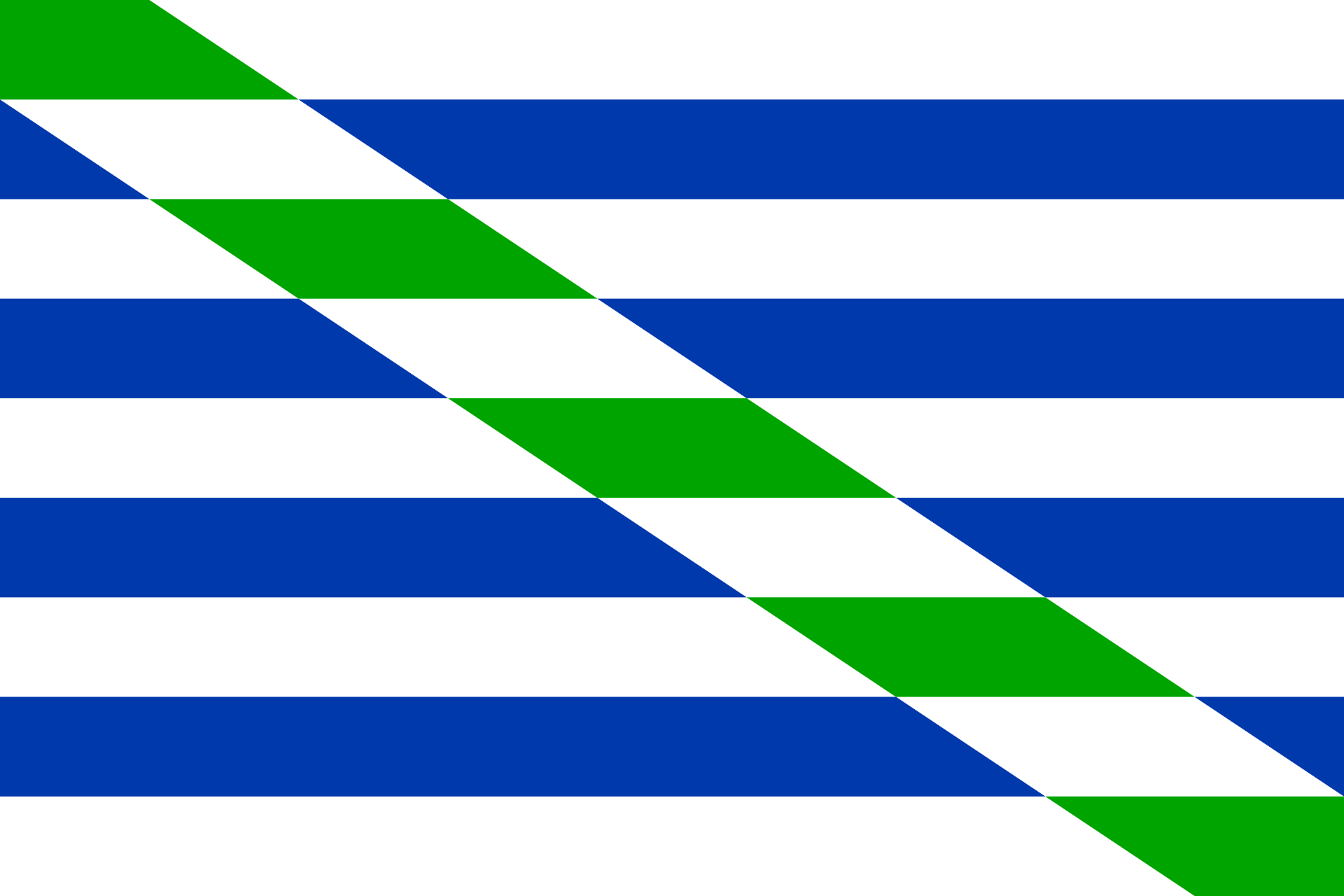
Cataño's official symbols reflect the family name from which the municipality originated, the palm-covered landscape remembered in its early name, and its identity as an independent town along San Juan Bay.
Flag
The flag contains nine horizontal stripes—five white and four blue—crossed diagonally by a white-and-green band. The blue and white colors are derived from the heraldic arms associated with the family of Hernando de Cataño. White symbolizes nobility, while blue represents serenity and the heraldic traditions of Spanish noble families. Green recalls the palm trees associated with the early name Hato de las Palmas de Cataño. The flag was officially adopted in 1974.
Coat of Arms
The coat of arms also contains alternating blue and silver horizontal bands derived from the heraldic tradition associated with Hernando de Cataño. Two green palm trees surround the shield, recalling the palms that once characterized the area. Above the shield appears a three-towered mural crown, identifying Cataño as an incorporated municipality.
Anthem
The municipal anthem is titled "Cataño." Your existing page credits its creation to Carmen I. Guzmán and Nick Jiménez Olmeda. The anthem celebrates the municipality's waterfront identity, history, community pride, and close relationship with San Juan Bay.
Human & Capital Resources
Economy
Cataño's economy has long depended on its strategic location within San Juan Bay. Manufacturing, warehousing, transportation, port-related activity, construction, retail, food service, and public-sector employment all contribute to the local economy.
The Bacardí distillery remains one of the municipality's most visible industrial and tourism anchors. The ferry terminal and waterfront restaurants also support visitor activity, while Cataño's proximity to Bayamón, Guaynabo, and San Juan allows many residents to work throughout the metropolitan area.
Historically, economic development brought employment but also placed industrial activity close to residential neighborhoods and environmentally sensitive wetlands. Cataño's future depends partly on balancing industry and commerce with waterfront improvement, flood protection, environmental restoration, and better opportunities for local businesses.
Education
Cataño is served by public elementary, middle, and secondary schools administered by the Puerto Rico Department of Education, along with community and vocational programs.
Because the municipality is part of the larger San Juan metropolitan area, residents also have access to universities, technical institutions, and professional training programs in nearby Bayamón, Guaynabo, and San Juan. Improving educational opportunity remains especially important in a municipality shaped by working-class families and economic transitions.
Demographics *
Population
23,155
Land Area: 4.84 sq mi
Density: 4,904 per sq mi
Median Age: 40.7
Sex: 53% female
Economics **
$12,918
Median household income: $18,647
Puerto Rico: $21,058
Persons below poverty line: 46.8%
Housing, families and educational attainment *
Number of households
8,773
Housing units density:
2,314.7 (2013)
Persons per household: 2.7
High school grad or higher: 75.7%
Marital status: 34% married
* U.S. Census Bureau 2020 data, unless otherwise noted - Source: Quick Facts Puerto Rico.
** U.S. Census Bureau 2016-2020
Map References
Coordinates: 18.4450° N, 66.1178° W
ZIP Code: 00962, 00963
Driving Distance from San Juan: 13.6 miles
Driving Time: 25 minutes
Other Resources
Frequently Asked Questions
What is Cataño known for?
Cataño is best known for Casa BACARDÍ, its ferry connection to Old San Juan, waterfront restaurants, and views across San Juan Bay. It is also Puerto Rico's smallest municipality by land area.
Why is Cataño called La Antesala de la Capital?
Cataño is known as "La Antesala de la Capital," or "The Foyer of the Capital," because it sits directly across San Juan Bay from Puerto Rico's capital and has long served as an entry point to Old San Juan.
Is Cataño worth visiting?
Yes. Cataño offers Casa BACARDÍ, a scenic ferry ride, waterfront dining, views of Old San Juan, local history, and a more authentic look at everyday life within the metropolitan area.
What are the top attractions in Cataño?
Popular attractions include Casa BACARDÍ, the Cataño ferry, the waterfront promenade, Parque Recreativo La Esperanza, the town plaza, Nuestra Señora del Carmen Parish, and the Ciénaga de las Cucharillas Natural Reserve.
How do you get from Old San Juan to Cataño?
The most scenic option is the passenger ferry across San Juan Bay. Visitors may also reach Cataño by taxi, ride-sharing service, or car through the metropolitan highway network.
How long is the ferry ride to Cataño?
The crossing itself is brief—typically only a few minutes—but total travel time depends on boarding, schedules, weather, and current operating conditions. Discover Puerto Rico describes it as approximately a five-minute trip.
Can you walk from the Cataño ferry to Casa BACARDÍ?
Casa BACARDÍ is not directly beside the passenger terminal. Visitors should plan to use a taxi, ride-sharing service, shuttle when available, or another form of transportation from the waterfront.
Where can you eat in Cataño?
The waterfront includes several popular restaurants, including Don Tello, La Garita, Casa Cataño, Container Bay, and Casilda Cocina Creativa. Many offer Puerto Rican cuisine, seafood, cocktails, and views of Old San Juan.
Does Cataño have beaches?
Cataño is a waterfront municipality, but it is not primarily a beach destination. Its shoreline is dominated by San Juan Bay, wetlands, port facilities, promenades, and urban development rather than traditional swimming beaches.
Can Cataño be visited as a day trip?
Absolutely. Cataño is one of the easiest excursions from Old San Juan. Visitors can cross by ferry, explore the waterfront, have lunch, and continue to Casa BACARDÍ before returning to San Juan.
Did You Know?
In 1906, Theodore Roosevelt, the first US President to travel outside the United States, made a stop in Puerto Rico (thus, becoming the first president to visit the island) and that he stayed overnight in Ponce.
Get Our Newsletter
Discover new places, local flavors, upcoming events, cultural stories, and some of our favorite finds from around the island.Read the Latest ¡La Isla! Newsletter
Follow Along


