
Guaynabo, Puerto Rico
(gwei-NAH-bo)
Located in the heart of Puerto Rico's metropolitan area, Guaynabo seamlessly blends centuries of history with modern conveniences. Founded in 1769, the municipality traces its roots to Caparra, the island's first Spanish settlement established in 1508 by Juan Ponce de León. Today, Guaynabo is known for its excellent restaurants, upscale shopping, beautiful parks, thriving business districts, and archaeological treasures that tell the story of Puerto Rico's earliest colonial history.
Just minutes from Old San Juan, Condado, and Luis Muñoz Marín International Airport, Guaynabo is an ideal destination for travelers looking to experience Puerto Rico beyond the typical tourist attractions. Whether you're exploring the Ruins of Caparra, enjoying local cuisine, shopping at San Patricio Plaza, or relaxing in one of the city's many parks, Guaynabo offers a unique blend of history, culture, and urban sophistication.
Guaynabo is known as "Capital del Deporte" (capital of the sport). Guaynabo derives its name from a Taino Indian term which means "lugar de aguas dulces".
Overview
Why Visit Guaynabo?
Guaynabo offers a different perspective on Puerto Rico. Instead of beaches and resorts, visitors will discover one of the island's most vibrant urban communities, where history, culture, gastronomy, shopping, and outdoor recreation come together. The municipality is home to Puerto Rico's first Spanish settlement, beautiful parks, family-friendly attractions, and some of the best restaurants in the San Juan metropolitan area. Its central location also makes it an excellent base for exploring nearby San Juan, Bayamón, Cataño, and the island's northern coast while enjoying a quieter atmosphere at the end of the day.Top Things to Do in Guaynabo
Caparra Ruins Historic Site
The Ruins of Caparra preserve the remains of Puerto Rico's first Spanish settlement, founded in 1508 by Juan Ponce de León. Visitors can explore archaeological remains, museum exhibits, and learn about the island's earliest colonial history.
Museo y Parque Histórico Ruinas de Caparra
Adjacent to the archaeological site, the museum showcases artifacts recovered from Caparra and tells the story of Puerto Rico's first European settlement.
San Patricio Plaza
One of Puerto Rico's premier shopping centers, San Patricio Plaza features major retailers, local boutiques, restaurants, cafés, and entertainment options.
Parque Forestal La Marquesa
Nature lovers can enjoy hiking trails, scenic overlooks, a small zoo, aviary, butterfly garden, and family-friendly outdoor activities in one of the metropolitan area's largest parks.
Parque Monagas
A favorite gathering place for residents, Parque Monagas offers walking trails, sports facilities, picnic areas, and playgrounds.
Museo del Deporte de Puerto Rico
Sports enthusiasts can explore exhibits honoring Puerto Rico's greatest athletes and the island's rich sporting history.
Plan your Visit
Located immediately west of San Juan, Guaynabo is one of the easiest Puerto Rican municipalities to include in a metropolitan-area itinerary.
Getting There
By Air
Luis Muñoz Marín International Airport (SJU) is the principal airport serving the area. Driving time to Guaynabo is generally around 20 to 35 minutes, depending on the destination and metropolitan traffic.
By Car
Guaynabo is connected to San Juan, Bayamón, Cataño, and the rest of Puerto Rico through major roads including PR-2, PR-20, PR-22, PR-1, and PR-199.
Getting Around
Rental Car
A rental car is the most convenient option for combining Caparra, San Patricio, parks, restaurants, and Guaynabo's southern mountain communities.
Public Transportation
Guaynabo operates municipal transportation services, and parts of the city are also served by metropolitan bus routes.
Taxis & Rideshare
Taxis and rideshare may be available, but service can be limited compared with San Juan.
Walking
Individual areas such as Guaynabo Pueblo, San Patricio, and some shopping districts can be explored on foot, but Guaynabo as a whole is not a walkable destination.
Nature & Resources
Geography
Guaynabo covers approximately 27 square miles (70 km²) in Puerto Rico's northern coastal valley. The municipality borders San Juan, Bayamón, Cataño, Aguas Buenas, and Toa Baja. Although largely urban, Guaynabo also includes rolling hills, rivers, protected green spaces, and forested areas that provide a pleasant balance between city life and nature.
Neighborhoods & Barrios
Guaynabo is divided into 10 barrios (PDF) (wards or districts)
- Camarones
- Frailes
- Guaraguao
- Hato Nuevo
- Mamey
- Pueblo
- Pueblo Viejo
- Río
- Sonadora
- Santa Rosa
Climate
Guaynabo enjoys a tropical climate year-round, with warm temperatures averaging between 75°F and 89°F (24°C–32°C). The driest months generally occur from January through April, making winter and early spring ideal for sightseeing and outdoor activities.
10 Day Forecast from weather.com
Where to Stay
Business Hotels
- Hyatt Place San Juan (nearby)
- Aloft San Juan (nearby)
- Hotels near San Patricio
Perfect for business travelers and visitors looking for easy access to Guaynabo and the San Juan metropolitan area.
Local Flavors & Festivities
Where to Eat
- El Rancho Original
- La Cueva del Mar
- La Vergüenza Metro
- El Fogón de Abuela
- Bottles
- Il Nuovo Mercato
- Hacienda Don José
- Panadería Lemy Guaynabo
- Panadería Pepín
- Panadería Apolo
- Sweet Ann Cakes
- Pan Castiel
- Guaynabo Bakery
Festivals and Events
Displaying 8 results.
-
Carnaval Mabo
- February
One of Guaynabo's signature annual celebrations featuring colorful parades, costumes, live music, artisan vendors, carnival rides, and family-friendly activities.
-
Ciudad Encantada en Navidad
- November
Official Christmas lighting celebration featuring spectacular holiday decorations, live music, food kiosks, artisans, children's attractions, and seasonal entertainment.
-
Dia Nacional de la Salsa
- June
Celebration of Puerto Rico's salsa heritage featuring nationally recognized orchestras, dancing, food vendors, and cultural performances.
-
Feria de Artesanos de Guaynabo
- November
Annual artisan fair held during the Christmas festivities showcasing handcrafted goods, demonstrations, live music, and Puerto Rican culture.
-
Festival Bomba y Plena
- October
Long-running festival at Amelia Waterfront celebrating Afro-Puerto Rican bomba and plena traditions with live music, dance, food kiosks, and artisan vendors.
-
Fiesta de Reyes
- January
Traditional Three Kings celebration with music, children's activities, gifts, cultural performances, and family entertainment held throughout the municipality.
-
Fiestas Patronales San Pedro Martir
- April
Guaynabo's patron saint festival honoring San Pedro Martir with religious processions, artisan markets, carnival rides, live entertainment, traditional Puerto Rican food, and family activities centered around the historic downtown plaza.
-
Homenaje a las Madres
- May
Annual community celebration honoring mothers with live music, cultural performances, family activities, and special recognitions.
History
Founded in 1769, Guaynabo's history stretches back even further to 1508, when Juan Ponce de León established Caparra, the first Spanish settlement on the island. Although the settlement was later relocated to present-day Old San Juan, Caparra remains one of Puerto Rico's most significant archaeological and historical sites.
Moments in History
Indigenous communities lived in and traveled through the region long before Spanish colonization. The municipality's name is generally associated with an Indigenous term interpreted locally as "place of fresh waters." The exact linguistic origin is difficult to establish with certainty.
Juan Ponce de León established Caparra, also known as La Ciudad de Puerto Rico, in what is now Guaynabo. It became the first permanent Spanish settlement and the first colonial capital on Puerto Rico's main island.
Ponce de León constructed a stone residence at Caparra, where he lived with his family. Its foundations form the centerpiece of today's archaeological site.
Because Caparra's inland location made transportation and trade difficult, the Spanish relocated the capital to the nearby islet of San Juan, where it developed into today's Old San Juan.
Guaynabo was officially established as a municipality, growing over time from an agricultural community into one of the San Juan metropolitan area's principal residential and commercial centers.
Puerto Rican historian and archaeologist Adolfo de Hostos directed excavations that helped identify the foundations of Ponce de León's residence and other portions of Caparra.
A museum was established beside the archaeological remains to preserve artifacts and explain the history of the settlement and Puerto Rico's early colonial period.
The Caparra archaeological site was added to the National Register of Historic Places and later designated a National Historic Landmark because of its importance to the early European history of Puerto Rico and the United States.
Guaynabo evolved from a largely rural municipality into one of Puerto Rico's principal residential, commercial, media, and business centers while retaining historic sites and green spaces.
City Symbols
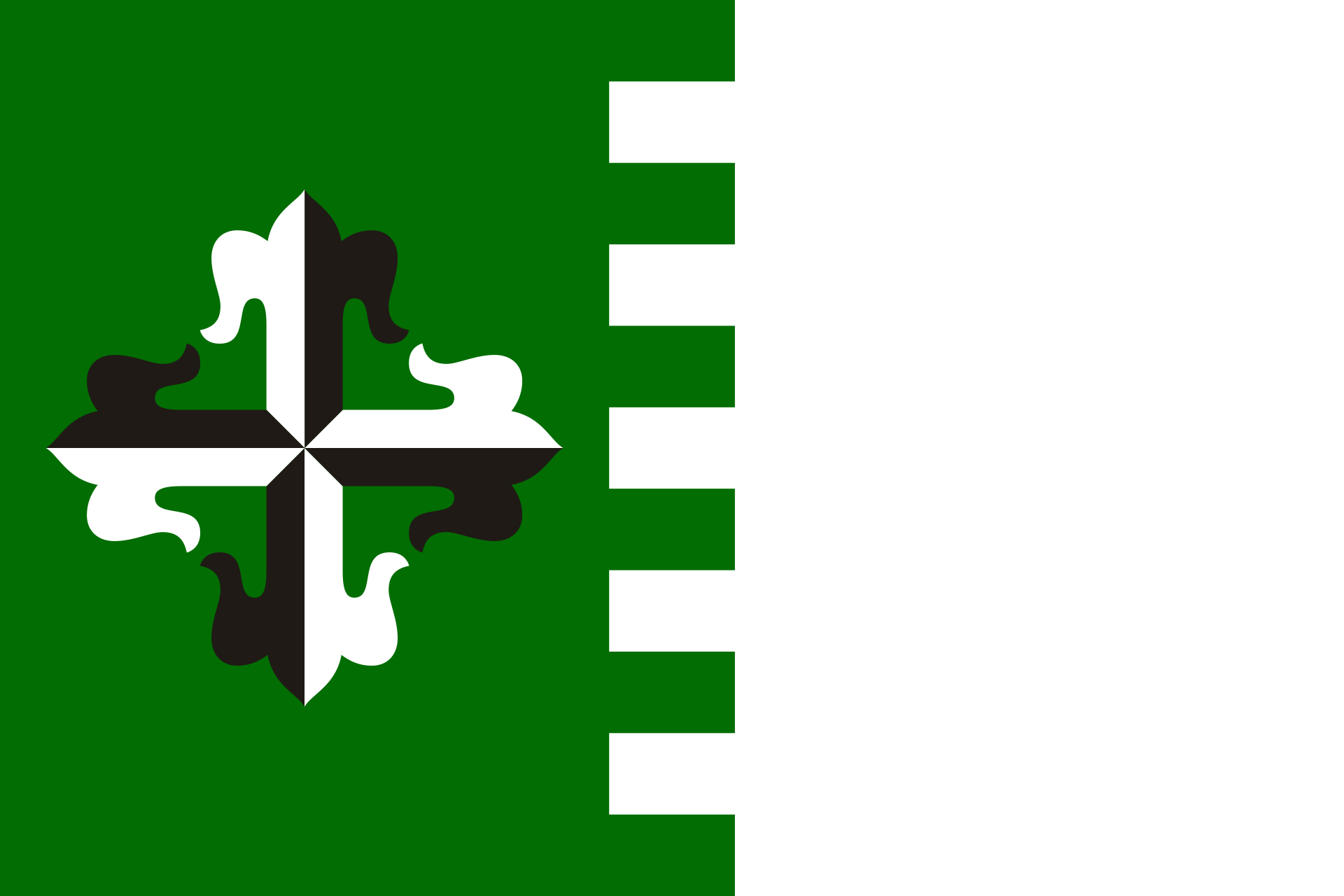
Flag
Guaynabo's flag has a white field with a green cross resembling the emblem associated with the Dominican Order. At its center appears a small heraldic shield.
The green and white colors are among the municipality's oldest identifying colors. The cross honors San Pedro Mártir de Verona, while the central shield connects the flag to the municipality's historical coat of arms and the story of Caparra.
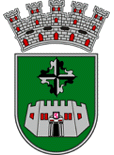
Coat of Arms
Guaynabo's coat of arms brings together symbols of religion, colonial history, and municipal identity.
The fleur-de-lis cross represents San Pedro Mártir de Verona and his connection to the Dominican Order. The fortified building recalls Caparra, Puerto Rico's first Spanish settlement and colonial capital. A smaller shield displaying a lion represents Juan Ponce de León, the first governor associated with Caparra. Green and silver reflect Guaynabo's traditional heraldic colors.
The crown above the shield identifies Guaynabo as a municipality and follows the heraldic tradition used by towns and cities throughout Puerto Rico.
Anthem
Guaynabo's municipal anthem expresses affection for the city, pride in its people, and respect for its historical legacy. It reinforces the close relationship between modern Guaynabo and Caparra, the early settlement that gave the municipality a distinctive place in Puerto Rican history.
Nickname
Capital del Deporte (Capital of Sports)
This nickname reflects Guaynabo's strong sporting culture, municipal athletic programs, recreation facilities, and history of supporting professional and amateur teams. Basketball, volleyball, baseball, track and field, and youth sports have all played an important role in the city's identity.
Patron Saint
San Pedro Mártir de Verona
Saint Peter Martyr of Verona, a Dominican friar and martyr, is Guaynabo's traditional patron saint. His connection to the municipality appears prominently in Guaynabo's heraldry through the Dominican-style cross shown on the flag and coat of arms.
The municipality traditionally celebrates its patron saint festivities in April with religious observances, music, food, community activities, and cultural entertainment.
Notable People
As one of Puerto Rico's most influential municipalities, Guaynabo has been home to political leaders, athletes, artists, entrepreneurs, and educators whose contributions have shaped the island's history, culture, and public life.
Famous Guaynabeños
Román Baldorioty de Castro
1822–1889
Education • Politics • Abolition
Román Baldorioty de Castro was an educator, writer, political leader, and prominent advocate for the abolition of slavery and greater political rights for Puerto Rico. Born in Guaynabo, he became one of the most influential Puerto Rican thinkers and public figures of the nineteenth century.
David Sánchez
Born 1968
Music • Jazz
Grammy-winning saxophonist and composer David Sánchez is internationally respected for blending modern jazz with Afro-Caribbean rhythms and Puerto Rican musical traditions. His recordings and performances have helped bring a distinctly Caribbean voice to contemporary jazz.
Iván De Jesús Jr.
Born 1987
Baseball
Born in Guaynabo, Iván De Jesús Jr. became a professional infielder and made his Major League Baseball debut in 2011. He continued a family baseball tradition as the son of former major-league shortstop Iván De Jesús Sr.
Tomás Nido
Born 1994
Baseball
Guaynabo-born catcher Tomás Nido reached Major League Baseball after being selected in the 2012 draft. Known for his defensive work behind the plate, he made his major-league debut with the New York Mets in 2017.
April Carrión
Born 1989
Visual Arts • Entertainment
Born in Guaynabo, April Carrión is a Puerto Rican drag performer, visual artist, and television personality. A graduate of Puerto Rico's School of Plastic Arts and Design, Carrión is known for imaginative fashion, performance, and creative work inspired by Puerto Rican culture.
Julio "Gunda" Merced
Born 1953
Music • Salsa
Julio "Gunda" Merced is a Guaynabo-born percussionist associated with Puerto Rico's salsa tradition. His work as a conga player and recording musician contributed to the rhythmic sound that helped define salsa during its most influential decades.
Human & Capital Resources
Economy
Guaynabo is one of Puerto Rico's leading economic centers. Its economy is driven by professional services, healthcare, finance, retail, technology, education, and corporate headquarters. Major shopping centers, office complexes, and commercial districts contribute to one of the island's strongest local economies, while restaurants, hotels, and entertainment venues make Guaynabo a destination for both residents and visitors.
Education
Guaynabo is home to an excellent network of public and private schools and is recognized as one of Puerto Rico's educational centers. The municipality also hosts campuses of several universities and higher education institutions, attracting students from across the metropolitan region.
Demographics *
Population
89,780
Land Area: 27.58 sq mi
Density: 3,233.50 per sq mi
Median Age: 47
Sex: 54% female
Economics **
$24,527
Median household income: $36,073
Puerto Rico: $21,058
Persons below poverty line: 25.3%
Housing, families and educational attainment *
Number of households
31,465
Housing units density:
1,523.3 (2013)
Persons per household: 2.69
High school grad or higher: 85.5%
Marital status: 40% married
* U.S. Census Bureau 2020 data, unless otherwise noted - Source: Quick Facts Puerto Rico.
** U.S. Census Bureau 2016-2020
Map References
Coordinates: 18.1144° N, 66.1681° W
ZIP Code: 00965, 00966, 00968, 00969, 00970, 00971
Driving Distance from San Juan: 15.8 miles
Driving Time: 27 minutes
Frequently Asked Questions
Is Guaynabo worth visiting?
Yes. Guaynabo is worth visiting for Caparra's archaeological ruins, parks, shopping, restaurants, sporting events, and its convenient location beside San Juan. It is particularly appealing to travelers interested in history or looking for experiences beyond Puerto Rico's beach districts.
What is Guaynabo best known for?
Guaynabo is best known for Caparra, Puerto Rico's first Spanish settlement, as well as its modern residential communities, restaurants, shopping centers, parks, business districts, and sports culture.
Where are the Caparra Ruins?
The Caparra Archaeological Site is located along PR-2 in Guaynabo's Pueblo Viejo barrio. The site includes archaeological foundations and a small museum devoted to Puerto Rico's conquest and colonization.
How far is Guaynabo from San Juan?
Guaynabo borders San Juan directly. Driving times commonly range from about 15 to 35 minutes, depending on the starting point, destination, traffic, and time of day.
Do I need a car in Guaynabo?
A car is strongly recommended for sightseeing because Guaynabo's attractions, parks, restaurants, and neighborhoods are spread across the municipality. Rideshare and municipal transportation may be useful in the more urban districts.
Are there hotels in Guaynabo?
Hotel choices within Guaynabo are limited. Vacation rentals are more common, while nearby San Juan offers a much larger selection of hotels, resorts, and boutique accommodations.
What is the best time to visit Guaynabo?
December through April generally brings comfortable conditions for historical sightseeing and outdoor activities. Guaynabo can be visited throughout the year, but summer tends to feel hotter and more humid.
Can I visit Guaynabo as a day trip from San Juan?
Yes. Guaynabo is one of the easiest day trips from San Juan because the municipalities share a border. Caparra, San Patricio, restaurants, parks, and shopping areas can be combined in a half-day or full-day itinerary.
Continue Exploring Puerto Rico
Explore Nearby Cataño
Cross to this compact waterfront municipality for views of San Juan Bay, local restaurants, and access to the Casa Bacardí visitor experience. Cataño sits immediately north of Guaynabo.
Experience Nearby San Juan
Explore Old San Juan's colorful colonial streets, centuries-old fortifications, museums, plazas, restaurants, and waterfront views. Guaynabo borders the capital, making San Juan a natural addition to any local itinerary.
Plan Your Puerto Rico Itinerary
Find suggested 1-, 3-, 5-, and 7-day itineraries to help build your trip.
Did You Know?
El Yunque, located in Luquillo, is the only tropical forest in the United States National Forest System.
Get Our Newsletter
Discover new places, local flavors, upcoming events, cultural stories, and some of our favorite finds from around the island.Read the Latest ¡La Isla! Newsletter
Follow Along


