
Añasco, Puerto Rico
(ah-NYAHS-ko)
Añasco is known as "La Ciudad Donde los Dioses Mueren" (the city where the gods die) and "El Pueblo Del Hojaldre", Añasco played an important role during the earliest years of Spanish colonization while today offering visitors beautiful beaches, excellent surfing, local seafood, and easy access to nearby Rincon, Mayaguez, and the Porta del Sol region.
Overview
Why Visit Añasco
Añasco offers visitors a little of everything that makes Puerto Rico's west coast special. Beautiful Atlantic beaches, excellent surfing, mountain scenery, rivers, local seafood, and rich colonial history all come together within a short drive. Because of its central location, Añasco also serves as an excellent base for exploring Rincon, Mayaguez, Aguada, and the rest of the Porta del Sol region.
Top Things to Do in Añasco
Tres Hermanos Beach
A wide beach popular with locals for swimming, beach walks, sunsets, and relaxing along Puerto Rico's west coast.
Balneario Tres Hermanos
A family-friendly public beach with picnic areas, calm waters during favorable conditions, and seasonal facilities.
Puente de Añasco
One of Puerto Rico's best-known historic bridges, connecting communities across the Rio Grande de Añasco while offering scenic river views.
Parroquia San Antonio Abad
Founded in 1728, the parish is one of the oldest churches in western Puerto Rico. The current church dates to 1801 and features beautiful stained-glass windows, historic bells preserved from earlier structures, and elegant Spanish Colonial architecture overlooking Añasco's central plaza.
Mirador de la Bahía
A scenic overlook providing panoramic views of Añasco Bay, nearby mountains, and spectacular west coast sunsets.
Rio Grande de Añasco
Puerto Rico's second-longest river offers fishing, kayaking opportunities, birdwatching, and beautiful riverside scenery.
Parque Nacional de Balneario Tres Hermanos
A popular recreational area combining beach access, open spaces, and family gathering areas.
Nearby Rincon
Only minutes away, Rincon's surfing beaches, restaurants, whale watching, and nightlife make an easy day trip.
Plan your Visit
Añasco is easy to reach from both Aguadilla and Mayaguez, making it one of the most convenient destinations on Puerto Rico's west coast.
Getting There
By Air
Rafael Hernandez Airport (BQN) in Aguadilla is about 35 minutes away, while Luis Muñoz Marín International Airport (SJU) is approximately 2½ hours by car.
By Sea
Although Añasco has no commercial passenger port, nearby marinas in Rincon and Mayaguez offer boating and recreational excursions.
By Car
Añasco is easily reached via PR-2, connecting it with Mayaguez, Aguada, Rincon, and other western municipalities.
Getting Around
Rental Car
The easiest way to explore beaches, rivers, mountain roads, and neighboring towns.
Taxis & Rideshare
Taxis and rideshare may be available, but service can be limited compared with San Juan.
Walking
Downtown Añasco is compact and walkable, with local bakeries, shops, restaurants, and the town plaza.
Nature & Resources
Geography
Añasco is located on Puerto Rico's west coast in the fertile Coastal Valley region, bordered by the Mona Passage to the west, Mayagüez to the south, Aguada to the north, Las Marias to the east, and Rincón to the southwest. The municipality covers approximately 39 square miles (102 km²), transitioning from coastal plains to rolling hills and the foothills of Puerto Rico's central mountains.
The municipality is crossed by the Rio Grande de Añasco, Puerto Rico's second-longest river, along with rivers such as Rio Cañas, Rio Yagüez, and numerous smaller streams that support agriculture and local ecosystems. The combination of rivers, fertile soils, and coastal access has shaped Añasco's economy and settlement patterns for centuries.
Añasco highest peaks include Canta Gallo (370 m), Gordo (340 m) and Pichón (340 m).
Neighborhoods & Barrios
Añasco is made up of 21 barrios (PDF) (wards/districts):
- Añasco
- Añasco Abajo
- Añasco Arriba
- Caguabo
- Casey Arriba
- Caracol
- Carreras
- Cerro Gordo
- Cidra
- Corcóvada
- Daguey
- Espino
- Hatillo
- Humatos
- Marías
- Ovejas
- Piñales
- Playa
- Pueblo
- Quebrada Larga
- Río Abajo
Climate
Añasco enjoys a warm tropical climate throughout the year, with average temperatures ranging from the upper 70s to mid-80s°F (25–30°C). The coastal location provides refreshing ocean breezes, while afternoon showers are common during the summer and early fall. The dry season generally runs from December through April, making it one of the most pleasant times to visit beaches and explore the surrounding countryside.
On average, the warmest month is August, and the coolest month is February. Añasco annual precipitation is 13.81 inches. September is the average wettest month.
ANASCO WEATHERWhere to Stay
- Hotel Villa del Castillo
- Roberto's Hidden Paradise
- Hacienda Almirante
- Beachfront condos
- Vacation homes
Local Flavors & Festivities
Where to Eat
- Restaurante Casa Linda
- El Tesoro de Julian
- El Coche
- Rafael Seafood
- Restaurante El Coche
- Panadería La Fe
- Panadería Añasco Bakery
Festivals and Events
Displaying 12 results.
-
Feria de Autos Antiguos
- January
Classic automobile exhibition featuring restored vintage vehicles, collectors, family entertainment, food kiosks, and live music in downtown Anasco.(787) 826-3100
-
Festival de Bellas Artes
- January
Annual fine arts festival featuring visual arts exhibits, local artists, cultural performances, workshops, and community activities celebrating the municipality's artistic heritage.(787) 826-3100
-
Festival de Reyes Ovejas y Corcovada
- January
Traditional Three Kings celebration held in the barrios of Ovejas and Corcovada featuring music, children's activities, Christmas traditions, and the arrival of the Three Kings.(787) 826-3100
-
Festival Mayuco
- January
One of Anasco's signature community festivals celebrating local traditions with live music, artisan vendors, Puerto Rican cuisine, family entertainment, and cultural activities.(787) 826-3100
-
Fiestas Patronales de San Antonio Abad
- January
Añasco's annual patron saint festival honoring San Antonio Abad with religious processions, live concerts, carnival rides, artisan vendors, traditional food, parades, and family activities in the town plaza.(787) 826-3100
-
Maraton San Antonio
- January
Annual road race honoring San Antonio Abad that attracts runners from across Puerto Rico and includes community festivities and awards.(787) 826-3100
-
Festival del Teatro
- May
Annual theater festival showcasing local and visiting theatrical productions, educational workshops, and performances celebrating Puerto Rico's performing arts tradition.(787) 826-3100
-
Festival de la Juventud
- July
Youth-oriented celebration with concerts, sports activities, educational exhibits, competitions, and family entertainment promoting community involvement among young people.(787) 826-3100
-
Festival Santa Rosa de Lima
- August
Community festival honoring Santa Rosa de Lima with religious observances, cultural presentations, live music, artisan vendors, and traditional Puerto Rican food.(787) 826-3100
-
Triatlón de Añasco
- September
Competitive triathlon bringing together athletes from across Puerto Rico to swim, cycle, and run along Añasco's scenic coastal routes.(787) 826-3100
-
Festival del Chipe
- October
Festival celebrating the municipality's traditional chipe clam heritage with seafood dishes, cooking demonstrations, live music, artisan vendors, and cultural entertainment.(787) 826-3100
-
Maratón Cooperativa
- October
Annual community road race sponsored by the local cooperative promoting healthy living and community participation.(787) 826-3100
History
Moments in History
Añasco was officially founded on October 18, 1733, although Spanish settlements in the area date back much earlier. The municipality takes its name from Spanish settler Luis de Añasco, who received lands in the region during the early colonial period.
Añasco occupies an important place in Puerto Rico's history because it was near this area that the Taíno people reportedly tested whether Spanish conquistador Diego Salcedo was mortal. According to tradition, his death demonstrated that the Spaniards were not gods, inspiring indigenous resistance throughout the island. This legendary event earned Añasco the nickname "Pueblo Donde los Dioses Murieron."
Throughout the nineteenth century the municipality developed into an important agricultural community producing sugar cane, coffee, fruits, and livestock. Today Añasco balances agriculture with tourism, manufacturing, and service industries while preserving its historical and cultural heritage.
Municipality officially founded.
Current Parroquia San Antonio Abad completed.
Sugar cane and coffee become major economic drivers.
Municipality becomes part of the United States following the Spanish-American War.
Expansion of manufacturing and improvements to transportation along Puerto Rico's west coast.
Notable People
Although Añasco is a relatively small municipality, it has produced influential political leaders, musicians, educators, and athletes whose achievements have contributed to Puerto Rico's cultural, civic, and artistic heritage.
Famous Añasqueños
Mariana Bracetti
1825–1903
Patriot • Independence Movement
Known as the "Brazo de Oro" (Golden Arm), Mariana Bracetti is credited with knitting the revolutionary flag used during the Grito de Lares uprising in 1868. Although born in Añasco is sometimes debated, she is closely associated with the municipality and remains one of Puerto Rico's most celebrated patriots.
Wilkins Vélez
1952–Present
Music
Internationally recognized romantic singer Wilkins has entertained audiences throughout Latin America and the United States for decades. His successful recording career has made him one of Puerto Rico's most recognizable musical artists.
José de Diego
1866–1918
Law • Literature • Politics
Although born in Aguadilla, José de Diego maintained close ties to Puerto Rico's western region. His influence on Puerto Rican literature, education, and the island's autonomy movement continues to be recognized throughout the country.
City Symbols

Flag
The municipal flag features green and white horizontal stripes with a black cross outlined in gold. Green represents the municipality's fertile agricultural lands and surrounding natural beauty, while white symbolizes peace and civic unity. The cross recalls Añasco's historical and religious heritage.
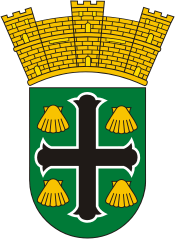
Coat of Arms
The coat of arms incorporates symbols honoring the municipality's Spanish origins and agricultural legacy. Its design includes crosses representing faith, gold elements symbolizing prosperity, and trees that reflect the fertile valleys surrounding the Río Grande de Añasco. The mural crown identifies Añasco as a Puerto Rican municipality.
Anthem
Añasco's municipal anthem celebrates the community's proud history, beautiful landscapes, hardworking residents, and important role in Puerto Rico's western region.
Together, these symbols honor Añasco's rich history while reflecting the municipality's continued pride in its culture, natural beauty, and welcoming community.
Written by David Cruz Colón, Añasco pueblo querido...
Human & Capital Resources
Economy
Agriculture remains an important part of Añasco's identity, with crops including bananas, plantains, tropical fruits, and vegetables still grown throughout the fertile valleys surrounding the Rio Grande de Añasco. Manufacturing has also become a significant employer, particularly in medical devices, pharmaceuticals, and light industry located within the municipality's industrial parks.
Tourism continues to grow thanks to Añasco's beaches, proximity to Rincon and Mayaguez, and its location within Puerto Rico's Porta del Sol tourism region. Small businesses, retail, restaurants, and local services further contribute to the municipality's economy.
Education
Public education in Añasco is administered by Puerto Rico's Department of Education and includes elementary, middle, and high schools serving communities throughout the municipality. Students also benefit from nearby universities and technical institutions in Mayaguez, including the University of Puerto Rico at Mayaguez, one of the Caribbean's leading engineering and agricultural universities. This proximity provides residents with access to higher education while supporting workforce development across western Puerto Rico.
Demographics *
Population
25,596
Land Area: 39.29 sq mi
Density: 676 per sq mi
Median Age: 43.2
Sex: 52% female
Economics **
$10,618
Median household income: $20,167
Puerto Rico: $21,058
Persons below poverty line: 45.5%
Housing, families and educational attainment *
Number of households
8,866
Housing units density:
324.6 (2013)
Persons per household: 2.98
High school grad or higher: 68.3%
Marital status: 43% married
* U.S. Census Bureau 2020 data, unless otherwise noted - Source: Quick Facts Puerto Rico.
** U.S. Census Bureau 2016-2020
Map References
Coordinates: 18.3161° N, 67.1397° W
ZIP Code: 00610, 00611
Driving Distance from San Juan: 97.4 miles
Driving Time: 2 hours, 27 minutes
Frequently Asked Questions
Where is Añasco located?
Añasco is located on Puerto Rico's west coast between Rincón and Mayagüez, about 95 miles (153 km) west of San Juan.
What is Añasco known for?
Añasco is known for its beaches, rich colonial history, the Río Grande de Añasco, agriculture, and its nickname "Pueblo Donde los Dioses Murieron," which refers to an important event in Puerto Rico's early colonial history.
Is Añasco worth visiting?
Yes. Visitors enjoy Añasco for its relaxed atmosphere, beautiful coastline, local seafood, nearby surfing beaches, and convenient location for exploring Puerto Rico's Porta del Sol region.
What are the best things to do in Añasco?
Popular attractions include Balneario Tres Hermanos, the historic Parroquia San Antonio Abad, Mirador de la Bahía, the Río Grande de Añasco, and day trips to nearby Rincón and Mayagüez.
What beaches are in Añasco?
Balneario Tres Hermanos and Playa Tres Hermanos are the municipality's best-known beaches, offering swimming, sunsets, fishing, and beach walks.
Do you need a car in Añasco?
Yes. A rental car is the best way to explore Añasco's beaches, rivers, nearby mountain communities, and neighboring municipalities.
When is the best time to visit Añasco?
Añasco enjoys warm weather year-round. The driest months generally occur between December and April, although the municipality can be visited during any season.
Where should you stay in Añasco?
Visitors can choose from beachfront hotels, boutique guesthouses, vacation rentals, and nearby accommodations in Rincón and Mayagüez.
Did You Know?
San Juan is the oldest continuously inhabited city in a U.S. territory.
Get Our Newsletter
Discover new places, local flavors, upcoming events, cultural stories, and some of our favorite finds from around the island.Read the Latest ¡La Isla! Newsletter
Follow Along


