
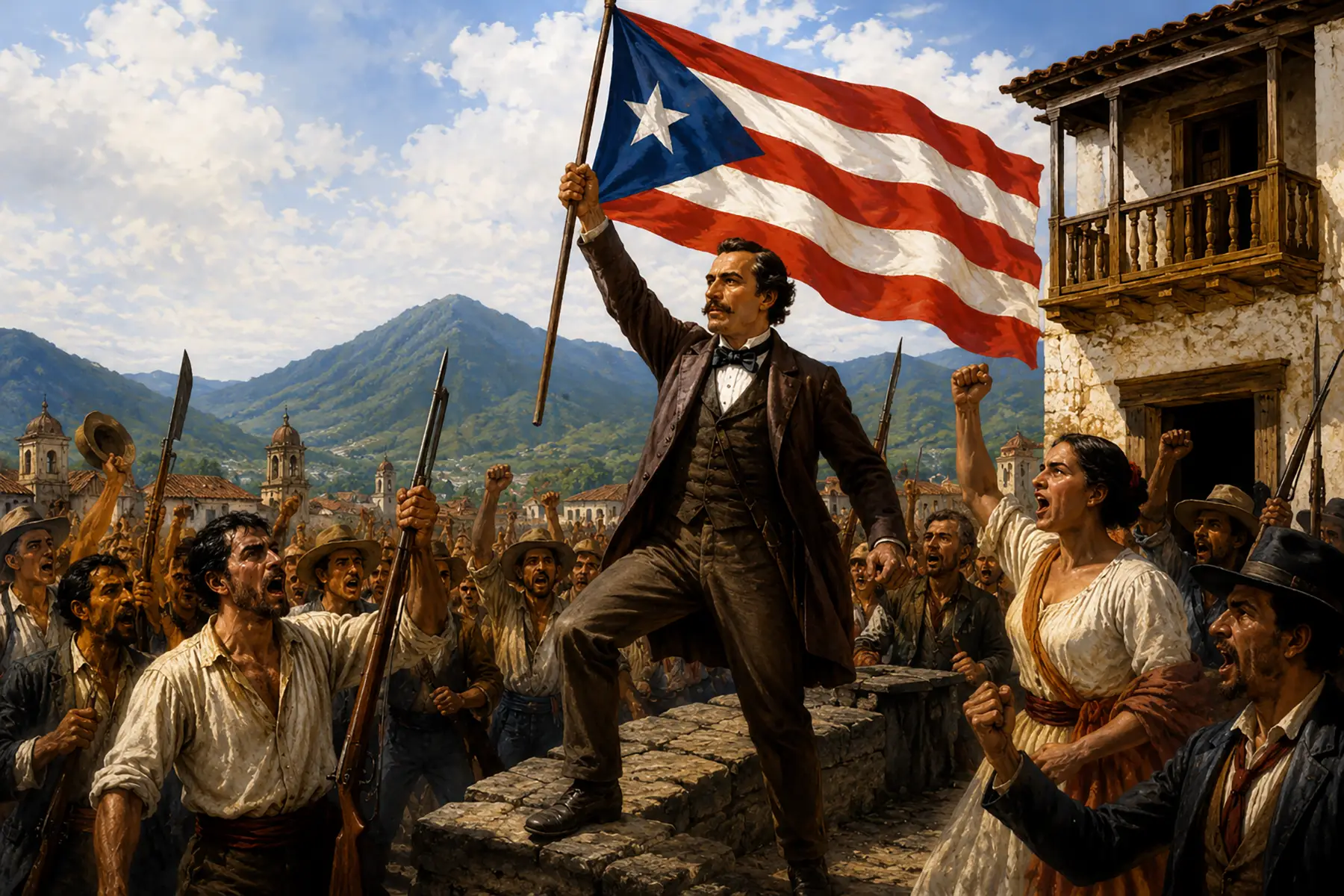
El Grito de Lares
The Cry That Sparked Puerto Rico's Fight for Freedom
It's September 23, 1868. In the remote mountain town of Lares, hundreds of Puerto Ricans—farmers, intellectuals, freed slaves—gather under cover of darkness. They're about to do something unthinkable: declare independence from Spain and proclaim Puerto Rico a republic.
The uprising lasted only days. But El Grito de Lares—"The Cry of Lares" — became the defining moment in Puerto Rico's fight for freedom, echoing through generations and shaping the island's identity forever.
The Grito de Lares was a revolutionary uprising against Spanish colonial rule that took place on September 23, 1868, in the mountain town of Lares, Puerto Rico. Although the revolt was short-lived, it became one of the most important symbols of Puerto Rican nationalism, resistance, and the island's struggle for self-determination.
Moments in History
The path to El Grito
Puerto Rico remained under Spanish colonial control while many Latin American countries gained independence. Economic inequality, political repression, and limited local representation fueled growing unrest among Puerto Rican intellectuals and reformists.
Puerto Rican patriots living on the island and abroad began organizing independence movements inspired by:
- Latin American independence movements
- The Dominican Restoration War
- Cuban revolutionary efforts
- Liberal political ideas from Europe and the Americas
Puerto Rican exiles in the Dominican Republic established the Revolutionary Committee of Puerto Rico, led by Dr. Ramón Emeterio Betances and Segundo Ruiz Belvis. The movement began planning an armed uprising against Spanish rule.
Betances published revolutionary demands calling for:
- abolition of slavery
- freedom of speech
- freedom of religion
- democratic representation
- Puerto Rican self-government
Revolutionaries gathered in the town of Lares and declared Puerto Rico a republic.
The rebels:
- occupied the town
- raised the revolutionary Puerto Rican flag
- proclaimed the "Republic of Puerto Rico"
- freed enslaved people who joined the cause
Hundreds of participants were arrested and imprisoned by Spanish authorities. Some leaders escaped, while others were sentenced to prison. International pressure and political instability in Spain later contributed to many prisoners being pardoned.
Although the revolt failed militarily, its ideas influenced future reforms. Spain officially abolished slavery in Puerto Rico in 1873.
Spanish colonial rule ended after the Spanish-American War, when Puerto Rico became a territory of the United States. The Grito de Lares remained an enduring symbol of Puerto Rican identity and resistance.
Heroes of the Revolution
Ramón Emeterio Betances
The Father of the Nation
1827–1898
"He who accepts oppression is born to be a slave."
Physician, abolitionist, and revolutionary leader widely considered the "Father of the Puerto Rican Nation." He organized the movement from exile and became its most influential figure.
Segundo Ruiz Belvis
"Brazo de Oro" (Golden Arm)
1829–1867
Lawyer, abolitionist, and independence advocate who worked alongside Betances to organize the revolutionary movement and oppose slavery. Mariana hand-sewed the revolutionary flag that flew over Lares—a symbol that still represents Puerto Rican independence today.
Mariana Bracetti
1825–1903
Patriot known as "Brazo de Oro" ("Golden Arm"). She is credited with knitting the revolutionary flag used during the uprising.
Manuel Rojas
1831–1903
Venezuelan-born landowner who led revolutionary forces in Lares during the uprising.
Other Key Figures of the Grito de Lares
Mathias Brugman
1811–1868
Revolutionary leader from Mayagüez who supported the independence movement and was later executed by Spanish authorities.
Lola Rodríguez de Tió
1843–1924
Poet, writer, and nationalist known for writing revolutionary verses supporting Puerto Rican independence. She also authored the famous line:
"Cuba y Puerto Rico son de un pájaro las dos alas."
Her writings became deeply associated with the independence movement.
Manuel María González
1834–1909
President of the Revolutionary Committee in Lares and one of the local leaders who helped organize the uprising on the island.
Francisco Ramírez Medina
Aka "El Coquí"
1827–1876
He was one of the principal military leaders of the uprising. Led the armed attack on Lares and commanded troops during the revolt. Declared the first "President of the Republic of Puerto Rico" during the uprising in Lares.
He was imprisoned but eventually pardoned. Continued to advocate for independence until his death.
Important Places Connected to the Grito de Lares
Lares
The mountain town where the uprising began and Puerto Rico's republic was proclaimed.
Plaza de la Revolución
Historic plaza in Lares commemorating the uprising and honoring its leaders.
Grito de Lares Museum
Museum dedicated to preserving artifacts, documents, and history related to the 1868 revolt.
Dominican Republic
Many revolutionary leaders organized the movement from exile in the Dominican Republic.
Mayagüez
Important western Puerto Rican city where revolutionary activity and support networks developed.
The Lasting Legacy of the Grito de Lares
Although militarily unsuccessful, the Grito de Lares became one of Puerto Rico's most powerful national symbols. The event helped shape Puerto Rican political identity, inspired future generations of activists, and remains commemorated annually on September 23.
Today, the revolutionary flag of Lares, patriotic ceremonies, and historical memorials continue to honor the movement's legacy in Puerto Rican history.
Political Impact
- Forced Spain to grant political reforms
- Led to abolition of slavery (1873)
- Inspired future independence movements
Cultural Significance
- National symbol of resistance
- Commemorated annually (Sept 23)
- Inspired art, music, and literature
- Flag still used in protests
Identity & Memory
- Shaped Puerto Rican national identity
- Source of pride for independence supporters
- Taught in schools as foundational history
Why Grito
"Grito" means "cry" or "shout" in Spanish. Many Latin American independence movements used this term for their uprisings:
- Mexico: El Grito de Dolores (1810)
- Puerto Rico: El Grito de Lares (1868)
It symbolizes the passionate cry for freedom that sparked revolution.
The Revolutionaries
- 600-800 - Estimated participants
- 12 - Key leaders identified
- 5+ - Women active in the movement
- 1 - Executed (Brugman)
- 100+ - Imprisoned after uprising
- 3-5 - Years average prison sentence
- Many - Fled to exile
Experience the History
Visit Lares to see where history was made:
- Plaza de la Revolución - Memorial and monument commemorating the uprising
- Grito de Lares Museum - Original artifacts, documents, and interactive exhibits
- Historic walking tour - Follow the path of the revolutionaries
Best time to visit: September 23rd for annual commemoration ceremonies
Did You Know?
The Puerto Rico Tourism Company (PRTC), founded in 1970, is a public corporation responsible for stimulating, promoting and regulating the development of the tourism industry.
Get Our Newsletter
Discover new places, local flavors, upcoming events, cultural stories, and some of our favorite finds from around the island.Read the Latest ¡La Isla! Newsletter
Follow Along


