
Corozal, Puerto Rico
(ko-ro-ZAHL)
Known as "La Cuna del Voleibol" (The Cradle of Volleyball) and "La Perla de la Sabana" (The Pearl of the Plains), Corozal is a welcoming municipality in Puerto Rico's central region where rich agricultural traditions, sports culture, and scenic countryside come together. Founded in 1795, Corozal offers visitors a blend of historic landmarks, mountain views, local festivals, and authentic Puerto Rican hospitality. Whether you're exploring its vibrant town plaza, enjoying traditional cuisine, or driving through its rolling green hills, Corozal provides an enjoyable glimpse into everyday life in Puerto Rico's interior.
The city name is derived from the "palma de corozo" (grugru palm, Acrocomia media) which abounds in the central zone of the Island.
Overview
Why Visit Corozal?
Corozal offers a slower pace of life where visitors can experience authentic Puerto Rican culture away from the island's busiest tourist destinations. The municipality is celebrated for its volleyball legacy, colorful festivals, fertile farmland, and welcoming community. Its central location also makes it an excellent base for exploring neighboring mountain towns while enjoying scenic drives, local restaurants, and cultural attractions.
Top Things to Do in Corozal
Plaza Pública Doroteo Hernández
The heart of downtown Corozal, the historic plaza is surrounded by local businesses, cafés, and the beautiful San José Parish. Throughout the year it hosts concerts, artisan fairs, festivals, and community celebrations.
Iglesia San José
One of Corozal's most recognizable landmarks, this historic Catholic church overlooks the town plaza and has served as the municipality's spiritual center for generations. Its elegant architecture reflects the town's rich religious heritage.
Museo Histórico de Corozal
Learn about Corozal's history through exhibits featuring photographs, historical documents, agricultural artifacts, and displays highlighting the municipality's volleyball tradition and cultural heritage.
Parque Recreativo de Corozal
A favorite gathering place for families, this recreational park offers walking paths, playgrounds, sports facilities, and green spaces perfect for relaxing outdoors.
Ruta Panorámica
Several sections of Puerto Rico's scenic mountain roads pass near Corozal, offering beautiful views of valleys, forests, and neighboring municipalities. It's an excellent destination for a leisurely drive through the island's interior.
Plantain Farms & Agricultural Countryside
Corozal is known for producing plantains and other agricultural products. Driving through its rural communities offers visitors a chance to experience Puerto Rico's farming traditions and picturesque landscapes.
Volleyball Hall of Fame Displays
As the "Cradle of Volleyball," Corozal celebrates its long history in the sport through local monuments, exhibits, and community pride surrounding one of Puerto Rico's most successful athletic traditions.
Plan your Visit
Whether you're planning a scenic drive through Puerto Rico's central region or looking to experience authentic small-town culture, Corozal offers history, agriculture, beautiful landscapes, and warm hospitality. Its convenient location makes it easy to combine with visits to neighboring mountain communities while enjoying a relaxed pace away from the island's busiest tourist areas.
Getting There
By Air
Luis Muñoz Marín International Airport (SJU) is approximately 50 minutes from Corozal by car.
By Car
Corozal is easily reached via PR-159, PR-142, PR-164, and nearby highways connecting the municipality with San Juan, Bayamón, Naranjito, Morovis, Orocovis, and Toa Alta.
Getting Around
Rental Car
A rental car is highly recommended for exploring Corozal's rural roads, scenic countryside, and nearby municipalities.
Taxis & Rideshare
Taxis and rideshare may be available, but service can be limited compared with San Juan.
Walking
Downtown Corozal is compact and easily explored on foot, especially around the plaza, church, museum, and local businesses.
Nature & Resources
Geography
Corozal is located in the central-eastern region, north of Orocovis and Barranquitas; south Vega Alta; southwest of Toa Alta; east of Morovis and Orocovis; and west of Naranjito. Rolling hills, fertile valleys, rivers, and forests define much of the municipality's landscape, creating ideal conditions for agriculture and outdoor recreation.
Several rivers and streams flow through Corozal, including the Río Manatí, Río Cibuco, Río de los Negros, Río Corozal, and Río Grande de Manatí. Together, they help shape the municipality's fertile valleys, support local agriculture, and contribute to the region's scenic landscapes.
Neighborhoods & Barrios
Corozal consists of 12 barrios (PDF) (wards/districts):
- Abras
- Cibuco
- Cuchillas
- Dos Bocas
- Magueyes
- Maná
- Negros
- Padilla
- Palmarejo
- Palmarito
- Palos Blancos
- Pueblo
Climate
Corozal enjoys a warm tropical climate moderated by its elevation. Temperatures are comfortable throughout much of the year, while regular rainfall keeps the surrounding countryside green and productive, supporting the municipality's agricultural economy.
Corozal annual precipitation is 74 inches, and its average temperature is 77°. The driest month is February, the wetest is August. The warmest month is August, the coolest is January.
10 Day Forecast from weather.com
Where to Stay
- D'Delicias Hotel
- Hyatt Place Bayamón
- Comfort Inn & Suites Levittown
- Embassy Suites by Hilton Dorado del Mar Beach Resortl
Private vacation homes, mountain cabins, and countryside cottages offer visitors a comfortable way to experience Corozal like a local. Many rentals feature scenic views, outdoor terraces, and easy access to nearby attractions.
Local Flavors & Festivities
Where to Eat
- Lechonera El Negro
- Café Museo El Yagrumo
- Local family-owned restaurants
- El Quenepo
- Tibuho Bar & Grill
- Balalaika
- Canela Coffee & Brunch
- Palmarejo Bakery
- El Gran Café
- Momentos Café Coffee Shop & Bistro
Festivals and Events
Displaying 3 results.
-
Festival del Platano
- October
The three-day event features a variety of plantain dishes along with live music and vendors.You must try aranitas (shredded fried green plantain) stuffed with chicken, banana soup, mofongo with seafood, tostones, and maduritos.(787) 859-3060
-
Festival Nacional del Platano
- October
Exhibitions of local produce, especially dishes made with green and ripe plantains, crafts, paintings, folkloric music and dance.(787) 859-3060
-
Fiestas Patronales de San Juan Bautista
- January
Every year, Corozal celebrates a patron saint festival. The festivities include dances, food, parades and religious processions.(787) 859-3060
History
Founded on June 17, 1795, by Joaquin Marrero and Jose de Rivera Ortiz, and officially became a town in 1804. Corozal developed as an agricultural community in Puerto Rico's fertile central region. Originally known as San José de los Llanos, the municipality later adopted the name Corozal after the native corozo palm, which once grew abundantly throughout the area.
Throughout the nineteenth century, agriculture became the backbone of the local economy, with tobacco, coffee, sugar cane, plantains, and other crops supporting the community. During the twentieth century, Corozal gained national recognition for producing outstanding volleyball players, earning its lasting nickname, "La Cuna del Voleibol."
Today, Corozal blends its agricultural heritage with commerce, education, sports, and community traditions while remaining one of Puerto Rico's most welcoming municipalities.
Moments in History
Corozal is officially founded.
Agriculture flourishes with tobacco, coffee, sugar cane, and plantain production.
Puerto Rico becomes a U.S. territory following the Spanish-American War.
Volleyball becomes one of Corozal's defining traditions, producing numerous championship teams and elite athletes.
Residential and commercial growth expands due to improved transportation and proximity to the San Juan metropolitan area.
Corozal continues to thrive as a center for agriculture, sports, commerce, and cultural traditions.
Notable People
Corozal has produced accomplished athletes, entertainers, educators, and public servants whose achievements have brought recognition to the municipality across Puerto Rico and beyond.
Famous Corozaleños
José "Piculín" Ortiz
1963–
Basketball
Although born in Aibonito, Piculín Ortiz has long been associated with Corozal's basketball and sports community, becoming one of Puerto Rico's greatest basketball players.
City Symbols
Flag
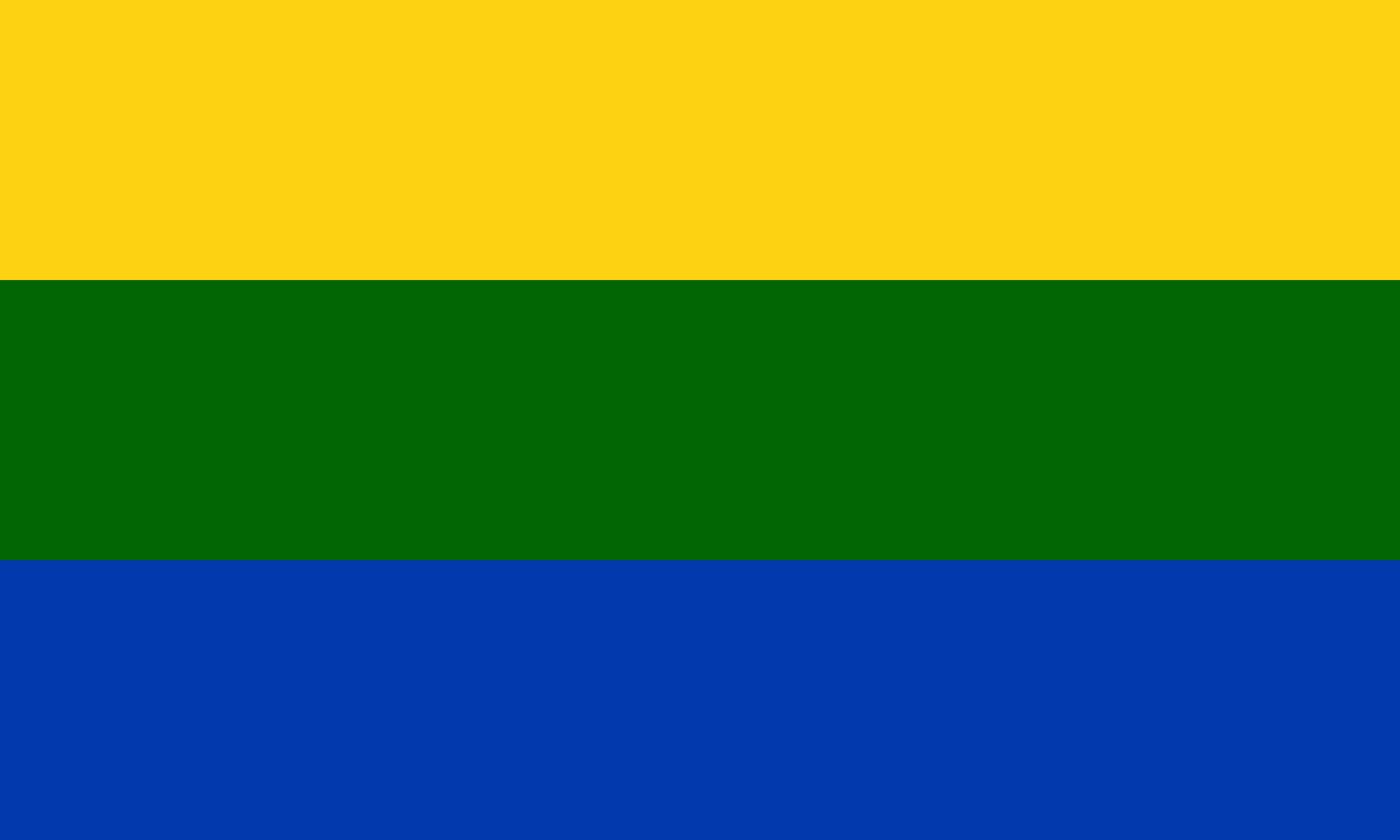
Corozal's flag consists of three horizontal stripes: gold, green, and blue. The gold represents the municipality's wealth and prosperity, the green symbolizes its fertile valleys and mountains, and the blue reflects the rivers and waterways that have shaped Corozal's history. The municipal coat of arms is often displayed in the center of the flag.
Coat of Arms
The coat of arms reflects Corozal's agricultural heritage and history. It incorporates symbols associated with the corozo palm, from which the municipality takes its name, along with references to its fertile lands, Christian heritage, and Spanish colonial origins. A mural crown above the shield signifies Corozal's status as one of Puerto Rico's municipalities.
Anthem
The official anthem of Corozal is "Salve Perla de la Sabana", with lyrics by Aníbal Gandara Campos. The anthem celebrates Corozal's natural beauty, agricultural heritage, and the pride of its people, honoring the municipality's nickname, "The Pearl of the Plains."
Human & Capital Resources
Economy
Agriculture has long been central to Corozal's identity. Fertile soils and rolling hills have supported the cultivation of plantains, coffee, vegetables, fruits, and livestock for generations. The municipality has also played an important role in Puerto Rico's dairy and poultry industries, while small farms continue to contribute to the local economy.
Today, Corozal's economy includes manufacturing, retail, healthcare, education, construction, government services, and numerous small businesses. Its location within commuting distance of the San Juan metropolitan area has encouraged residential growth while preserving much of its rural character and agricultural heritage.
Education
Education plays an important role in the development of Corozal's community. The municipality is served by a network of public and private schools offering educational opportunities from elementary through high school. Corozal also has vocational and technical education programs that help prepare students for careers in skilled trades, technology, and business.
Residents seeking higher education have convenient access to institutions in nearby Bayamón, Toa Baja, Arecibo, and San Juan, including campuses of the University of Puerto Rico, Inter American University, and other colleges. Community libraries, cultural organizations, and athletic programs further support lifelong learning while preserving the municipality's rich history and strong volleyball tradition.
Demographics *
Population
34,571
Land Area: 42.57 sq mi
Density: 773.6 per sq mi
Median Age: 40.9
Sex: 52% female
Economics **
$8,829
Median household income: $16,933
Puerto Rico: $21,058
Persons below poverty line: 52.3%
Housing, families and educational attainment *
Number of households
10,765
Housing units density:
328.8 (2013)
Persons per household: 3.04
High school grad or higher: 71.5%
Marital status: 43% married
* U.S. Census Bureau 2020 data, unless otherwise noted - Source: Quick Facts Puerto Rico.
** U.S. Census Bureau 2016-2020
Map References
Coordinates: 18.3417° N, 66.3169° W
ZIP Code: 783
Driving Distance from San Juan: 32.2 miles
Driving Time: 59 minutes
Frequently Asked Questions
What is Corozal known for?
Corozal is best known as the "Cradle of Volleyball", its agricultural heritage, scenic countryside, and friendly small-town atmosphere.
Where is Corozal located?
Corozal is located in Puerto Rico's central region, about 50 minutes southwest of San Juan.
Why is Corozal called the Cradle of Volleyball?
Corozal has produced championship volleyball teams and many outstanding players, making it one of Puerto Rico's most successful volleyball communities.
What are the best things to do in Corozal?
Visitors can explore the historic downtown, visit the local museum, enjoy scenic countryside drives, sample traditional Puerto Rican cuisine, and attend the municipality's annual festivals.
Is Corozal a good day trip from San Juan?
Yes. Corozal's proximity to the San Juan metropolitan area makes it an excellent day trip for visitors interested in Puerto Rico's interior, local culture, and mountain scenery.
What agricultural products is Corozal known for?
Corozal is known for producing plantains, coffee, fruits, vegetables, dairy products, and other agricultural goods that have supported the municipality for generations.
Did You Know?
The University of Puerto Rico Botanical Garden contains nearly 300 acres of gardens, lakes, sculptures, and tropical forests, making it one of the Caribbean's largest botanical gardens.
Get Our Newsletter
Discover new places, local flavors, upcoming events, cultural stories, and some of our favorite finds from around the island.Read the Latest ¡La Isla! Newsletter
Follow Along


