
Arroyo, Puerto Rico
(ah-RO-yo)
Arroyo is known as "El Pueblo Grato" (The Pleasant Town), Arroyo is a charming seaside municipality on Puerto Rico's southeastern coast. Founded in 1855, Arroyo grew as an important sugar-exporting port during the 19th century and still preserves much of its historic coastal character. Today, visitors come to enjoy peaceful beaches, colorful waterfront scenery, local seafood, and landmarks that reflect the town's maritime and industrial heritage.
Arroyo ("creek" in English) derives its name from the small stream from which weary travelers in the past stopped for a drink of water and to rest.
Overview
Why Visit Arroyo?
Arroyo offers a quieter side of Puerto Rico where history meets the Caribbean Sea. Visitors can explore historic sugar mills, relax at Punta Guilarte Beach, stroll along the waterfront, and discover one of Puerto Rico's oldest steam-powered sugar mills. Its small-town atmosphere, ocean views, and authentic local culture make Arroyo a rewarding stop along the island's southern coast.
Why I Love Arroyo

Arroyo reminds me of what many coastal Puerto Rican towns used to feel like—peaceful, welcoming, and deeply connected to the sea. It isn't filled with large resorts or crowds, and that's exactly its charm. Sitting by the waterfront while fishing boats come and go, watching the sunset over the Caribbean, or enjoying fresh seafood at a local restaurant makes it easy to appreciate the slower rhythm of life that defines this beautiful municipality.
Top Things to Do in Arroyo
Fernando L. Pacheco
Punta Guilarte Beach
Arroyo's most popular public beach features calm Caribbean waters, picnic areas, gazebos, playgrounds, and camping facilities. The beach is ideal for families, swimming, kayaking, and enjoying spectacular sunsets.
Central Lafayette (Central Arroyo)
One of Puerto Rico's oldest steam-powered sugar mills, Central Lafayette played an important role in the island's sugar industry during the late 19th and early 20th centuries. Although no longer operating, parts of the historic complex remain important reminders of Arroyo's agricultural past.
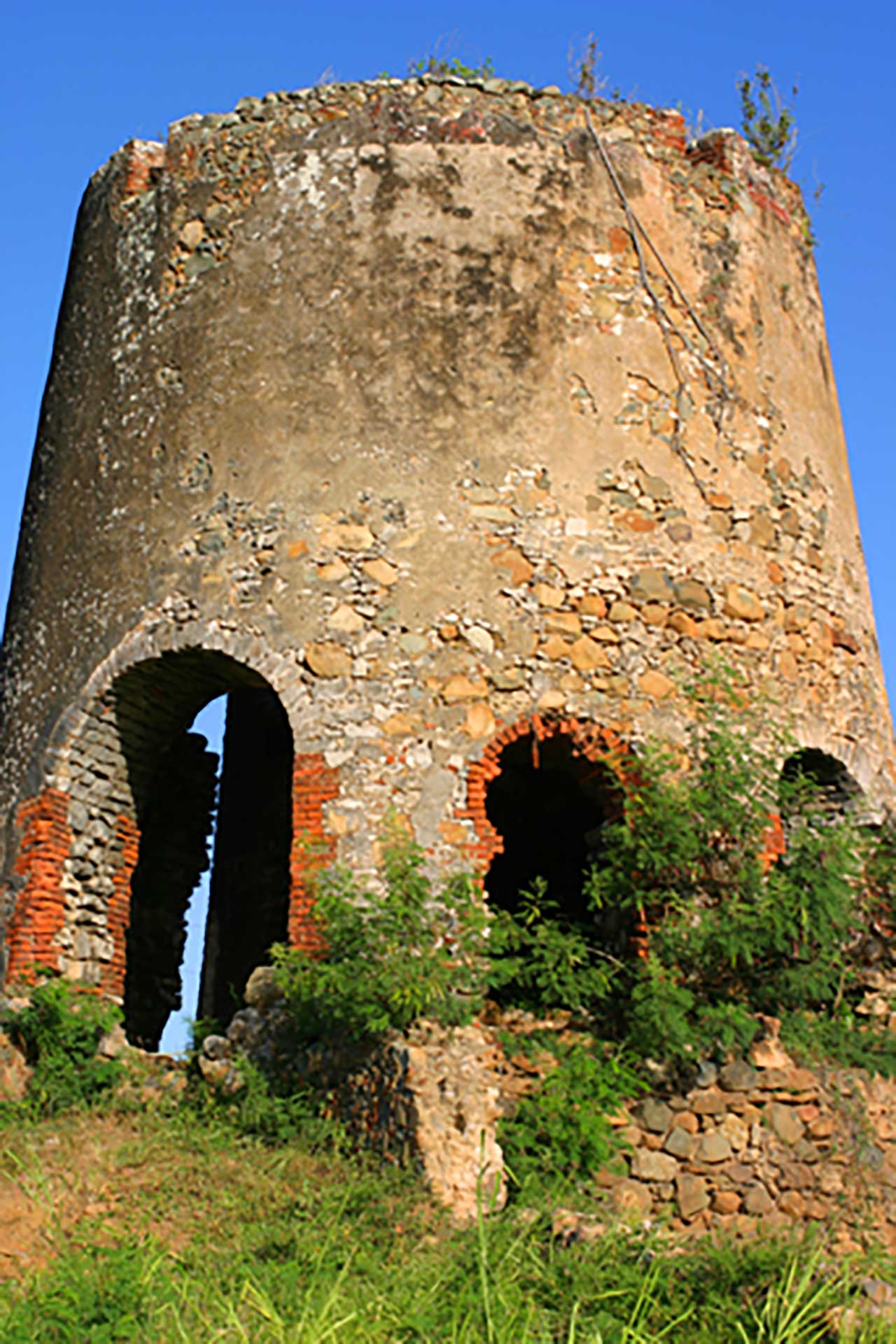
Negenegen Windmill
The restored stone windmill is one of Arroyo's best-known historical landmarks. Built during the sugar plantation era, it once helped power sugar production and today serves as a reminder of the municipality's colonial heritage.
Arroyo Waterfront
The scenic waterfront offers beautiful Caribbean views, fishing docks, small parks, and places to relax while watching local fishermen and boats. It's one of the best places to experience everyday life in Arroyo.
Hacienda La Dolores
This former sugar plantation highlights the economic history that shaped much of Puerto Rico's southern coast during the 19th century.
Hacienda La Cora
One of Arroyo's historic sugar plantations, Hacienda La Cora reflects the municipality's agricultural heritage during Puerto Rico's sugar boom. While it is not a formal tourist attraction today, it remains an important historical site that illustrates the region's plantation economy.
Las Palmas Beach
A quiet neighborhood beach popular with local residents for swimming, fishing, and relaxing away from larger crowds. It's an excellent place to experience Arroyo's slower pace of life.
Arroyo Waterfront & Fishing Pier
The waterfront promenade is one of Arroyo's most pleasant places for a stroll, offering views of the Caribbean Sea, local fishing boats, and colorful sunsets.
Central Lafayette Historic Sugar Mill
Once among Puerto Rico's most important sugar mills, Central Lafayette helped transform Arroyo into a major sugar-exporting municipality during the late 19th and early 20th centuries. Today it remains one of the town's most significant historical landmarks.
Plan your Visit
Everything you need to know before exploring one of Puerto Rico's most peaceful seaside towns.
Getting There
By Air
Luis Muñoz Marín International Airport (SJU) is approximately 1 hour 15 minutes away by car. Mercedita Airport (PSE) in Ponce is about 45 minutes away.
By Sea
Although no passenger ferry operates here, Arroyo maintains a small marina and fishing harbor that support recreational boating.
By Car
Arroyo is easily reached via PR-53, Puerto Rico's southeastern expressway, with connections from Guayama, Salinas, Patillas, and Ponce.
Getting Around
Rental Car
The best way to explore Arroyo and nearby coastal communities.
Nearby
Arroyo makes an excellent stop while exploring the southeastern municipalities of Guayama, Patillas, Maunabo, and Salinas.
Walking
The town center and waterfront are easily explored on foot.
Nature & Resources
Geography
Arroyo is located in the region known as the Southern Coastal Valley, a very dry region. Bordering the Caribbean Sea, east of Guayama and northwest of Patillas. Arroyo's highest peaks are Yaurel (686 m), Corazón (605 m), and Ancones (270 m). Its mostly flat coastal plain transitions into gentle hills inland, while mangroves, estuaries, and sandy beaches characterize much of its shoreline.
The Nigua River crosses the municipality from north to south.
Neighborhoods & Barrios
Arroyo is made up of 6 barrios (PDF) (wards/districts):
- Ancones
- Guásima
- Palmas
- Pitahaya
- Pueblo
- Yaurel
Climate
Arroyo enjoys year-round summer temperatures, an average annual temperature of 77°. On average, the warmest month is August, and the coolest month is January. Arroyo averages 34.45 inches of rain per year. November is the average wettest month. Thanks to constant Caribbean trade winds, Arroyo remains comfortable for beach activities nearly year-round.
ARROYO WEATHERWhere to Stay
Beachfront & Small Hotels- Costa Bahía Hotel
Nearby Resort Options
Larger hotels can be found in nearby Guayama and Ponce, both within an hour's drive.
Local Flavors & Festivities
Where to Eat
- Restaurante El Pescador El Nuevo Tropical La Posada de Arroyo El Bohío
- Galería del Puerto
- anadería La Nueva
- Panadería San Antonio
- Cafetería El Faro
- Heladería La Tropical
- El Balcón del Malecón
Festivals and Events
Displaying 12 results.
-
Fiesta de Reyes
- January
Traditional Three Kings celebration featuring the arrival of the Magi, children's activities, Christmas music, gift giving, and Puerto Rican holiday traditions.
-
Renacer Navideño
- January
Community Christmas celebration marking the close of the holiday season with live music, cultural performances, traditional foods, family activities, and festive decorations throughout the town.
-
Carnaval Arroyano
- February
One of Puerto Rico's oldest coastal carnivals, featuring colorful parades, vejigantes, live music, dance performances, food kiosks, artisan vendors, and family entertainment leading up to Lent.(787) 839-9060
-
Rosarios de Cruz
- May
Traditional community celebration preserving one of Puerto Rico's oldest religious and cultural customs, featuring rosary prayers, music, traditional foods, community gatherings, and cultural activities in neighborhoods throughout Arroyo.(787) 839-3500
-
Fiesta Negra
- June
Celebrates the rich African heritage of Arroyo and Puerto Rico through bomba and plena music, traditional dance, Afro-Caribbean cuisine, educational exhibits, poetry, theater, artisan crafts, and cultural presentations honoring the community's African roots.(787) 839-3500
-
Fiestas Patronales de Nuestra Senora del Carmen
- July
Arroyo's annual patron saint festival honoring Our Lady of Mount Carmel with religious processions, live concerts, carnival rides, artisan vendors, traditional Puerto Rican food, parades, and family entertainment in the town plaza.(787) 839-2030
-
Sancocho Jazz Fest
- August
A unique event combining live jazz performances with Puerto Rican culinary traditions, featuring renowned musicians, local artists, food vendors, and the popular traditional sancocho stew.
-
Festival del Pescao
- November
Celebrates Arroyo's fishing heritage with fresh seafood, cooking demonstrations, local cuisine, live music, artisan vendors, family activities, and exhibitions highlighting the municipality's coastal traditions.(787) 839-3500
-
Festival Navideño
- November
Holiday celebration featuring the official Christmas lighting, live music, artisan markets, seasonal food, cultural performances, and family activities that usher in Puerto Rico's Christmas season.
-
Batey Criollo
- December
Cultural celebration highlighting Puerto Rican traditions through music, dance, crafts, folklore, and demonstrations of the island's rural heritage.
-
Fundación de Arroyo
- December
Commemorates the founding of Arroyo with historical exhibits, civic ceremonies, cultural presentations, music, and activities celebrating the municipality's heritage.
-
Parrandas de Navidad
- December
Traditional Puerto Rican Christmas parrandas with musicians visiting homes and public plazas, singing aguinaldos while celebrating the island's beloved holiday traditions.
Moments in History
Arroyo is officially incorporated as a municipality.
Central Lafayette becomes one of Puerto Rico's largest sugar-producing mills.
Following the Spanish-American War, Arroyo becomes part of the United States territory of Puerto Rico.
The municipality experiences continued economic growth fueled by sugar production and maritime commerce.
Like much of Puerto Rico, Arroyo transitions from an agriculture-based economy toward manufacturing, commerce, and public services following the decline of the sugar industry.
Notable People
Despite its small size, Arroyo has produced influential writers, musicians, athletes, and public figures whose contributions have enriched Puerto Rico's cultural and intellectual life.
Famous Arreyanos
Francisco Arriví
1915–2007
Playwright & Theater Pioneer
One of Puerto Rico's most influential dramatists, Arriví helped shape modern Puerto Rican theater and literature.
Nilita Vientós Gastón
1903–1989
Attorney, Writer & Educator
A pioneering lawyer and essayist who became a leading advocate for Puerto Rican culture, literature, and the Spanish language.
José "Chegüí" Torres
1936–2009
Olympic Boxer
Olympic medalist, world light heavyweight boxing champion, sports commentator, and author.
Enrique Huyke
1883–1970
Educator & Politician
Prominent educator, legislator, and Commissioner of Education who greatly influenced Puerto Rico's public education system.
Rubén Gómez
1927–2004
Major League Baseball
The first Puerto Rican pitcher selected to an MLB All-Star Game and one of Puerto Rico's baseball pioneers.
Francisco J. Amy
1883–1962
Poet
Recognized for his contributions to Puerto Rican poetry and literature.
City Symbols
Flag
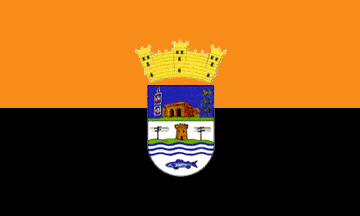
Arroyo's flag features orange and black horizontal fields with the municipal Coat of Arms centered between them. The colors symbolize the town's historic sugar industry, fertile lands, and the resilience of its people while emphasizing Arroyo's unique municipal identity.
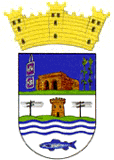
Coat of Arms
The Coat of Arms reflects Arroyo's history as an agricultural and maritime community. Elements represent the Caribbean Sea, sugar cane cultivation, local commerce, and the municipality's Spanish colonial heritage. The mural crown identifies Arroyo as an incorporated municipality of Puerto Rico.
Anthem
The official anthem of Arroyo is "Mi Arroyo." The song celebrates the municipality's beautiful coastline, its hardworking people, and the pride residents have for their hometown, reflecting the warmth and welcoming spirit that earned Arroyo the nickname "El Pueblo Grato."
Human & Capital Resources
Economy
Arroyo's economy was historically built on sugar cane cultivation and sugar production, becoming one of Puerto Rico's important export centers during the late 19th century. Today, the municipality's economy is supported by retail businesses, education, healthcare, public services, fishing, and tourism. Punta Guilarte Beach, the waterfront, and the town's historical landmarks continue attracting visitors seeking a quieter coastal destination.
Education
Arroyo provides students with access to public and private schools that serve the community from elementary through high school. While the municipality does not have a major university campus, residents benefit from its convenient location along Puerto Rico's southern coast, with several colleges and universities just a short drive away.
Students pursuing higher education have access to nearby institutions such as the Inter American University of Puerto Rico – Guayama Campus, which offers undergraduate and graduate programs in business, education, health sciences, technology, agriculture, and the humanities.
Additional educational opportunities are available within 30 to 45 minutes in neighboring municipalities, including campuses of the University of Puerto Rico and private universities throughout the southern and eastern regions. This accessibility allows Arroyo residents to enjoy the town's peaceful coastal lifestyle while remaining close to a wide range of academic and professional opportunities.
Demographics *
Population
15,843
Land Area: 15.01 sq mi
Density: 1,166.10 per sq mi
Median Age: 40.8
Sex: 53% female
Economics **
$8,899
Median household income: $16,206
Puerto Rico: $21,058
Persons below poverty line: 60.1%
Housing, families and educational attainment *
Number of households
6,070
Housing units density:
591.3 (2013)
Persons per household: 2.88
High school grad or higher: 76.5%
Marital status: 32% married
* U.S. Census Bureau 2020 data, unless otherwise noted - Source: Quick Facts Puerto Rico.
** U.S. Census Bureau 2016-2020
Map References
Coordinates: 17.9658° N, 66.0614° W
ZIP Code: 714
Driving Distance from San Juan: 56.6 miles
Driving Time: 1 hour, 27 minutes
Other Resources
Did You Know?
Fort San Cristobal was the largest citadel built by the Spanish in the New World.
Get Our Newsletter
Discover new places, local flavors, upcoming events, cultural stories, and some of our favorite finds from around the island.Read the Latest ¡La Isla! Newsletter
Follow Along


