
Patillas, Puerto Rico
(pah-TEE-yahs)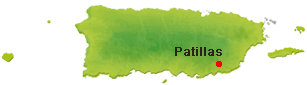
Patillas is known as "La Esmeralda del Sur" (emerald of the south), because of its green mountains. Patillas is a picturesque municipality in southeastern Puerto Rico where green mountains, rivers, forests, reservoirs, and the Caribbean Sea come together. Founded in 1811, Patillas offers visitors a rare combination of mountain adventure and relaxed coastal scenery.
The municipality stretches from the foothills of the Sierra de Cayey and Sierra de Guardarraya to the southern coastline, creating an especially diverse landscape. Visitors can hike through Carite State Forest, swim at Charco Azul, explore waterfalls and rivers, relax at quiet beaches such as Guardarraya and Villa Pesquera, or enjoy fishing and scenic views at Lago Patillas.
Overview
Why Visit Patillas?
Patillas is ideal for travelers who want both mountains and coast in a single destination. Spend the morning hiking to a freshwater swimming hole, enjoy traditional Puerto Rican food in the countryside, and finish the day relaxing beside the Caribbean Sea.
Top Things to Do in Patillas
Charco Azul
Patillas' best-known natural attraction is a deep-blue freshwater swimming hole within Carite State Forest. An easy trail of about 20 minutes leads through the forest to the pool, where picnic tables, grills, and designated camping facilities are available.
Carite State Forest
Established in 1939, this nearly 7,000-acre mountain forest extends across several municipalities, including Patillas. Its lush trails, streams, birdlife, and tropical vegetation make it an excellent destination for hiking, picnicking, and nature photography.
Tres Chorros & Survivor Waterfall
Hidden within the mountain landscape are three freshwater pools fed by small waterfalls. The area is popular for swimming and exploring, although conditions can become crowded on weekends and slippery after heavy rain.
Lago Patillas
Created as a reservoir in the early twentieth century, Lago Patillas is surrounded by green mountains and offers opportunities for fishing, photography, and scenic drives through the municipality's interior.
Villa Pesquera Beach
Considered Patillas' principal recreational beach, Villa Pesquera offers opportunities for swimming, snorkeling, kayaking, paddleboarding, and enjoying coastal views. Public facilities include picnic areas, restrooms, showers, and an observation structure.
Guardarraya Beach
A peaceful beach along PR-3 with a mixture of sand and rock, shallow water near shore, and several nearby restaurants and roadside food stops serving fresh seafood and Puerto Rican fritters.
Inches Beach
A scenic stretch of coastline known for stronger waves and a relaxed local atmosphere. It is especially popular with surfers and visitors enjoying the restaurants and coastal drive along PR-3.
Bosque de Pterocarpus
This wetland forest preserves an important tropical ecosystem and provides habitat for native plants, birds, and wildlife along Patillas' coastal plain.
Plan your Visit
Located on Puerto Rico's scenic southeastern coast, Patillas is best explored by car, allowing visitors to combine mountain forests, rivers, lakes, beaches, and countryside restaurants in a single trip.
Getting There
By Air
Luis Muñoz Marín International Airport (SJU) is approximately 1½ hours from Patillas by car, depending on traffic and your destination within the municipality.
By Car
PR-3 follows the southeastern coastline and provides access from Guayama, Arroyo, Maunabo, and other coastal communities. PR-184 and PR-181 lead inland toward Patillas' mountain attractions and Carite State Forest.
Getting Around
Rental Car
A rental car is strongly recommended because Patillas' beaches, lake, forest attractions, and rural communities are spread throughout the municipality.
Scenic Driving
PR-3 provides beautiful Caribbean views along the coast, while inland roads wind through mountains, farms, rivers, and forests.
Taxis & Rideshare
Taxis and rideshare may be available, but service can be limited compared with San Juan.
Nature & Resources
Geography
Patillas lies along Puerto Rico's southeastern coast and covers approximately 47 square miles. Although part of the southern coastal region, much of the municipality is mountainous, south of San Lorenzo; west of Yabucoa and Maunabo; and east of Guayama and Arroyo. The Sierra de Cayey extends into its northwestern and northern sectors, while the Sierra de Guardarraya rises to the east. Between these mountains and the Caribbean coast are fertile valleys, rivers, wetlands, reservoirs, and agricultural lands.
Rivers, Lakes & Natural Resources
Patillas has an extensive network of rivers and streams descending from its mountain interior toward the Caribbean Sea. Important waterways include the Río Grande de Patillas, Río Jacaboa, Río Marín, Río Chico, and Río Apeadero. Numerous smaller quebradas also form part of the municipality's watershed.
The Lago Patillas reservoir is one of the municipality's most recognizable inland features. Built in the early twentieth century, it receives water from the Patillas and Marín rivers and has long supported irrigation, water management, fishing, and recreation. Along the coast, mangrove forests and wetlands provide valuable habitat for birds and marine species.
Neighborhoods & Barrios
Patillas is made up of 16 barrios (PDF) (wards/districts):
- Apeadero
- Bajo
- Cacao Alto
- Cacao Bajo
- Egozcue
- Guardarraya
- Jacaboa
- Jagual
- Mamey
- Marín
- Mulas
- Muñoz Rivera
- Pollos
- Pueblo
- Quebrada Arriba
- Ríos
Climate
Patillas enjoys a warm tropical climate throughout the year, with coastal areas generally warmer and drier than the municipality's higher mountain communities. Regular rainfall in the interior supports forests, rivers, waterfalls, and agriculture, while Caribbean breezes help moderate temperatures along the coast. These varied elevations allow visitors to experience warm beaches and cooler forested mountains within the same municipality.
10 Day Forecast from weather.com
Where to Stay
- Dos Mares Guest House and Restaurant
- Patillas Beach-House
- Finca Corsica
- Casa Coral Beachfront Farmstay
- Casa Del Sol Family Beach House
- Coral Family Beach House Rentals
Local Flavors & Festivities
Where to Eat
- El Tenedor de Mario
- Calixto's Place
- Cafetería El Terminal.
- Los Moralitos Sunset Bar & Grill Restaurant
- Mangols Tropical Cafe Playa
- Montes Bakery
- Panadería La Familia
- Panadería La Defensa.
Festivals and Events
Displaying 5 results.
-
Carnaval Esmeralda del Sur
- May
Annual carnival celebrating Patillas' identity as La Esmeralda del Sur with colorful parades, music, dancing, food, community activities, and family entertainment.(787) 839-4120
-
Fiestas Patronales de San Benito Abad
- August
Annual patron saint celebration honoring San Benito Abad and local religious traditions with processions, live music, food, artisans, carnival attractions, and community festivities.(787) 839-4120
-
Maratón del Sureste
- November
Traditional road race bringing runners together for a sporting event through Patillas and Puerto Rico's southeastern region.(787) 839-4120
-
Festival de Harina
- December
Culinary festival celebrating traditional flour-based foods, local recipes, Puerto Rican cuisine, music, artisans, and community activities.(787) 839-4120
-
Parada de Navidad
- December
Holiday parade featuring Christmas music, decorated floats, community groups, seasonal entertainment, and family celebrations through the town.(787) 839-4120
History
The Patillas region was already populated by scattered agricultural communities during the eighteenth century. By the early nineteenth century, expanding sugarcane cultivation and the establishment of local sugar mills created pressure for a more organized settlement.
In 1811, local residents petitioned Governor Salvador Meléndez to establish a municipality. Their request was approved, and two years later the parish of San Benito Abad and Santa Bárbara de Patillas was established. The municipality's name is traditionally linked to the abundance of patillas, or watermelons, that grew on the property where the original town was established.
Agriculture remained central to Patillas for generations, particularly sugarcane and later plantains, fruits, livestock, and other crops. Over time, the municipality also became known for the extraordinary contrast between its mountainous interior and Caribbean coastline, earning the nickname "La Esmeralda del Sur."
Moments in History
Agricultural communities begin developing throughout the fertile Patillas valley and southeastern coastline.
Residents successfully petition Governor Salvador Meléndez to establish Patillas as an independent municipality.
The parish of San Benito Abad and Santa Bárbara de Patillas is formally established.
Construction of the Patillas Reservoir creates an important source of water for agriculture and communities in southeastern Puerto Rico.
Carite State Forest is established, protecting thousands of acres of mountain habitat extending into Patillas and neighboring municipalities.
Patillas is recognized for its combination of mountain forests, rivers, freshwater pools, reservoirs, beaches, agriculture, and coastal recreation.
Notable People
Patillas has produced distinguished athletes, musicians, writers, historians, journalists, and public figures whose achievements have contributed to Puerto Rico's cultural and intellectual life.
Famous Patillenses
Angelita Lind
1959–
Athletics
Olympic middle-distance runner known as "El Ángel de Puerto Rico." Lind won multiple medals in Central American, Caribbean, and Pan American competitions and represented Puerto Rico at the 1984 Olympic Games in Los Angeles.
Jalil Sued Badillo
History • Education
Historian, researcher, and educator recognized for his scholarship on Puerto Rico's Indigenous history, archaeology, and early colonial period.
Edmundo Disdier
Music
Puerto Rican musician and composer whose works include Amor soñado, Lo imposible, and Reflejo.
Francisco Cervoni Gely
Literature • Journalism • Politics
Poet, playwright, journalist, and political figure whose writings appeared in Puerto Rican newspapers and magazines. His dramatic works include Los suegros and La cruz roja.
José Dávila Ricci
Journalism • Politics
Journalist and political leader who helped found the Sociedad Puertorriqueña de Periodistas and held leadership positions with several important Puerto Rican newspapers and magazines.
Ramón Lebrón Rodríguez
Literature • Law
Writer whose works include Esbozo histórico del Derecho Penal and La vida de un prócer, contributing to Puerto Rico's legal and historical literature.
City Symbols
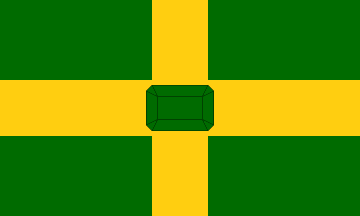
Flag
Patillas' flag features four green rectangles representing the municipality's valleys and mountains. A golden cross symbolizes devotion to Santo Cristo de la Salud, while the emerald at its center represents Patillas' famous nickname, "La Esmeralda del Sur."
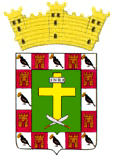
Coat of Arms
The coat of arms incorporates symbols connected to Patillas' history and religious traditions. A crow holding bread represents the legend of San Benito Abad being saved from poisoning. A castle recalls Santa Bárbara, an early patron of the town, while crossed machetes symbolize the labor of sugarcane workers and the agricultural origins of the municipality's economy. A watermelon leaf recalls the fruit traditionally associated with the town's name.
Anthem
Patillenses, written by Andrés Plaud Soto, is the municipal anthem of Patillas. It honors the achievements of the municipality's people and celebrates civic pride, sacrifice, knowledge, and service to the community.
Human & Capital Resources
Economy
Agriculture has shaped Patillas since its founding, beginning with sugarcane and local mills in the early nineteenth century. Today, plantains, bananas, fruits, vegetables, livestock, and other crops remain important to the municipality's rural economy. Patillas has also been identified as one of Puerto Rico's important plantain-producing areas.
The modern economy also includes retail, healthcare, education, government services, restaurants, fishing, construction, and small businesses. Tourism and hospitality are increasingly important as visitors discover Charco Azul, Carite State Forest, Lago Patillas, quiet beaches, and the municipality's growing collection of coastal restaurants and vacation rentals.
Education
Education in Patillas is provided through public and private schools serving students from elementary through high school, with public education administered by the Puerto Rico Department of Education. Students pursuing higher education have access to institutions in nearby Guayama, Humacao, Cayey, and other communities throughout southeastern and central Puerto Rico.
Demographics *
Population
15,985
Land Area: 46.7 sq mi
Density: 356 per sq mi
Median Age: 45.7
Sex: 51% female
Economics **
$10,142
Median household income: $17,138
Puerto Rico: $21,058
Persons below poverty line: 50.8%
Housing, families and educational attainment *
Number of households
6,101
Housing units density:
200.4 (2013)
Persons per household: 2.72
High school grad or higher: 76%
Marital status: 40% married
* U.S. Census Bureau 2020 data, unless otherwise noted - Source: Quick Facts Puerto Rico.
** U.S. Census Bureau 2016-2020
Map References
Coordinates: 18.0064° N, 66.0158° W
ZIP Code: 723
Driving Distance from San Juan: 59.6 miles
Driving Time: 1 hour, 31 minutes
Frequently Asked Questions
Where is Patillas located?
Patillas is located on Puerto Rico's southeastern coast, bordered by San Lorenzo, Yabucoa, Maunabo, Arroyo, Guayama, and the Caribbean Sea.
What is Patillas known for?
Patillas is known for Charco Azul, Carite State Forest, Lago Patillas, secluded beaches, rivers, waterfalls, agriculture, and its beautiful combination of mountain and coastal scenery.
Why is Patillas called "La Esmeralda del Sur"?
The nickname refers to the lush green mountains and landscapes that characterize much of the municipality.
What are the best things to do in Patillas?
Popular activities include swimming at Charco Azul, hiking in Carite State Forest, visiting Tres Chorros, relaxing at Guardarraya or Villa Pesquera beaches, fishing at Lago Patillas, and enjoying seafood along PR-3.
Can you swim at Charco Azul?
Yes. Charco Azul is a popular freshwater swimming hole within Carite State Forest. Visitors should always check recent weather conditions because rivers and natural pools can change quickly after heavy rain.
What beaches are in Patillas?
Popular coastal areas include Guardarraya Beach, Villa Pesquera, Inches Beach, and several smaller beaches along PR-3.
What are people from Patillas called?
Residents of Patillas are known as patillenses.
What festivals are celebrated in Patillas?
Major annual events include Carnaval Esmeralda del Sur, the Fiestas Patronales de San Benito Abad, Maratón del Sureste, Festival de Harina, and the Christmas parade.
Is Patillas worth visiting?
Yes. Patillas is an excellent destination for travelers who want beaches, mountain forests, rivers, waterfalls, traditional food, and a quieter experience away from Puerto Rico's major resort areas.
Did You Know?
Camuy is home to one of the largest cave systems in the Western Hemisphere. The Río Camuy Cave Park features massive underground caverns carved out by the third-largest subterranean river in the world.
Get Our Newsletter
Discover new places, local flavors, upcoming events, cultural stories, and some of our favorite finds from around the island.Read the Latest ¡La Isla! Newsletter
Follow Along


