
Yabucoa, Puerto Rico
(yah-boo-KO-ah)
Yabucoa is known as La Ciudad de los Azúcar (The City of Sugar), Yabucoa is a southeastern coastal municipality where fertile farmland, mountains, rivers, and the Caribbean Sea come together. Founded in 1793, the town developed in one of Puerto Rico's largest and most productive agricultural valleys. Derives its name from a Taino Indian term, which means sitio donde se cultiva la yuca.
Overview
Why Visit Yabucoa?
Yabucoa offers a different side of Puerto Rico's east coast—one shaped less by large resorts and more by agricultural valleys, uncrowded beaches, mountain scenery, and the remains of the island's once-powerful sugar industry.
Explore the ruins of Hacienda Santa Lucía and Central Roig to discover the municipality's sugar-producing past, then follow the coastline to Playa Lucía, Playa Guayanés, and El Cocal. Yabucoa's beaches generally receive fewer visitors than many of Puerto Rico's better-known coastal destinations.
Nature is another reason to explore Yabucoa. The Punta Yeguas Natural Area protects coastal grasslands, cliffs, and promontories overlooking the Caribbean, while the Sierra de Pandura rises dramatically along the municipality's southern boundary with Maunabo.
Yabucoa is also an excellent destination for travelers who enjoy discovering Puerto Rico beyond the traditional tourism corridor. Scenic roads, roadside restaurants, local festivals, farmland, historic ruins, and sweeping views of the Caribbean make the journey part of the experience.
Top Things to Do in Yabucoa
Hacienda Santa Lucía
Explore the ruins of one of Yabucoa's historic sugar estates, where surviving structures and machinery recall the era when sugarcane dominated the municipality's economy and landscape.
Central Roig
One of the most important landmarks of Yabucoa's sugar history. The former sugar complex preserves industrial equipment and structures associated with the processing of sugarcane in the fertile Yabucoa Valley.
Playa Lucía
A scenic beach on Yabucoa's Caribbean coast known for its palm-lined shoreline and relaxed atmosphere. It offers visitors a quieter coastal experience than many of Puerto Rico's more heavily visited beaches.
El Cocal
A picturesque stretch of coastline with golden sand, turquoise water, and rocky formations. A natural pool formed by the rocks can provide calmer water under suitable sea conditions.
Punta Yeguas Natural Area
Also associated with the Doña Inés María Mendoza Natural Reserve, this protected coastal landscape features grasslands, cliffs, rocky promontories, and panoramic views toward Vieques and the Sierra de Pandura.
Sierra de Pandura
A rugged mountain range forming part of the natural boundary between Yabucoa and Maunabo. Its forested peaks create one of the most distinctive landscapes in southeastern Puerto Rico.
Yabucoa: Puerto Rico's Sugar Valley
Few landscapes tell the story of Puerto Rico's sugar industry as clearly as the Yabucoa Valley. Surrounded by mountains and opening toward the Caribbean Sea, this broad fertile plain became one of southeastern Puerto Rico's most important agricultural areas.
Sugarcane once stretched across much of the valley. Planting, cutting, transporting, and processing cane shaped everyday life and provided work for generations of Yabucoeños. The industry influenced where people lived, how communities developed, and even how Yabucoa came to see itself.
That history survives in the municipality's nickname, La Ciudad del Azúcar, and in landmarks such as Hacienda Santa Lucía and Central Roig. At the old Roig complex, industrial machinery and surviving structures recall an era when enormous quantities of cane harvested throughout the valley were brought here for processing.
Sugar's influence can even be found in Yabucoa's municipal coat of arms. The guardian angels carry staffs topped with guajana, the flowering plume of sugarcane, while the green earth beneath them represents the fertile Yabucoa Valley.
The disappearance of commercial sugar production transformed the local economy, but it did not erase the landscape it helped create. Today, agricultural fields still spread across portions of the valley, framed by mountains that descend toward the Caribbean.
For visitors, exploring Yabucoa offers an opportunity to see this history where it actually happened—not only inside a museum, but in abandoned industrial structures, old hacienda ruins, agricultural roads, and the valley itself.
Plan your Visit
Located between the mountains and Caribbean Sea on Puerto Rico's southeastern coast, Yabucoa is best explored by car. A vehicle makes it easy to combine beaches, historic sugar sites, countryside restaurants, and scenic mountain roads.
Getting There
By Air
Luis Muñoz Marín International Airport (SJU) is approximately 1 to 1½ hours from Yabucoa by car, depending on traffic.
By Car
PR-3 is the principal highway connecting Yabucoa with Humacao, the San Juan metropolitan area, and Puerto Rico's eastern coast. PR-901 provides a scenic route south toward Maunabo.
Getting Around
Rental Car
A car is strongly recommended. Yabucoa's beaches, historic sites, countryside restaurants, and natural areas are spread across a relatively large municipality.
Taxis & Rideshare
Service may be available around populated areas, but availability is considerably more limited than in metropolitan San Juan.
Walking
The traditional town center can be explored on foot, but a vehicle is necessary for reaching most beaches and natural attractions.
Nature & Resources
Geography
Yabucoa is located in the southeastern region, north of Maunabo; south of San Lorenzo, Las Piedras and Humacao; and east of Patillas.
Yabucoa occupies a broad valley on Puerto Rico's southeastern coast between the Caribbean Sea and surrounding mountain ranges. Much of the municipality belongs to the humid Eastern Coastal Plains, while mountainous terrain rises along its western and southern boundaries.
The Yabucoa Valley is considered one of Puerto Rico's largest and most fertile agricultural valleys. Its rich soils and abundant water helped support centuries of farming and later the large-scale cultivation of sugarcane.
Coastline
Yabucoa has approximately 11 miles of coastline, with dozens of identified beaches and coastal areas. Playa Lucía, Playa Guayanés, and El Cocal are among the best known, while Punta Yeguas protects an ecologically important section of the coast.
Mountains & Rivers
The Sierra de Pandura rises along the southern portion of the municipality, creating a dramatic transition between Yabucoa and neighboring Maunabo. The Río Guayanés and numerous smaller waterways drain the surrounding mountains and cross the fertile valley before reaching the Caribbean Sea.
Neighborhoods & Barrios
Yabucoa is made up of 10 barrios (PDF) (wards/districts):
- Aguacate
- Calabaza
- Camino Nuevo
- Guayabota
- Jácana
- Juan Marín
- Limones
- Playa
- Pueblo
- Tejas
Climate
Yabucoa has a warm tropical climate throughout the year, with daytime temperatures generally remaining warm in every season. Its location on Puerto Rico's southeastern coast exposes the municipality to moisture carried by the trade winds, while the surrounding mountains create local variations in rainfall.
Coastal areas are typically hot and breezy, while higher elevations toward the Sierra de Pandura can be slightly cooler and wetter. Rainfall occurs throughout the year, with wetter conditions generally developing during the late summer and fall.
June through November is Atlantic hurricane season. Yabucoa's location on Puerto Rico's southeastern coast has made the municipality particularly exposed to tropical systems approaching the island from the east and southeast.
10 Day Forecast from weather.com
Where to Stay
Yabucoa offers a quieter alternative to Puerto Rico's larger resort areas, with beachfront accommodations, small guesthouses, and private vacation homes along the southeastern coast. Additional resort options are available nearby in Humacao.
- Parador Palmas de Lucía
- Exotic Paradise Guest House
- Casa Amapola
- Oceanview Villa Yabucoa
- Villa BosqueMar
- Wyndham Palmas Beach & Golf Boutique Resort
- Palmas del Mar vacation rentals
- Palmas del Mar villas & condos
Local Flavors & Festivities
Where to Eat
- Lechonera La Nueva Tinajita
- Platanutre Bar & Grill
- Restaurante El Panorámico
- La Frontera Yabucoeña
- El Nuevo Horizonte
- Parador Palmas de Lucía Restaurant
- Panadería & Repostería Deli Dulce Arte
- Café Don Mario
- Panadería Ortiz
- Yabuco Bakery
- Panadería y Repostería El Maná
Festivals and Events
Displaying 6 results.
-
Festival de la Playa
- May
Annual coastal celebration featuring music, food, artisans, recreation, and family activities highlighting Yabucoa's Caribbean shoreline and beach culture.
-
Festival del Azúcar, Guarapo y Melao
- May
Traditional festival celebrating Yabucoa's sugarcane heritage with guarapo, melao, Puerto Rican food, artisans, music, and cultural activities recalling the industry that once shaped the municipality's economy.
-
Festival del Carmen
- July
Community and religious celebration honoring the Virgen del Carmen with traditional activities, music, food, and local festivities.
-
Fiestas Patronales de los Santos Ángeles Custodios
- September
Yabucoa's traditional patron saint celebration honoring the Santos Ángeles Custodios with religious observances, live music, artisans, food, entertainment, and community festivities.(787) 893-3000
-
Festival del Campesino
- October
Celebration honoring Yabucoa's agricultural heritage and the generations of farmers who shaped the valley, featuring traditional music, artisans, local foods, and cultural activities.
-
Festival Jíbaro de Martorell
- December
Community festival in the Martorell area celebrating Puerto Rican jíbaro traditions through music, traditional food, crafts, and cultural activities.
History
Long before the establishment of the modern municipality, indigenous communities lived throughout the Yabucoa Valley and along its coast. Archaeological evidence documents human occupation of the region extending back many centuries before European colonization. During the Taíno period, the area formed part of the indigenous region of Guayaney.
Yabucoa was officially founded on October 3, 1793, during the administration of Governor Francisco Torralbo. Manuel Colón de Bonillas and Catalina Morales Pacheco donated land for the settlement, and a church dedicated to the Santos Ángeles Custodios was established the following year.
The young settlement faced a devastating setback in 1825 when the Santa Ana hurricane nearly destroyed the town. According to historical accounts, the church was among the few structures to survive, and residents gradually rebuilt the community during the following years.
Agriculture became the foundation of Yabucoa's economy. Its broad, fertile valley proved especially suitable for sugarcane, and by the nineteenth century several estates and sugar operations had developed throughout the municipality.
Among the most important was Hacienda Santa Lucía, established during the nineteenth century. The sugar industry eventually became increasingly centralized, and Central Roig emerged as one of the defining industrial complexes in Yabucoa.
Sugar shaped generations of life in Yabucoa, providing employment while transforming the landscape of the valley. Central Roig and its associated refinery remained part of the municipality's economy well into the twentieth century before the sugar industry ultimately disappeared.
Today, the remains of Yabucoa's sugar estates and industrial structures preserve an important chapter in Puerto Rico's agricultural history, while the surrounding valley continues to rank among the island's most valuable agricultural landscapes.
Moments in History
Indigenous communities occupy the Yabucoa Valley and surrounding coastal areas for centuries before European colonization, leaving archaeological evidence throughout the municipality.
Yabucoa is officially founded on October 3 during the administration of Governor Francisco Torralbo.
A church dedicated to the Santos Ángeles Custodios is established, reinforcing the new community's religious and civic center.
The devastating Santa Ana hurricane nearly destroys Yabucoa. The community rebuilds during the years that follow.
Sugarcane becomes increasingly important to Yabucoa's economy as haciendas and agricultural colonies expand throughout the fertile valley.
Sugar production transforms the Yabucoa Valley, eventually giving rise to major industrial operations associated with Central Roig.
Hurricane San Ciriaco causes extensive destruction in Yabucoa, damaging homes, agriculture, and infrastructure.
Central Roig ceases sugar operations, marking the end of an industry that had shaped Yabucoa's economy and identity for generations.
Yabucoa preserves its identity as La Ciudad del Azúcar while its fertile valley, beaches, protected natural areas, and historic sugar sites tell the story of southeastern Puerto Rico.
Notable People
Yabucoa has been home to poets, educators, public officials, activists, and other Puerto Ricans who have contributed to the island's culture, politics, and public life.
Famous Yabucoaños
Santiago Vidarte
1828–1848
Poetry & Literature
Poet associated with Puerto Rico's Romantic literary movement. Although his life was cut short at only 19, Vidarte contributed to some of the island's important early literary collections and is remembered among Puerto Rico's early Romantic poets.
Antonio Ayuso Valdivieso
1899–1969
Journalism • Law • Politics
Lawyer, journalist, educator, and political figure who participated in Puerto Rican public life during the twentieth century and became associated with journalism and the island's political movements.
Carmen Delgado Votaw
1935–2017
Civil Rights • Women's Rights
Civil rights advocate, author, and public servant who became an influential international advocate for women's equality. She served as president of the Inter-American Commission of Women and worked extensively to increase women's participation in public and political life.
Nydia Velázquez
1953–
Politics • Public Service
Born in Limones barrio in Yabucoa, Velázquez became the first Puerto Rican woman elected to the United States House of Representatives. Her long congressional career has focused on economic development, small businesses, housing, immigration, and issues affecting Puerto Rico.
City Symbols
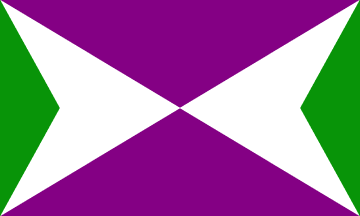
Flag
Yabucoa's municipal flag uses violet, white, and green, the principal colors found in the municipality's coat of arms. Its geometric design reflects the colors traditionally associated with Yabucoa's civic identity.
Coat of Arms
Yabucoa's coat of arms prominently features two guardian angels representing the Santos Ángeles Custodios, the municipality's patron saints. Yabucoa is unique among Puerto Rico's municipalities in having the Guardian Angels as its patron saints.
The violet field represents the dignity of the angels, while the staffs they carry symbolize their role as guides and companions. The staffs are crowned with guajana flowers, recalling the sugarcane that once dominated Yabucoa's fertile valley.
The green ground beneath the angels represents the rich agricultural valley upon which the municipality developed.
Anthem
Like the municipality's flag and coat of arms, it celebrates local identity and pride in the community.
Human & Capital Resources
Economy
Agriculture has shaped Yabucoa's economy for centuries. The broad and fertile Yabucoa Valley supported sugarcane on a large scale, earning the municipality its enduring nickname, La Ciudad del Azúcar.
Central Roig became one of the most important symbols of that economy. Sugar production provided employment for generations of Yabucoeños before the central ceased operations around the beginning of the 21st century.
Yabucoa's economy later diversified beyond agriculture. Petroleum-related industries, manufacturing, retail, services, and small businesses became increasingly important, while farming continued in the surrounding valley. Plantains, bananas, root crops, fruits, and livestock remain part of the area's agricultural activity.
Today, the municipality's economy includes retail, health and social services, food and accommodations, agriculture, industrial activity, and locally owned businesses. Tourism remains comparatively small, but Yabucoa's beaches, natural areas, scenic PR-901 corridor, and sugar heritage offer opportunities for sustainable and cultural tourism.
Education
Public education in Yabucoa is administered by the Puerto Rico Department of Education, with elementary, middle, and secondary schools serving communities throughout the municipality.
Education has a long history in Yabucoa. By 1847, the municipality had a public school attended by approximately 20 students, and by 1898 the community had seven public and three private schools.
Students seeking higher education have access to colleges and universities elsewhere in eastern Puerto Rico, including institutions in neighboring Humacao and the greater metropolitan region.
Demographics *
Population
30,426
Land Area: 55.21 sq mi
Density: 595.3 per sq mi
Median Age: 44.1
Sex: 52% female
Economics **
$10,124
Median household income: $16,828
Puerto Rico: $21,058
Persons below poverty line: 51.7%
Housing, families and educational attainment *
Number of households
11,687
Housing units density:
286.1 (2013)
Persons per household: 2.81
High school grad or higher: 71.9%
Marital status: 36% married
* U.S. Census Bureau 2020 data, unless otherwise noted - Source: Quick Facts Puerto Rico.
** U.S. Census Bureau 2016-2020
Map References
Coordinates: 18.0506° N, 65.8794° W
ZIP Code: 767
Driving Distance from San Juan: 39.8 miles
Driving Time: 1 hour, 8 minutes
Continue Exploring Puerto Rico
Explore the East Region
Continue exploring Puerto Rico's East Region, where Caribbean beaches, mountain landscapes, tropical forests, historic towns, and coastal communities come together. Discover destinations from Humacao and Yabucoa to Maunabo, Fajardo, and beyond.
Visit Humacao
Just north of Yabucoa, Humacao combines nature, history, beaches, and recreation. Explore the Humacao Nature Reserve, discover the historic town center, or enjoy the beaches, restaurants, golf, and resort amenities of Palmas del Mar.
Discover Maunabo
Head south to Maunabo, a quiet coastal town framed by the Sierra de Pandura and Caribbean Sea. Visit Punta Tuna Lighthouse, relax at Playa Punta Tuna, and experience one of southeastern Puerto Rico's most scenic coastal landscapes.
Frequently Asked Questions
Where is Yabucoa located?
Yabucoa is located on Puerto Rico's southeastern coast, south of Humacao and north of Maunabo, approximately one hour by car from the San Juan metropolitan area.
What is Yabucoa known for?
Yabucoa is best known as La Ciudad del Azúcar (The City of Sugar) because of its long history of sugarcane cultivation. It is also known for its fertile agricultural valley, beaches, historic sugar sites, and mountain scenery.
What are the best things to do in Yabucoa?
Popular experiences include visiting the ruins of Hacienda Santa Lucía and Central Roig, exploring Playa Lucía and El Cocal, driving the scenic PR-901 corridor, and discovering the Punta Yeguas Natural Area and Sierra de Pandura.
Does Yabucoa have beaches?
Yes. Yabucoa has an extensive Caribbean coastline with beaches including Playa Lucía, Playa Guayanés, El Cocal, and several smaller coastal areas.
Where should I stay in Yabucoa?
Parador Palmas de Lucía provides a traditional beachfront hotel experience, while Yabucoa also has guesthouses, villas, and vacation homes along its coast. Travelers seeking a larger resort can stay nearby at Palmas del Mar in Humacao.
Do I need a car in Yabucoa?
Yes, a rental car is strongly recommended. Yabucoa's beaches, restaurants, historic sites, and natural attractions are spread throughout the municipality, and public transportation options for visitors are limited.
What is Central Roig?
Central Roig was one of Yabucoa's major sugar-processing complexes and became a symbol of the municipality's sugar industry. Its surviving structures and equipment preserve part of the history that earned Yabucoa the nickname La Ciudad del Azúcar.
What festivals are celebrated in Yabucoa?
Major traditional celebrations include the Festival del Azúcar, Festival Playero, Festival del Carmen, Festival del Campesino, and the Fiestas Patronales de los Santos Ángeles Custodios.
Is Yabucoa worth visiting?
Yes, particularly for travelers interested in discovering a quieter and less touristy side of Puerto Rico. Yabucoa combines beaches, mountain scenery, Puerto Rican food, agricultural landscapes, and important sugar-industry history.
Did You Know?
The oldest city in the United States is St. Augustine in Florida, that is according to a continuously settled Europeans in the city. But the United States jurisdiction recognises San Juan as the oldest city in the US territory of Puerto Rico.
Get Our Newsletter
Discover new places, local flavors, upcoming events, cultural stories, and some of our favorite finds from around the island.Read the Latest ¡La Isla! Newsletter
Follow Along


