
Villalba, Puerto Rico
(vee-YAHL-bah)
Located along the southern slopes of Puerto Rico's Cordillera Central, Villalba is a mountain municipality known for its lakes, cool highland landscapes, panoramic roads, and agricultural traditions. Villalba is known as "La Ciudad del Gandul" (pigeon pea city) and "La Ciudad de los Lagos" (city of lakes), Villalba offers a quieter side of Puerto Rico shaped by mountains, reservoirs, forests, and rural communities.
Villalba became an independent municipality in 1917 after separating from Juana Díaz. José Ramón Figueroa played an important role in the long campaign to establish Villalba as its own municipality, while Walter McK. Jones was appointed its first mayor.
Overview
Why Visit Villalba?
Villalba is a destination for travelers who want to experience Puerto Rico beyond its beaches and major cities. Here, winding mountain roads reveal reservoirs, coffee country, forested peaks, waterfalls, and sweeping views across the Cordillera Central.
Lakes & Mountain SceneryVillalba is known as La Ciudad de los Lagos, with Lago Toa Vaca and Lago Guayabal forming two of its most recognizable landscapes. Scenic roads surrounding the reservoirs offer beautiful views of the mountains and valleys of south-central Puerto Rico.
Outdoor AdventureHead into the mountains toward Toro Negro State Forest for hiking, forest scenery, natural swimming areas, and some of the highest elevations in Puerto Rico. The Villalba-Orocovis area is especially rewarding for travelers who enjoy scenic drives and nature.
Authentic Mountain CultureVillalba retains the atmosphere of Puerto Rico's rural interior, where agriculture, traditional food, community festivals, and mountain life remain important parts of local identity. It is an excellent place to slow down and experience a different side of the island.
Top Things to Do in Villalba
Lago Toa Vaca
One of Villalba's defining landmarks, Lago Toa Vaca is a large reservoir surrounded by the green mountains of south-central Puerto Rico. Scenic roads around the lake offer beautiful views of the water and surrounding countryside.
Lago Guayabal
Located near the Villalba-Juana Díaz boundary, Lago Guayabal is another important reservoir in the region. The lake and surrounding hills contribute to Villalba's nickname, La Ciudad de los Lagos.
Miradero Villalba-Orocovis
High in the Cordillera Central, this scenic overlook along the route between Villalba and Orocovis offers sweeping views of Puerto Rico's mountainous interior and southern valleys.
Toro Negro State Forest
Just north of Villalba, Toro Negro protects some of Puerto Rico's highest and most dramatic mountain terrain. Visitors can explore hiking trails, mountain streams, natural swimming areas, and panoramic viewpoints.
Río Jacaguas
One of the principal rivers of south-central Puerto Rico, the Río Jacaguas flows through Villalba's mountain landscape and has played an important role in the area's agriculture and water resources.
Historic Town Center
Explore Villalba's traditional town center around Plaza de Recreo José Ramón Figueroa and Iglesia Nuestra Señora del Carmen, where the municipality's civic, religious, and community life comes together.
Plan your Visit
Set among the mountains of south-central Puerto Rico, Villalba is best explored by car, allowing travelers to reach its lakes, scenic overlooks, forest areas, restaurants, and rural communities.
Getting There
By Air
Luis Muñoz Marín International Airport (SJU) is approximately 1½ to 2 hours from Villalba by car, depending on traffic and your destination within the municipality.
By Car
From the San Juan metropolitan area, travelers generally head south across the Cordillera Central before connecting with roads leading toward Villalba. PR-149, PR-150, and PR-151 are among the municipality's principal routes.
Getting Around
Rental Car
A car is strongly recommended. Villalba's attractions are spread throughout mountainous and rural areas with limited public transportation.
Mountain Roads
Expect narrow, winding roads, steep grades, and changing elevations when exploring the northern part of the municipality. Allow extra travel time and use additional caution after dark or during heavy rain.
Walking
The traditional town center around Plaza de Recreo José Ramón Figueroa can be explored on foot, but a vehicle is necessary for reaching most natural attractions.
Nature & Resources
Geography
Villalba is located in the central region, northeast of Juana Díaz; south of Orocovis; and west of Coamo.
Villalba lies along the southern slopes of Puerto Rico's Cordillera Central, where the terrain rises dramatically from rolling hills and valleys to rugged mountain peaks. Elevations range from roughly 350 feet near Lago Guayabal to approximately 3,500 feet in the municipality's north-central mountains.
The landscape is shaped by rivers, reservoirs, forested mountains, and agricultural valleys. This variation in elevation also creates noticeable differences in temperature and rainfall between the lower southern areas and the cooler mountains to the north.
Rivers & Lakes
Water is central to Villalba's landscape and identity. Important waterways and reservoirs include:
- Río Jacaguas
- Río Toa Vaca
- Lago Toa Vaca
- Lago Guayabal
- Lago El Guineo
Lago Toa Vaca and Lago Guayabal are the municipality's most prominent reservoirs and helped inspire Villalba's nickname, La Ciudad de los Lagos.
Neighborhoods & Barrios
Villaba is made up of 7 barrios (PDF) (wards/districts):
- Caonillas Abajo
- Caonillas Arriba
- Hato Puerco Arriba
- Pueblo
- Vacas
- Villalba Abajo
- Villalba Arriba
Climate
Villalba has a tropical climate influenced strongly by elevation. The lower valleys are warm throughout the year, while the higher mountain communities can be noticeably cooler, particularly at night and during the winter months.
The municipality receives substantial rainfall, helping support its forests, rivers, reservoirs, coffee-growing areas, and other agricultural lands. Rain and mist are more common at higher elevations along the Cordillera Central.
Temperatures can vary considerably during a single drive through Villalba as roads climb from the lower valleys toward the mountains. Visitors exploring Toro Negro and the Villalba-Orocovis area may want to bring a light layer, especially during early mornings and evenings.
Hurricane season officially runs from June 1 through November 30. Heavy rain can affect mountain roads, rivers, and trails, so visitors should check local weather conditions before heading into remote areas.
10 Day Forecast from weather.com
Where to Stay
Villalba's accommodations reflect the character of the municipality itself. Instead of large hotels and resorts, visitors will find mountain retreats, countryside homes, glamping properties, and vacation rentals surrounded by nature.
- Rancho la Terapia
- El Cemi
- Hacienda Sol y Luna
- La Casita de Lele
- Casa Bohemia
- Casa de Campo Apa
- Casa de Campo El Retiro
- Hacienda Florecer Villalba
Vacation rentals are a good choice for couples, families, and travelers planning to explore Villalba, Orocovis, Coamo, and the surrounding Cordillera Central.
Local Flavors & Festivities
Where to Eat
Villalba's mountain setting is reflected in its food, with restaurants serving hearty Puerto Rican cooking, grilled meats, mofongo, rice and beans, and traditional dishes made with locally familiar ingredients. The municipality is especially associated with gandules (pigeon peas), which have long been part of its agricultural identity.
- Restaurante Papa Luis
- El Rincón Isleño Bar & Grill
- Coliseo Restaurant
- Mesa Típica
- Delicias de Campo Adentro Rest & Bar
- Las Cabañas de Doña Juana
- Alba Biergarten
- ArtesanAle
- La Ricotta Pizzeria
Festivals and Events
Displaying 6 results.
-
Fiestas Patronales de Nuestra Señora del Carmen
- July
Villalba's traditional patron saint celebration honoring Nuestra Señora del Carmen with religious observances, live music, food, artisans, community activities, and family entertainment.(787) 847-2500
-
Maratón de Puerto Rico
- July
Long-running road race traditionally associated with Villalba's July patron saint festivities, bringing runners together for one of the municipality's signature sporting traditions.
-
Festival del Lago
- August
Community festival celebrating Villalba's identity as the Ciudad de los Lagos Avancinos, with recreation, music, food, and activities highlighting the municipality's lakes and mountain landscape.
-
Festival Areyto
- November
Cultural festival celebrating Puerto Rico's Indigenous heritage with traditional presentations, exhibits, food, crafts, and activities inspired by Taíno culture.
-
Festival del Ñame y la Carne Frita
- November
Annual culinary festival celebrating two local favorites—ñame and carne frita—with Puerto Rican food, music, vendors, and community festivities in Villalba's town center.
-
Maratón Carlos Báez
- December
Traditional Villalba road race honoring Carlos Báez and bringing together local and visiting runners as part of the municipality's long-standing athletic culture.
History
Villalba developed in the mountainous interior of south-central Puerto Rico, in territory that originally formed part of the municipality of Juana Díaz. Its fertile valleys, abundant waterways, and mountain slopes supported agriculture and small rural communities long before Villalba became an independent municipality.
The community grew around agriculture, particularly sugarcane, coffee, pigeon peas, plantains, citrus, and other crops. The Río Jacaguas and the surrounding mountain landscape played an important role in the settlement and agricultural development of the area.
During the early twentieth century, residents sought greater political and administrative independence from Juana Díaz. Villalba became a municipality in 1917, with José Ramón Figueroa and Walter McK Jones among the figures closely associated with its establishment.
Agriculture remained central to Villalba's economy through much of the first half of the twentieth century. During the decades that followed, however, manufacturing and services gradually replaced agriculture as the municipality's principal economic sectors.
Despite these changes, Villalba retains a strong rural and mountain identity. Its lakes, agricultural traditions, patron saint celebrations, running culture, and relationship with the Cordillera Central continue to shape community life.
Moments in History
Villalba becomes an independent municipality after separating from Juana Díaz, beginning a new chapter in the community's political and civic history.
Agriculture—including sugarcane, coffee, pigeon peas, plantains, and other crops—helps shape Villalba's economy and rural identity.
The construction and development of reservoirs and water infrastructure reinforce Villalba's close relationship with the Río Jacaguas watershed and contribute to its identity as La Ciudad de los Lagos.
Villalba develops a growing reputation for distance running, a tradition eventually represented by the Medio Maratón de Puerto Rico, one of Puerto Rico's longest-running half marathons.
Villalba's economy shifts as manufacturing and service industries grow in importance, gradually replacing agriculture as the municipality's principal sources of employment and economic activity.
Villalba commemorates its centennial as an independent municipality, celebrating 100 years of municipal history.
Villalba remains closely connected to its mountain landscape, lakes, agricultural traditions, and athletic heritage while serving as a residential and economic center in Puerto Rico's south-central interior.
Notable People
Villalba has produced notable figures in athletics, music, the arts, public service, and community life. The municipality is particularly known for its strong tradition of distance running and competitive sports.
Famous Villalbeños
Walter McK Jones
1883–1944
Politics • Public Service
Villalba's first mayor and one of the principal figures involved in establishing the municipality in 1917. He helped organize the new municipal government and later served in the Puerto Rico House of Representatives.
José Ramón Figueroa
1836–1918
Agriculture • Municipal History
Coffee planter, merchant, and landowner who was one of the co-founders of Villalba. The municipality's main plaza, Plaza de Recreo José Ramón Figueroa, bears his name.
Carlos Báez Guzmán
1948–
Athletics
Villalba-born middle-distance runner who represented Puerto Rico at the 1968 Summer Olympics in Mexico City. He competed internationally in the 800 meters, 1,500 meters, and steeplechase and is part of Villalba's strong running tradition.
City Symbols
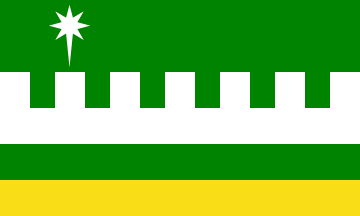
Flag
Villalba's flag is derived from the colors and symbolism of the municipal coat of arms. It consists of four horizontal bands of unequal width in green, white, green, and yellow. The white band has a crenellated design, while a white star appears near the hoist in the upper green band. The flag was designed by Enrique De Jesús.
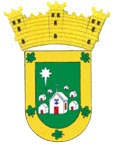
Coat of Arms
Villalba's coat of arms depicts a nineteenth-century Puerto Rican village with houses and a church, representing the community itself. The church bears the arms of Carmel in honor of Nuestra Señora del Carmen, Villalba's patron saint.
A silv
Anthem
The anthem was written by Pablo Collazo. The anthem celebrates the Río Jacaguas, Villalba's agricultural landscape, natural beauty, and the lasting affection Villalbeños feel for their hometown.
A las orillas del Río Jacaguas...
Human & Capital Resources
Economy
Villalba's economy has evolved considerably from its agricultural origins. Farming once dominated local employment, with sugarcane, coffee, pigeon peas, plantains, citrus, and other crops cultivated throughout the municipality's valleys and mountain slopes.
Beginning in the second half of the twentieth century, manufacturing and service industries became increasingly important. Today, services, manufacturing, commerce, government, healthcare, and small businesses contribute to the local economy.
Agriculture remains part of Villalba's cultural identity, particularly the cultivation of coffee, pigeon peas (gandules), and smaller crops. The gandul is so closely associated with the municipality that Villalba is known as La Ciudad del Gandul.
Villalba has also hosted manufacturing operations, including companies connected with medical devices and industrial products, reflecting the broader importance of manufacturing to Puerto Rico's economy.
Education
Public education in Villalba is administered through the Puerto Rico Department of Education, with schools serving students throughout the municipality and its rural barrios.
One of Villalba's historically significant educational landmarks is the Walter McK Jones School, named for the municipality's first mayor. The historic school building forms part of Villalba's architectural and civic heritage.
Students seeking broader university and technical programs also have access to institutions in nearby Ponce and other communities throughout south-central Puerto Rico.
Frequently Asked Questions
Where is Villalba located?
Villalba is located in south-central Puerto Rico, along the southern slopes of the Cordillera Central. It is bordered by Orocovis to the north, Coamo to the east, and Juana Díaz to the south and west.
What is Villalba known for?
Villalba is known for its mountain scenery, lakes and reservoirs, pigeon pea farming, running tradition, and access to the Cordillera Central. Its nicknames include La Ciudad del Gandul and La Ciudad de los Lagos.
Why is Villalba called the City of Lakes?
Villalba's landscape includes several important bodies of water, particularly Lago Toa Vaca and Lago Guayabal, along with other reservoirs and rivers. Water is one of the defining features of the municipality's geography.
What are the best things to do in Villalba?
Popular experiences include visiting Lago Toa Vaca, exploring the mountain roads of the Cordillera Central, stopping at the Miradero Villalba-Orocovis, visiting the historic town center, and exploring nearby Toro Negro State Forest.
Is Villalba worth visiting?
Yes, particularly for travelers interested in Puerto Rico's mountains, scenic drives, rural communities, lakes, hiking, and local culture. Villalba offers a quieter alternative to the island's coastal tourism centers.
Do I need a car in Villalba?
Yes. A rental car is strongly recommended because Villalba's lakes, mountain viewpoints, forests, restaurants, and rural communities are spread across mountainous terrain and public transportation options are limited.
What is the climate like in Villalba?
Villalba has a tropical mountain climate. Lower elevations are warm throughout the year, while higher areas of the Cordillera Central are noticeably cooler and wetter.
What is Villalba's patron saint?
Villalba's patron saint is Nuestra Señora del Carmen (Our Lady of Mount Carmel), honored during the municipality's traditional patron saint festivities in July.
What food is Villalba known for?
Villalba is particularly associated with the gandul, or pigeon pea. The crop is part of the municipality's agricultural heritage and inspired the nickname La Ciudad del Gandul. Traditional Puerto Rican mountain cooking is also common throughout the area.
What major sporting event takes place in Villalba?
Villalba hosts the Medio Maratón de Puerto Rico, a challenging 21-kilometer race and one of Puerto Rico's longest-running half marathons. The municipality has a particularly strong tradition of distance running.
Demographics *
Population
22,093
Land Area: 35.64 sq mi
Density: 614.5 per sq mi
Median Age: 41.3
Sex: 52% female
Economics **
$11,596
Median household income: $19,355
Puerto Rico: $21,058
Persons below poverty line: 46.4%
Housing, families and educational attainment *
Number of households
7,932
Housing units density:
272.4 (2013)
Persons per household: 2.75
High school grad or higher: 78.5%
Marital status: 38% married
* U.S. Census Bureau 2020 data, unless otherwise noted - Source: Quick Facts Puerto Rico.
** U.S. Census Bureau 2016-2020
Map References
Coordinates: 18.1272° N, 66.4922° W
ZIP Code: 766
Driving Distance from San Juan: 76.1 miles
Driving Time: 1 hour, 52 minutes
Did You Know?
Lajas is home to La Parguera, one of Puerto Rico’s only bioluminescent bays where visitors can swim in glowing waters.
Get Our Newsletter
Discover new places, local flavors, upcoming events, cultural stories, and some of our favorite finds from around the island.Read the Latest ¡La Isla! Newsletter
Follow Along


