
Trujillo Alto, Puerto Rico
(troo-HEE-yo AHL-to)
Trujillo Alto is known as "El Pueblo de los Arrecostaos" (laid back town). Trujillo Alto was founded on January 8, 1801 by Alonso de Trujillo.
Founded on January 8, 1801 as Santa Cruz de Trujillo Alto, the municipality developed along the Río Grande de Loíza and the roads connecting San Juan with Puerto Rico's eastern and central regions. Its landscape, once dominated by agriculture and cattle raising, has gradually become part of the expanding metropolitan region while preserving pockets of countryside character.
Today, Trujillo Alto is especially known for Lago Carraízo, its historic steel bridge, horseback-riding traditions, the popular Ruta del Lechón along PR-175, and the macabeo—a traditional plantain fritter celebrated every December during one of the municipality's signature festivals.
Overview
Why Visit Trujillo Alto?
Trujillo Alto offers a surprising taste of Puerto Rico's countryside just minutes from San Juan. Visitors can sample traditional lechón along PR-175, discover the town's famous macabeo, explore the historic center and bridge, enjoy horseback riding, and see Lago Carraízo, one of Puerto Rico's most important reservoirs.
Its convenient metropolitan location makes Trujillo Alto especially appealing for travelers who want to experience authentic local food and culture without planning a full-day trip into the central mountains.
Top Things to Do in Trujillo Alto
Lago Carraízo
Formed by the damming of the Río Grande de Loíza, Lago Carraízo is one of Puerto Rico's most important reservoirs and the principal source of drinking water for much of the San Juan metropolitan area. Surrounded by green hills, the lake also supports recreational fishing and provides one of Trujillo Alto's most distinctive landscapes.
Represa Carraízo
Completed in the 1950s, the Carraízo Dam created the reservoir now known as Lago Carraízo or Lago Loíza. The dam and reservoir transformed Puerto Rico's metropolitan water system and remain important pieces of the island's infrastructure.
Puente Histórico de Trujillo Alto
Built in 1938 across the Río Grande de Loíza, this steel bridge once carried traffic along PR-181. After being replaced by a modern bridge, the historic structure was preserved and declared a historic monument, becoming one of Trujillo Alto's most recognizable landmarks.
Paseo del Bicentenario
Created to commemorate Trujillo Alto's 200th anniversary, this pedestrian area incorporates the historic bridge and provides a scenic place to appreciate the Río Grande de Loíza and the municipality's transportation history.
Plaza de Recreo
The traditional heart of Trujillo Alto Pueblo, the plaza has served as a community gathering place for generations. The present space hosts cultural activities, concerts, festivals, and other municipal events.
Parroquia Exaltación de la Santa Cruz
Located beside the town plaza, the parish reflects the Catholic heritage of Trujillo Alto and honors the Santa Cruz, the municipality's patronal devotion.
Parque Familiar Ecuestre
A recreational complex celebrating Puerto Rico's equestrian traditions with horseback-riding activities, horse events, family entertainment, food, and community celebrations.
Fundación Luis Muñoz Marín
A cultural and historical institution preserving documents, photographs, artifacts, gardens, and archival material related to former Puerto Rico governor Luis Muñoz Marín and the island's twentieth-century political history.
Gruta de Lourdes
A religious landmark associated with Trujillo Alto's Catholic traditions and one of several sites that reflect the municipality's long connection to springs, hills, and devotional landscapes.
Trujillo Alto's Ruta del Lechón
You don't have to drive deep into Puerto Rico's mountains to experience a traditional ruta del lechón. Trujillo Alto has its own version along PR-175 in Barrio Carraízo, making it one of the easiest pork routes to reach from the San Juan metropolitan area.
The roadside lechoneras specialize in slow-roasted pork with crispy cuerito, accompanied by Puerto Rican favorites such as arroz con gandules, morcilla, yuca al mojo, pasteles, sweet plantains, and tostones. Weekends often add live music and a lively chinchorreo atmosphere.
Popular stops include Lechonera El Lago, Angelito's Place, La Casita de David, and Lechonera El Pino. Together they offer visitors a taste of Puerto Rico's countryside-food tradition without traveling far from San Juan.
The Macabeo: Trujillo Alto's Signature Flavor
Few foods are as closely identified with Trujillo Alto as the macabeo. This traditional fritter is prepared from mashed and grated green bananas, filled with seasoned meat, shaped into a half moon, and fried until golden.
The macabeo is distinct from the better-known alcapurria and has become an important symbol of Trujillo Alto's culinary identity. Since 1983, the municipality has celebrated the dish with the annual Festival del Macabeo, featuring traditional music, trova competitions, artisans, kiosks, entertainment, and plenty of macabeos.
Plan your Visit
Located just outside San Juan, Trujillo Alto is best explored by car, making it easy to combine its historic center, Lago Carraízo, lechoneras, and countryside attractions in a single day.
Getting There
By Air
Luis Muñoz Marín International Airport (SJU) is the closest major airport. Trujillo Alto is within the San Juan metropolitan area and can generally be reached within 30–45 minutes, depending on traffic and destination.
By Car
PR-181 is the principal route through Trujillo Alto, connecting the municipality with San Juan to the north and the interior toward Gurabo. PR-175 provides access to Carraízo and the municipality's popular lechoneras.
Getting Around
Rental Car
A car provides the greatest flexibility for visiting Lago Carraízo, Barrio Carraízo, the Ruta del Lechón, and attractions outside the traditional town center.
Walking
Once in Trujillo Alto Pueblo, the plaza, historic bridge, Paseo del Bicentenario, church, and surrounding streets can be explored on foot.
Taxis & Rideshare
Rideshare availability is generally better than in Puerto Rico's rural municipalities because Trujillo Alto forms part of the metropolitan region, although a car remains more practical for countryside attractions.
Nature & Resources
Geography
Trujillo Alto lies at the southeastern edge of Puerto Rico's Northern Coastal Plain and in the karst zonem, north of Caguas and Gurabo; southeast of San Juan, and west of Carolina.
The Río Grande de Loíza is the municipality's defining waterway, cutting through the landscape before reaching Lago Carraízo. Hills, streams, springs, and tropical vegetation give southern Trujillo Alto a noticeably more rural character than its densely developed northern communities.
Water is central to the municipality's identity. Trujillo Alto has long been known as La Ciudad de los Manantiales (the City of Springs), and its coat of arms incorporates eight streams of water representing both its barrios and its abundant rivers, springs, creeks, and reservoir.
Rivers & Waterways
The Río Grande de Loíza is Trujillo Alto's principal river and one of Puerto Rico's major waterways. Historically, its waters supported agriculture and transportation before becoming central to the metropolitan water-supply system.
The construction of the Carraízo Dam created Lago Carraízo, also known as Lago Loíza. The reservoir extends into Trujillo Alto, Gurabo, and Caguas and remains the principal source of drinking water for much of metropolitan San Juan.
Smaller waterways include Quebrada Colorada, Quebrada Infierno, Quebrada Limones, Quebrada Naranjo, Quebrada Grande, Quebrada Pastrana, Quebrada Haya Fría, and Quebrada Maracuto, while numerous natural springs reinforce Trujillo Alto's identity as the City of Springs.
Neighborhoods & Barrios
Trujillo Alto is made up of 8 barrios (PDF) (wards/districts):
- Carraízo
- Cuevas
- Dos Bocas
- La Gloria
- Pueblo
- Quebrada Grande
- Quebrada Negrito
- Saint Just
Climate
Trujillo Alto has a warm, humid tropical climate throughout the year. Its location between the northern coastal plain and the wetter interior hills produces lush vegetation and regular rainfall, particularly in the southern and elevated portions of the municipality.
Daytime temperatures generally remain warm year-round, while evenings can feel somewhat cooler in the hillier communities surrounding Carraízo and Quebrada Grande.
Rainfall occurs throughout the year, with wetter conditions generally developing from late spring through fall. The abundant rainfall feeds the Río Grande de Loíza, numerous streams and springs, and Lago Carraízo.
Visitors planning outdoor activities around the river or reservoir should monitor recent weather conditions, especially after periods of heavy rain when water levels and currents may change rapidly.
10 Day Forecast from weather.com
Where to Stay
- Hampton Inn & Suites San Juan
- Residence Inn by Marriott San Juan Isla Verde
- Hotel Villa del Sol
- Dreams Hotel Puerto Rico
- Hotel Nest
- Hyatt Place San Juan
Vacation Rentals
Vacation rentals are the main option for travelers who want to stay within Trujillo Alto itself, particularly for families and visitors looking for additional space.
Local Flavors & Festivities
Where to Eat
- Lechonera El Lago
- Angelito's Place
- La Casita de David
- Lechonera Restaurante El Pino
- Rincón del Viajero Café
- Barcelona Bakery & Deli
- Bakery Box
- Repostería Kannella
Festivals and Events
Displaying 8 results.
-
Feria Agrícola
- February
Traditional agricultural fair celebrating Trujillo Alto's rural heritage with local products, agricultural displays, food, artisans, and community activities.
-
Festival de Tríos
- May
Evening celebration of Puerto Rico's romantic trio tradition featuring live performances in the Plaza de Recreo.
-
Ven Pa'l Pueblo
- May
Community celebration in the traditional town center bringing together art, culture, music, local food, and entertainment along Calle Muñoz Rivera.
-
Festival Nacional de Bonsái
- July
National bonsai and suiseki festival featuring exhibitions, demonstrations, workshops, educational talks, and bonsai sales.
-
Fiestas Patronales de la Exaltación de la Santa Cruz
- September
Annual patron saint celebration honoring the Exaltación de la Santa Cruz with religious observances, music, food, artisans, entertainment, and community festivities.
-
5K del Arrecosta'o
- October
One of Trujillo Alto's best-known sporting traditions, bringing runners from across Puerto Rico together for a community 5K race through the municipality.
-
Festival de Paso Fino
- November
Celebration of Puerto Rico's Paso Fino horse tradition with equestrian exhibitions, riders, music, food, and family activities.
-
Festival del Macabeo
- December
Signature culinary festival celebrating Trujillo Alto's traditional macabeo with local food, music, trovadores, artisans, kiosks, entertainment, and family activities.
History
The lands that became Trujillo Alto were originally part of a much larger rural region surrounding the Río Grande de Loíza. During the Spanish colonial period, cattle raising and agriculture gradually attracted families to the hills and river valleys southeast of San Juan.
On January 8, 1801, the municipality was formally established as Santa Cruz de Trujillo Alto. The Río Grande de Loíza strongly influenced the location and development of the town because residents needed reliable access across the river during periods of flooding.
Agriculture formed the foundation of the early economy. Cattle, sugar cane, rice, corn, and smaller crops were produced throughout the municipality, while the river helped connect rural communities with neighboring towns.
Improved transportation gradually connected Trujillo Alto more closely with San Juan. Bridges were built during the nineteenth century, and in 1939 a steel bridge across the Río Grande de Loíza strengthened the route between the metropolitan area and Puerto Rico's eastern interior.
Trujillo Alto temporarily lost its independent municipal status in 1902 when it was annexed to Carolina, but a new law restored the municipality in 1905.
The construction of the Carraízo reservoir during the 1950s permanently transformed the landscape. Lago Carraízo became the principal source of drinking water for metropolitan San Juan and remains one of Trujillo Alto's most important geographic features.
During the second half of the twentieth century, suburban development expanded rapidly as the San Juan metropolitan area grew. Today, Trujillo Alto combines densely populated neighborhoods with rural communities, green hills, waterways, and culinary traditions that preserve its identity as La Ciudad en el Campo.
Moments in History
Santa Cruz de Trujillo Alto is officially established as a municipality on January 8.
Two early bridges improve connections from Trujillo Alto toward Río Piedras and Río Grande, strengthening transportation across the region.
Trujillo Alto's first school opens, marking an important milestone in the development of public education in the municipality.
Trujillo Alto is temporarily annexed to Carolina before being restored as an independent municipality three years later.
The historic steel bridge across the Río Grande de Loíza is constructed, improving transportation between Trujillo Alto and Puerto Rico's eastern interior.
Construction of the Carraízo reservoir is completed, creating Lago Carraízo and establishing one of the most important water-supply systems serving metropolitan San Juan.
The Festival del Macabeo begins, transforming the municipality's signature plantain fritter into one of Trujillo Alto's best-known cultural traditions.
Trujillo Alto celebrates its bicentennial with the development of the Paseo del Bicentenario and preservation of the historic bridge area.
Notable People
Trujillo Alto has produced influential writers, engineers, musicians, educators, and broadcasters whose contributions have shaped Puerto Rican culture, public life, literature, and sports.
Famous Trujillanos
Emilio Díaz Valcárcel
1929–2015
Literature
Acclaimed novelist, short-story writer, playwright, and educator born in Trujillo Alto. His work explored Puerto Rican society, migration, war, and modern life, establishing him as an important voice in twentieth-century Puerto Rican literature.
Tulio Larrínaga
1847–1917
Engineering • Politics
Civil engineer and statesman born in Trujillo Alto who served as Puerto Rico's Resident Commissioner in the U.S. House of Representatives from 1905 to 1911 and contributed to major infrastructure projects on the island.
Yolandita Monge
1955–present
Music • Acting
Internationally recognized Puerto Rican singer, songwriter, actress, and television personality born in Trujillo Alto. Her career spans more than five decades of Latin pop music and entertainment.
Manuel "Manolo" Rivera Morales
1923–2000
Sports Broadcasting
Legendary Puerto Rican sports broadcaster born in Trujillo Alto whose distinctive voice became closely associated with basketball, boxing, horse racing, and other major sporting events.
Medardo Carazo
Education
Educator remembered among Trujillo Alto's important historical figures for his contributions to teaching and the municipality's educational heritage.
José Fermín Díaz Viera
History
Historian associated with Trujillo Alto whose work contributed to documenting and preserving the municipality's history and cultural memory.
City Symbols
Flag
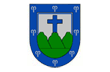
Trujillo Alto's municipal flag incorporates blue, green, and white, colors drawn from the municipality's coat of arms and associated with its landscape, waterways, and historic identity.
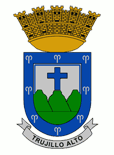
Coat of Arms
The coat of arms features three green mountains representing Trujillo Alto's hilly terrain and a blue Latin cross representing the Santa Cruz, patronal symbol of the municipality.
Eight streams of water surround the shield, representing Trujillo Alto's eight barrios as well as the municipality's abundant water resources—the Río Grande de Loíza, numerous springs and streams, and Lago Carraízo.
Anthem
The municipal anthem celebrates the municipality's landscape, history, traditions, and affection felt by Trujillanos for their hometown.
Human & Capital Resources
Economy
Trujillo Alto's early economy was based primarily on agriculture and cattle raising. Sugar cane, rice, corn, coffee, fruits, and other crops were cultivated throughout the river valleys and surrounding hills.
During the twentieth century, the rapid expansion of the San Juan metropolitan area transformed the municipality. Residential construction increased dramatically, agricultural land declined, and Trujillo Alto became increasingly integrated into the metropolitan economy.
Today, retail, healthcare, education, construction, professional services, restaurants, government employment, and small businesses support much of the local economy. Many residents also commute to jobs throughout San Juan, Carolina, Caguas, and the wider metropolitan region.
Food tourism provides Trujillo Alto with a distinctive visitor economy. The PR-175 Ruta del Lechón, Festival del Macabeo, equestrian activities, and community festivals attract visitors while supporting local restaurants, artisans, and small businesses.
Education
Public education in Trujillo Alto is administered primarily by the Puerto Rico Department of Education, with elementary, middle, and secondary schools serving communities throughout the municipality.
Trujillo Alto is also home to the Universidad Teológica del Caribe in Barrio Saint Just, a private higher-education institution offering undergraduate and graduate studies in theology, biblical studies, Christian education, ministry, and related fields.
The municipality's location within the San Juan metropolitan region also provides residents with convenient access to the University of Puerto Rico's Río Piedras Campus and numerous universities, technical institutes, and professional schools throughout San Juan and Carolina.
Demographics *
Population
67,740
Land Area: 20.76 sq mi
Density: 3,237.80 per sq mi
Median Age: 43.5
Sex: 54% female
Economics **
$16,824
Median household income: $32,611
Puerto Rico: $21,058
Persons below poverty line: 29.3%
Housing, families and educational attainment *
Number of households
23,805
Housing units density:
1,459.3 (2013)
Persons per household: 2.7
High school grad or higher: 84.9%
Marital status: 43% married
* U.S. Census Bureau 2020 data, unless otherwise noted - Source: Quick Facts Puerto Rico.
** U.S. Census Bureau 2016-2020
Map References
Coordinates: 18.3628° N, 66.0175° W
ZIP Code: 00976, 00977, 00978
Driving Distance from San Juan: 8.9 miles
Driving Time: 20 minutes
Frequently Asked Questions
What is Trujillo Alto, Puerto Rico known for?
Trujillo Alto is known for Lago Carraízo, its Ruta del Lechón, the traditional macabeo, the historic Trujillo Alto bridge, equestrian traditions, and its nickname El Pueblo de los Arrecostaos.
Where is Trujillo Alto located?
Trujillo Alto is located immediately southeast of San Juan, between San Juan, Carolina, Gurabo, and Caguas, making it part of Puerto Rico's metropolitan region.
What is a macabeo?
A macabeo is a traditional Trujillo Alto fritter prepared from mashed and grated green bananas, filled with seasoned meat, shaped into a half moon, and fried until golden.
What is the Ruta del Lechón in Trujillo Alto?
Trujillo Alto's Ruta del Lechón is a collection of traditional lechoneras along PR-175 in Barrio Carraízo serving roast pork, arroz con gandules, morcilla, yuca, plantains, and other Puerto Rican dishes.
What is Lago Carraízo?
Lago Carraízo, also known as Lago Loíza, is a reservoir created on the Río Grande de Loíza. It is one of Puerto Rico's most important water reservoirs and supplies drinking water to much of metropolitan San Juan.
What are the best things to do in Trujillo Alto?
Popular experiences include exploring Trujillo Alto Pueblo and its historic bridge, visiting Lago Carraízo, enjoying the Ruta del Lechón, attending local festivals, and experiencing the municipality's equestrian traditions.
When is the Festival del Macabeo?
The Festival del Macabeo is traditionally celebrated during the second weekend of December with local food, traditional music, trovadores, artisans, kiosks, and entertainment.
How far is Trujillo Alto from San Juan?
Trujillo Alto borders the San Juan metropolitan area and can often be reached within 20 to 40 minutes by car, depending on traffic and the destination within the municipality.
Do I need a car to visit Trujillo Alto?
A car is recommended, particularly for visiting Lago Carraízo, Barrio Carraízo, the Ruta del Lechón, and attractions outside the traditional town center.
Why is Trujillo Alto called El Pueblo de los Arrecostaos?
The nickname reflects Trujillo Alto's relaxed, easygoing local identity and has become one of the municipality's best-known cultural expressions.
Did You Know?
Puerto Rico population is equivalent to 0.04% of the total world population. (2020)
Get Our Newsletter
Discover new places, local flavors, upcoming events, cultural stories, and some of our favorite finds from around the island.Read the Latest ¡La Isla! Newsletter
Follow Along


