
San Lorenzo, Puerto Rico
(sanh lo-REN-zo)
San Lorenzo (Saint Lawrence) is known as El Pueblo de los Samaritanos (town of the Samaritans) and La Tierra de Leyendas (land of legends). San Lorenzo was founded in 1811 by Valeriano Muñoz de Oneca. Its original name was San Miguel de Hato Grande.
San Lorenzo is known as "El Pueblo de los Samaritanos" (the Town of the Samaritans) and "La Ciudad Samaritana". Located in Puerto Rico's east-central interior, the municipality combines mountain scenery, rivers and waterfalls, coffee-growing traditions, religious landmarks, and a strong agricultural heritage.
San Lorenzo was founded in 1811 by Valeriano Muñoz de Oneca as San Miguel de Hato Grande. Because early municipal records were destroyed by fire, the exact founding date is uncertain. The municipality officially adopted the name San Lorenzo in 1901.
Overview
Why Visit San Lorenzo?
San Lorenzo is a rewarding destination for travelers looking to explore Puerto Rico's rural interior. Coffee farms, mountain roads, waterfalls, traditional food, and religious landmarks reveal a side of the island that can easily be missed when traveling only along the coast.
Its location also makes San Lorenzo an easy countryside excursion from Caguas and the San Juan metropolitan area while providing access to the mountainous landscapes of southeastern Puerto Rico.
Top Things to Do in San Lorenzo
Hacienda Muñoz
A working coffee plantation where visitors can learn about Puerto Rico's coffee-growing traditions, tour the plantation, enjoy views of the surrounding countryside, and sample locally grown coffee.
Montaña Santa
One of San Lorenzo's best-known religious landmarks and an important Catholic pilgrimage destination associated with the mountain landscape of the municipality.
Las Tres Cruces
A religious and scenic landmark associated with San Lorenzo's mountain landscape and long tradition of Catholic devotion.
Cerro Gregorio
One of San Lorenzo's prominent natural landmarks, offering mountainous scenery representative of Puerto Rico's east-central interior.
Nature & Outdoor Attractions
Cascada Siete Chorros
A picturesque waterfall area tucked into San Lorenzo's lush interior and one of the municipality's notable natural attractions.
Charco El Periquito
A natural swimming hole surrounded by the tropical vegetation and waterways characteristic of San Lorenzo's countryside.
Carite State Forest
Parts of San Lorenzo reach into the mountainous landscape associated with Carite State Forest, an important protected forest in southeastern Puerto Rico known for tropical vegetation, rivers, mountain scenery, and wildlife.
Ulpiano Casal Natural Protected Area
A protected natural area that helps conserve San Lorenzo's forests, waterways, wildlife habitat, and mountainous landscape.
San Lorenzo Coffee Country
Coffee has long been part of Puerto Rico's mountain culture, and San Lorenzo offers visitors an opportunity to experience that tradition firsthand. The municipality's elevation, rural landscape, and agricultural heritage provide a natural setting for exploring Puerto Rican coffee beyond the island's better-known western coffee region.
One of the best places to experience this tradition is Hacienda Muñoz, a working coffee farm established in 1999. Visitors can explore the plantation on a guided coffee tour, learn about coffee cultivation and production, enjoy Puerto Rican cuisine at Yiya's Restaurant, and purchase locally produced coffee.
Plan your Visit
Located in Puerto Rico's east-central interior, San Lorenzo is best explored by car, allowing visitors to reach its coffee farms, waterfalls, mountain communities, and countryside attractions.
Getting There
By Air
Luis Muñoz Marín International Airport (SJU) is the primary airport for visitors traveling to San Lorenzo. From the metropolitan area, continue southeast through Caguas toward San Lorenzo.
By Car
Driving is the most convenient way to reach San Lorenzo. Roads connect the municipality with Caguas, Gurabo, Juncos, Cayey, Yabucoa, and other communities in eastern and central Puerto Rico.
Getting Around
Rental Car
A car is strongly recommended for exploring San Lorenzo's rural attractions, coffee farms, mountain roads, waterfalls, and surrounding countryside.
Scenic Driving
Allow extra time when traveling through the mountainous southern portions of the municipality, where roads can be narrow and winding.
Taxis & Rideshare
Taxi and rideshare service may be available around the town center, but availability can be limited in rural and mountainous areas.
Walking
The traditional town center can be explored on foot, but most natural attractions and rural destinations require transportation.
Nature & Resources
Geography
San Lorenzo occupies approximately 53 square miles in Puerto Rico's east-central region, north of Patillas and Yabucoa; south of Gurabo; east of Caguas and Cayey; and west of Juncos and Las Piedras. Its landscape transitions from rolling valleys and developed areas in the north to increasingly mountainous terrain toward the south.
The municipality forms part of an important natural corridor containing forests, rivers, streams, waterfalls, and protected lands. Portions of the Carite State Forest extend into the area, while the Ulpiano Casal protected area and the Guajón conservation-priority area preserve additional sections of San Lorenzo's natural landscape.
Rivers & Waterways
Water has played an important role in shaping San Lorenzo's landscape. Numerous rivers, streams, waterfalls, and natural pools drain the surrounding mountains and valleys, contributing to the watershed of eastern Puerto Rico.
Among the municipality's best-known water features are Cascada Siete Chorros and Charco El Periquito, while smaller streams and tributaries cross the rural barrios before joining larger river systems.
Neighborhoods & Barrios
San Lorenzo is made up of 11 barrios (PDF) (wards/districts):
- Cayaguás
- Cerro Gordo
- Espino
- Florida
- Hato
- Jagual
- Pueblo
- Quebrada
- Quebrada Arenas
- Quebrada Honda
- Quemados
Climate
San Lorenzo has a warm tropical climate throughout the year, with temperatures moderated somewhat by its inland elevation and mountainous terrain. Lower elevations tend to be warmer, while the southern mountain areas are generally cooler and receive more rainfall. Daytime temperatures typically range from the low 80s to upper 80s °F (about 27–31°C), with evenings generally in the upper 60s to low 70s °F (about 20–23°C). Temperatures can be noticeably cooler at higher elevations.
Rainfall occurs throughout the year, with the wetter period generally extending from late spring through fall. San Lorenzo's abundant rainfall feeds its rivers, streams, waterfalls, and lush vegetation, particularly in the mountainous areas near Carite State Forest.
The relatively drier months from December through March are often comfortable for exploring coffee farms, scenic mountain roads, and outdoor attractions. Visitors planning waterfall or river excursions should check recent weather conditions, as heavy rainfall can quickly increase water levels and currents.
10 Day Forecast from weather.com
Where to Stay
- Lilly of the Valley Puerto Rico
- Gavidias Guest House
- Hill House
- Monte Paraíso
Vacation Rentals
Vacation rentals are a good option for couples, families, and groups who want more space while staying close to San Lorenzo's rural attractions.
Local Flavors & Festivities
Where to Eat
- Yiya's Restaurant at Hacienda Muñoz
- Lechonera Los Compadres
- El Bambú
- El Llanito
- La Curvita de Pio
- SoJa Bar & Grill
- El Rey de las Frituras
- Hacienda Muñoz
- Tacita Dulce Coffee & Bistro
- Konversa Coffee Shop
- Panadería La Samaritana
- Las Piñas Bakery
Festivals and Events
Displaying 8 results.
-
Cabalgata Moncho Roldán
- January
Traditional horseback procession celebrating San Lorenzo's rural and equestrian heritage.
-
Trulla de Reyes
- January
Traditional Three Kings season celebration featuring Puerto Rican Christmas music and community festivities.
-
Fiestas de la Candelaria
- February
Traditional religious and community celebration associated with the Feast of Candlemas.
-
Festival de la Chiringa
- March
Family-oriented kite festival celebrating the Puerto Rican tradition of flying handmade chiringas, with outdoor activities and community entertainment.
-
Fiestas de Cruz
- May
Traditional observance of the Cruz de Mayo combining religious devotion, music, and community traditions.
-
Festival del Bordado y el Tejido
- September
Celebration of embroidery, weaving, needlework, and traditional Puerto Rican craftsmanship featuring artisans and handmade works.
-
Fiestas Patronales Nuestra Señora de las Mercedes
- September
San Lorenzo's traditional patron saint celebration honoring Nuestra Señora de las Mercedes with religious observances, music, food, community activities, and entertainment.
-
Festival de la Parcha
- November
Community festival celebrating parcha, or passion fruit, and its use in Puerto Rican food and beverages.
History
The area that became San Lorenzo developed during Puerto Rico's Spanish colonial period in the fertile valleys and mountains of the island's east-central interior. The community was originally known as San Miguel de Hato Grande.
The municipality's exact founding date remains uncertain because early municipal records were destroyed by fire. Historical accounts generally place the establishment of the town between 1811 and 1814.
Agriculture shaped San Lorenzo for generations. Sugar cane, tobacco, coffee, livestock, and food crops supported the rural economy, while small communities developed throughout the surrounding valleys and mountains.
In 1901, the municipality officially adopted the name San Lorenzo. During the 20th century, improved roads and transportation strengthened connections with Caguas and Puerto Rico's metropolitan region, while the local economy gradually shifted from agriculture toward manufacturing, commerce, and services.
Today, San Lorenzo retains much of its rural character while forming part of the broader economic corridor connecting eastern Puerto Rico with Caguas and the San Juan metropolitan area.
Moments in History
1811–1814 — Establishment of San Miguel de Hato Grande
Historical accounts place the establishment of the community that became San Lorenzo within this period. The precise date is uncertain because early municipal records were later destroyed.
19th Century — Agricultural Expansion
Sugar cane, tobacco, coffee, livestock, and subsistence agriculture become central to San Lorenzo's rural economy and help shape communities throughout the municipality.
1901 — San Lorenzo Receives Its Present Name
The municipality formerly known as San Miguel de Hato Grande officially adopts the name San Lorenzo.
1999 — Hacienda Muñoz Established
Héctor Muñoz establishes Hacienda Muñoz, which later develops into one of San Lorenzo's best-known coffee destinations and helps introduce visitors to Puerto Rico's coffee-growing traditions.
2024 — Manufacturing Investment
Puerto Rican manufacturer Lanco announces a $42 million expansion of its San Lorenzo operations, reinforcing manufacturing's continuing role in the municipality's modern economy.
Notable People
San Lorenzo has produced influential musicians, performers, public officials, writers, and cultural figures whose work has contributed to Puerto Rican life both on the island and internationally.
Famous Sanlorenceños
Chayanne
1968–present
Music • Acting
Born Elmer Figueroa Arce and raised in San Lorenzo, Chayanne became one of Puerto Rico's most internationally recognized Latin pop performers, with a career spanning music, television, and film.
Carmita Jiménez
1939–2003
Music
Known as "La Dama de la Canción," Jiménez was a celebrated Puerto Rican singer known for her interpretations of boleros, ballads, and popular Latin music.
Ernestina Reyes "La Calandria"
Music • Composition
Traditional Puerto Rican singer and composer remembered for her contributions to música jíbara and Puerto Rico's rural musical traditions.
Priscila Flores
Music
Traditional Puerto Rican singer known as "La Alondra de San Lorenzo" and remembered for her contributions to the municipality's musical heritage.
José Tous Soto
Law • Politics
Puerto Rican attorney and political leader who served in the island's legislature and became an important figure in Puerto Rico's early 20th-century political life.
Antonio Fernós-Isern
1895–1974
Medicine • Politics
Physician and statesman who served as Puerto Rico's Resident Commissioner in Washington and played an important role in the island's mid-20th-century political development.
City Symbols
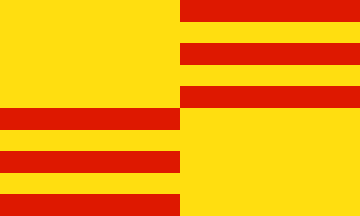
Flag
The flag of San Lorenzo incorporates yellow and red, colors closely associated with the municipality's coat of arms. Its design reflects the heraldic traditions and historical identity of San Lorenzo.
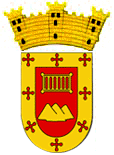
Coat of Arms
The coat of arms incorporates symbols associated with the municipality's religious and geographic heritage. The grill represents Saint Lawrence, the municipality's namesake, who according to Christian tradition was martyred on a gridiron.
Anthem
San Lorenzo's anthem celebrates the municipality's green countryside, landscape, and community identity.
Son tus campos de bellisimo verdor...
Human & Capital Resources
Economy
Agriculture historically formed the foundation of San Lorenzo's economy. Sugar cane, tobacco, coffee, livestock, fruits, and other crops were cultivated throughout its fertile valleys and mountain communities.
Over time, San Lorenzo transitioned toward a more diversified economy centered on manufacturing, retail, construction, healthcare, education, government, and other services. Its proximity to Caguas and transportation connections with eastern Puerto Rico also allow residents to participate in the larger regional labor market.
Manufacturing continues to play an important role. Recent private investment, including the expansion of Lanco's manufacturing operations, demonstrates the municipality's continuing role in Puerto Rico's industrial economy.
Agriculture nevertheless remains part of San Lorenzo's identity. Coffee production and agritourism, represented by destinations such as Hacienda Muñoz, help preserve the municipality's agricultural traditions while contributing to its visitor economy.
Education
Public education in San Lorenzo is administered by the Puerto Rico Department of Education, with elementary, middle, and secondary schools serving communities throughout the municipality.
Students seeking universities, technical programs, and other post-secondary opportunities also have access to institutions in nearby Caguas, Gurabo, and the greater San Juan metropolitan region.
Demographics *
Population
37,693
Land Area: 53.11 sq mi
Density: 688.9 per sq mi
Median Age: 43
Sex: 51% female
Economics **
$11,387
Median household income: $19,385
Puerto Rico: $21,058
Persons below poverty line: 43.8%
Housing, families and educational attainment *
Number of households
13,676
Housing units density:
324.3 (2013)
Persons per household: 2.67
High school grad or higher: 72.7%
Marital status: 39% married
* U.S. Census Bureau 2020 data, unless otherwise noted - Source: Quick Facts Puerto Rico.
** U.S. Census Bureau 2016-2020
Map References
Coordinates: 18.1900° N, 65.9686° W
ZIP Code: 754
Driving Distance from San Juan: 25.6 miles
Driving Time: 57 minutes
Frequently Asked Questions
What is San Lorenzo, Puerto Rico known for?
San Lorenzo is known for its mountain scenery, coffee traditions, rivers and waterfalls, religious landmarks, rural culture, and as the hometown associated with international Latin pop star Chayanne.
Why is San Lorenzo called El Pueblo de los Samaritanos?
The nickname is associated with the story of Julia Vázquez Torres, remembered locally as "La Samaritana de San Lorenzo" for helping people with traditional remedies, medicinal plants, and water from a local well.
What was San Lorenzo originally called?
The community was originally known as San Miguel de Hato Grande. The municipality adopted the name San Lorenzo in 1901.
When was San Lorenzo founded?
The exact founding date is uncertain because early municipal records were destroyed. Historical accounts generally place the establishment of San Miguel de Hato Grande between 1811 and 1814.
What are the best things to do in San Lorenzo?
Popular experiences include visiting Hacienda Muñoz, exploring the municipality's waterfalls and natural pools, discovering its mountain scenery, visiting religious landmarks, and enjoying traditional Puerto Rican food.
Can you visit a coffee farm in San Lorenzo?
Yes. Hacienda Muñoz is a working coffee plantation offering guided coffee tours where visitors can learn about coffee cultivation and production.
Do I need a car to visit San Lorenzo?
A car is strongly recommended. Many of San Lorenzo's coffee farms, waterfalls, mountain attractions, restaurants, and rural communities are outside the traditional town center, and public transportation is limited.
How far is San Lorenzo from San Juan?
San Lorenzo is southeast of the San Juan metropolitan area. Driving time varies with traffic and the destination within the municipality, but visitors should generally allow about an hour from the metropolitan area.
Is San Lorenzo in the mountains?
San Lorenzo extends from rolling valleys into mountainous terrain toward the south, where its landscape connects with the Cordillera Central and areas surrounding Carite State Forest.
Where can I eat traditional Puerto Rican food in San Lorenzo?
San Lorenzo has numerous criollo restaurants, lechoneras, chinchorros, bakeries, and cafés serving traditional dishes, frituras, roast pork, local coffee, breads, and pastries.
Did You Know?
On the United States, Puerto Ricans are the second largest Hispanic origin group (4 million) (Brown and Patten, 2014), following Mexicans (34 million in 2012) and ahead of Cubans (2 million) and Salvadorans (2 million).
Get Our Newsletter
Discover new places, local flavors, upcoming events, cultural stories, and some of our favorite finds from around the island.Read the Latest ¡La Isla! Newsletter
Follow Along


