
Sabana Grande, Puerto Rico
(sah-BAH-nah GRAHN-de)
Sabana Grande is known as "La Ciudad de los Petateros" and "El Pueblo de los Prodigios" (town of prodigies), Sabana Grande is a charming municipality in Puerto Rico's southwest known for its talented artists, musicians, writers, beautiful forests, religious heritage, and traditional palm-weaving craftsmanship.
Founded in 1813 by Pedro de Acosta, Sabana Grande sits between the foothills of the Central Mountain Range and the southern coastal plains, offering visitors a unique combination of outdoor adventure, historic architecture, cultural traditions, and peaceful rural scenery. The municipality is home to the famous Virgen del Pozo Sanctuary, the lush Susúa State Forest, and one of Puerto Rico's oldest patron saint festivals.
Overview
Why Visit Sabana Grande?
Visit Sabana Grande to hike through Susúa State Forest, discover the Virgen del Pozo Sanctuary, admire historic Spanish Colonial architecture, experience authentic western Puerto Rican culture, and enjoy excellent local cuisine away from the island's busiest tourist destinations.
Top Things to Do in Sabana Grande
Virgen del Pozo Sanctuary
One of Puerto Rico's most important religious pilgrimage sites, built around the reported Marian apparitions of 1953. The sanctuary includes a chapel, museum, prayer gardens, and the original well where the apparition is said to have appeared.
Susúa State Forest
A 3,240-acre subtropical forest featuring hiking trails, picnic areas, native wildlife, birdwatching, and one of the few habitats of Puerto Rico's native red bat.
Plaza José A. Busigó
The historic town plaza surrounded by colorful Spanish Colonial buildings, churches, monuments, cafés, and artisan shops.
Parroquia San Isidro Labrador y Santa María de la Cabeza
Dating to 1844, this beautiful neoclassical church is the municipality's oldest building and centerpiece of downtown Sabana Grande.
Casa Barco
A unique Art Deco residence designed in the shape of a ship, considered one of Puerto Rico's most unusual architectural landmarks.
Castillo Residence (Twin Houses)
Two identical Spanish Colonial homes that have become one of Sabana Grande's best-known architectural attractions.
Masonic Cemetery
The only Masonic cemetery in Puerto Rico, reflecting the municipality's unique historical heritage.
Monumento a la Petatera
A monument honoring the women artisans who preserved Sabana Grande's traditional petate weaving craft.
The Petateros Tradition
Sabana Grande proudly carries the nickname "La Ciudad de los Petateros", honoring generations of artisans who mastered the traditional craft of weaving petates—durable mats made from the leaves of the corozo palm. For centuries these handwoven mats served as sleeping mats, floor coverings, baskets, and household items throughout Puerto Rico.
Long before industrial materials became common, entire families participated in harvesting, drying, and weaving palm fibers into beautiful geometric patterns. The craftsmanship required patience, precision, and techniques passed from one generation to the next, making petate weaving an important part of Sabana Grande's cultural identity.
Although relatively few artisans continue the tradition today, the municipality proudly preserves this heritage through cultural events, artisan demonstrations, and the annual Festival del Petate, where visitors can watch traditional weaving techniques, purchase handcrafted pieces, and learn about one of Puerto Rico's oldest folk arts.
Throughout downtown, you'll also find monuments and public art celebrating the petateros, ensuring this unique craft remains an enduring symbol of Sabana Grande's history and community pride.
Local Tip: Visit during artisan festivals for the best chance to meet local craftspeople and purchase authentic handmade petates.
Plan your Visit
Located in Puerto Rico's southwest, Sabana Grande is best explored by car, with scenic mountain roads leading to forests, religious sites, historic downtown, and neighboring municipalities.
Getting There
By Air
Eugenio María de Hostos Airport (MAZ) in Mayagüez is about 30 minutes away. Rafael Hernández Airport (BQN) is approximately one hour away, while Luis Muñoz Marín International Airport (SJU) is about 2½ hours by car.
By Car
PR-2, PR-102, PR-121, and PR-364 provide convenient access from Mayagüez, San Germán, Lajas, Yauco, and Guánica.
Getting Around
Rental Car
Recommended for visiting Susúa State Forest, rural attractions, and neighboring towns.
Downtown
The historic plaza, churches, museums, bakeries, cafés, and restaurants can easily be explored on foot.
Nature & Resources
Geography
Sabana Grande lies in Puerto Rico's southwestern interior valleys, bordered by San Germán, Lajas, Guánica, Maricao, and Yauco. The municipality combines fertile agricultural plains with rolling hills and forested mountains that gradually transition into the Cordillera Central.
Rivers & Natural Resources
Several streams and small rivers flow through Sabana Grande, supplying fertile farmland and feeding nearby watersheds. The municipality's most valuable natural resource is Susúa State Forest, a protected subtropical ecosystem known for hiking, wildlife observation, native trees, and one of Puerto Rico's largest populations of the native red bat.
Neighborhoods & Barrios
Sabana Grande is made up of 8 barrios (PDF) (wards/districts):
- Machuchal
- Pueblo
- Rayo
- Rincón
- Santana
- Susúa
- Tabonuco
- La Torre
Climate
Sabana Grande enjoys a warm tropical climate year-round. Temperatures remain comfortable throughout the year, while the surrounding mountains bring slightly cooler evenings than Puerto Rico's coastal communities. Rainfall supports lush forests and productive agricultural lands. The annual precipitation is approximately 560 inches.
10 Day Forecast from weather.com
Where to Stay
- Parador Hacienda Juanita (Maricao)
- Hotel Oasis (San Germán)
- Holiday Inn Mayagüez & Tropical Casino (Mayagüez)
- Great Savannah Hospedaje
- La Peregrina Guest House
- Rincón de Paz en el Campo
- Casa Alpina
- Forest Camper
Local Flavors & Festivities
Where to Eat
- Hacienda Petates Restaurant & Café
- La República Restaurant & Bar
- Lechonera Figueroa
- Simple Sushi by Jann
- WOK Restaurant
- La Estrella China
- West Café
- SaVana Café
- Mercado's Bakery Sabana Grande
- The Cupcake Gallery PR
Festivals and Events
Displaying 4 results.
-
Fiestas Patronales de San Isidro Labrador
- May
Annual patron saint celebration featuring religious processions, live music, artisan vendors, carnival rides, traditional Puerto Rican food, and family entertainment.(787) 873-2060
-
Virgen del Pozo 10K
- May
Puerto Rico's oldest continuously held road race, beginning at the Virgen del Pozo Sanctuary and attracting runners from across the island.
-
Festival de la Virgen del Pozo
- October
Religious celebration commemorating the reported Marian apparitions with pilgrimages, Masses, cultural activities, and community gatherings centered at the sanctuary.
-
Festival del Petate
- December
Celebrates Sabana Grande's famous petate weaving tradition with artisan demonstrations, cultural exhibits, live music, traditional food, local crafts, and family activities.(787) 873-2060
History
Long before Spanish settlement, the valleys and hills surrounding present-day Sabana Grande were inhabited by Taíno communities who farmed the fertile land and relied on nearby rivers and forests for sustenance. Following Spanish colonization, the area developed into an agricultural settlement producing sugarcane, coffee, tobacco, and livestock.
Sabana Grande was officially founded on December 5, 1813, after separating from San Germán. Throughout the nineteenth century, agriculture fueled the local economy, while the craftsmanship of weaving petates from corozo palm leaves earned the municipality its enduring nickname, "La Ciudad de los Petateros."
During the twentieth century, Sabana Grande became nationally recognized for the reported apparitions of the Virgen del Pozo, transforming the municipality into one of Puerto Rico's most important religious pilgrimage destinations. Today, Sabana Grande balances its agricultural roots with ecotourism, artisan traditions, education, healthcare, and small businesses while preserving its historic downtown and cultural heritage.
Moments in History
Taíno communities settle the fertile valleys and rivers that later become Sabana Grande.
Sabana Grande is officially founded as an independent municipality after separating from San Germán.
Agriculture flourishes with sugarcane, coffee, tobacco, and livestock becoming the foundation of the local economy.
Petate weaving becomes one of the municipality's defining traditions, earning Sabana Grande the nickname "La Ciudad de los Petateros."
Reports of Marian apparitions at El Pozo lead to the development of the Virgen del Pozo Sanctuary, now one of Puerto Rico's most visited pilgrimage sites.
Sabana Grande is recognized for its artisan heritage, religious tourism, Susúa State Forest, and welcoming small-town atmosphere.
Notable People
Sabana Grande has produced distinguished educators, writers, artists, musicians, athletes, and public servants whose accomplishments have enriched Puerto Rico's cultural, educational, and civic life.
Famous Sabaneños
Fidel Vélez
1935–2021
Music
Acclaimed Puerto Rican composer, arranger, and musician whose work helped preserve and promote traditional Puerto Rican music.
Augusto Malaret
1875–1964
Literature • Linguistics
Renowned lexicographer, educator, and writer best known for compiling one of the most important dictionaries of Puerto Rican Spanish.
Manuel Quevedo Báez
1865–1955
Medicine
Physician and public health pioneer remembered for his leadership in tropical medicine and public health initiatives throughout Puerto Rico.
Dominga Rosado
1911–1984
Education
Respected educator whose dedication to public education helped shape generations of students in southwestern Puerto Rico.
Tiburcio de la Espada
1901–1978
Arts
Artist and cultural promoter recognized for preserving the artistic traditions and heritage of Sabana Grande.
Ángel M. Saavedra
1934–Present
Literature
Writer and historian whose publications have documented the history and cultural traditions of Sabana Grande and Puerto Rico.
City Symbols
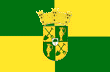
Flag
The flag of Sabana Grande features green and gold fields representing the municipality's fertile valleys, agricultural prosperity, and rich natural landscape. The design incorporates elements from the municipal coat of arms and reflects the community's historical identity.

Coat of Arms
The coat of arms includes symbols representing agriculture, Christianity, and the municipality's historical development. The mural crown identifies Sabana Grande as a Puerto Rican municipality, while the green and gold colors symbolize hope, prosperity, and the surrounding countryside.
Anthem
The anthem celebrates the municipality's history, beautiful landscapes, hardworking people, artisan traditions, and community pride.
Sabana Grande, ciudad petatera...
Human & Capital Resources
Economy
Agriculture has long been the foundation of Sabana Grande's economy, with sugarcane, coffee, tobacco, fruits, vegetables, and livestock shaping the municipality's early development. The community also became well known throughout Puerto Rico for its traditional petate weaving, a craft that contributed both economically and culturally to the region.
Today, Sabana Grande's economy is supported by healthcare, education, retail businesses, professional services, light manufacturing, and tourism. Religious pilgrims visiting the Virgen del Pozo Sanctuary and outdoor enthusiasts exploring Susúa State Forest contribute to the local economy, while small businesses and artisan enterprises continue to preserve the municipality's unique cultural identity.
Education
Education in Sabana Grande is provided through public and private elementary, middle, and high schools administered primarily by the Puerto Rico Department of Education. Residents also benefit from nearby higher education institutions including the Inter American University of Puerto Rico – San Germán Campus, the University of Puerto Rico at Mayagüez (UPRM), and several technical and vocational schools serving Puerto Rico's western region.
Demographics *
Population
22,729
Land Area: 35.83 sq mi
Density: 609.7 per sq mi
Median Age: 43
Sex: 54% female
Economics **
$10,130
Median household income: $18,290
Puerto Rico: $21,058
Persons below poverty line: 49.1%
Housing, families and educational attainment *
Number of households
7,063
Housing units density:
305.8 (2013)
Persons per household: 3.11
High school grad or higher: 68.3%
Marital status: 35% married
* U.S. Census Bureau 2020 data, unless otherwise noted - Source: Quick Facts Puerto Rico.
** U.S. Census Bureau 2016-2020
Map References
Coordinates: 18.0797° N, 66.9608° W
ZIP Code: 637
Driving Distance from San Juan: 105.8 miles
Driving Time: 2 hours, 15 minutes
Frequently Asked Questions
Where is Sabana Grande located?
Sabana Grande is located in Puerto Rico's southwestern region between San Germán, Lajas, Maricao, Guánica, and Yauco.
Why is Sabana Grande called "La Ciudad de los Petateros"?
The nickname honors generations of artisans who traditionally wove petates, or woven mats, from corozo palm leaves.
What is Sabana Grande best known for?
Sabana Grande is known for the Virgen del Pozo Sanctuary, Susúa State Forest, petate weaving, historic architecture, and its welcoming small-town atmosphere.
Can visitors explore Susúa State Forest?
Yes. The forest offers hiking trails, picnic areas, birdwatching, and opportunities to experience one of Puerto Rico's protected subtropical forests.
What is the Virgen del Pozo Sanctuary?
It is one of Puerto Rico's most important pilgrimage destinations, commemorating the reported Marian apparitions of 1953.
What are people from Sabana Grande called?
Residents are known as sabanagrandinos and sabanagrandinas.
When are the Fiestas Patronales held?
The Fiestas Patronales de San Isidro Labrador are celebrated each May with music, food, religious processions, carnival rides, and community activities.
Is Sabana Grande worth visiting?
Absolutely. Its combination of natural beauty, artisan traditions, religious heritage, and authentic Puerto Rican culture makes it one of the southwest's hidden gems.
Did You Know?
The first capital of Puerto Rico was Caparra, Ponce de Leon established this first European settlement in 1508. Located between Guaynabo and Bayamon. The capital was moved in 1521 to Old San Juan.
Get Our Newsletter
Discover new places, local flavors, upcoming events, cultural stories, and some of our favorite finds from around the island.Read the Latest ¡La Isla! Newsletter
Follow Along


