
Quebradillas, Puerto Rico
(ke-brah-DEE-yahs)
Quebradillas is known as "La Guarida del Pirata" (the pirate's hideout) and "La Ciudad del Cooperativismo" (the cooperativism city), Quebradillas is a picturesque municipality on Puerto Rico's northwestern coast, where dramatic Atlantic cliffs, rugged beaches, forested landscapes, and historic rail landmarks create one of the island's most distinctive coastal settings.
The town was founded in 1823 by Felipe Ruiz. Quebradillas takes its name from the many small streams, or quebradas, that cross the municipality. The name literally means "small streams".
Overview
Why Visit Quebradillas ?
Visit Quebradillas for dramatic Atlantic scenery, coastal hiking, pirate folklore, historic rail sites, rugged beaches, outdoor recreation, and one of Puerto Rico's most passionate basketball traditions.
Top Things to Do in Quebradillas
Guajataca State Forest
One of Puerto Rico's largest state forests, spanning Isabela and Quebradillas, with miles of hiking trails through the Northern Karst, characterized by limestone caves, scenic overlooks, and abundant native wildlife. The forest is especially popular for the Interpretive Trail and its dramatic karst landscapes. Over 40 walking trails, 25 miles of maintained footpaths can be found through the karst region. ake expressway 52 and Route 2 to the road 446 exit between Quebradillas and Isabela
Túnel de Guajataca
This historic railroad tunnel carved through the coastal hillside once formed part of Puerto Rico's sugar-era rail network. Today, it anchors an easy coastal walk connecting dramatic cliffs, ocean views, and Guajataca Beach.
Playa Guajataca
A striking Atlantic beach near the historic tunnel, known for its rocky shoreline, powerful surf, and dramatic coastal scenery. Because of the rough waves, it is better suited for sightseeing and photography than casual swimming. Perfect for sunning and collecting shells.
Puerto Hermina
A secluded beach framed by cliffs and coastal vegetation, Puerto Hermina is famous for local legends connecting the area to the pirate Roberto Cofresí. The nearby ruins add to the sense of mystery and history surrounding the site.
Lago Guajataca
This man-made lake (2.5 mi/4 km long) was completed in 1929 by the Puerto Rico Electric Authority, created by damming the River Guajataca. This reservoir is surrounded by hills and is used for water supply, wildlife habitat, kayaking, fishing, and recreation. The broader Guajataca area extends into neighboring municipalities as well.
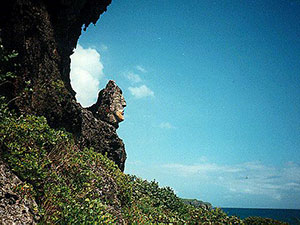
Area Recreativa Pedro Albizu Campos (El Merendero)
A scenic recreation area overlooking the Atlantic and Guajataca coastline, popular for picnics, walking, and panoramic coastal views.
Teatro Liberty
One of Quebradillas' most important cultural landmarks, Teatro Liberty reflects the municipality's artistic and civic history and continues to serve as a recognizable historic building in town.
Antigua Hacienda Amador
A historic property associated with Quebradillas' agricultural past and the sugar economy that shaped much of northwestern Puerto Rico.
Las Ceibas Gemelas
Two notable ceiba trees recognized as a local natural landmark and part of Quebradillas' cultural landscape.
Coliseo Raymond Dalmau
Home of the Piratas de Quebradillas, one of Puerto Rico's best-known Baloncesto Superior Nacional teams. Catching a game here is one of the best ways to experience the municipality's passion for basketball.
Pirate Legends of Puerto Hermina
Towering limestone cliffs and hidden sea caves made Puerto Hermina one of the most mysterious stretches of Puerto Rico's northwest coast. Local legends tell of pirates who used these secluded coves to hide ships, bury treasure, and evade Spanish authorities. While historians continue to debate how much of the folklore is fact versus legend, the stories have become an enduring part of Quebradillas' identity.
The dramatic coastline, carved by centuries of Atlantic waves, certainly feels like the perfect setting for pirate tales. Sea arches, cliffs, caves, and secluded beaches continue to inspire visitors' imaginations.
Today, Puerto Hermina is better known for its scenic overlooks, hiking opportunities, and spectacular sunsets, but the pirate stories remain woven into local history.
Plan your Visit
Located on Puerto Rico's northwestern coast, Quebradillas is best explored by car, with a walkable town center and scenic drives connecting beaches, cliffs, historic sites, and the Guajataca region.
Getting There
By Air
Rafael Hernández Airport (BQN) in Aguadilla is the closest commercial airport, approximately 35–45 minutes away. Luis Muñoz Marín International Airport (SJU) is roughly 1 hour and 45 minutes to 2 hours away by car.
By Car
PR-2 is the main highway serving Quebradillas and connects the municipality with Isabela, Camuy, Aguadilla, and other northwestern towns. PR-113 and local coastal roads provide access to Guajataca and Puerto Hermina.
Getting Around
Rental Car
A rental car is recommended for reaching coastal viewpoints, beaches, Guajataca attractions, and nearby inland recreation areas.
Taxis & Rideshare
Taxis and rideshare may be available, but service can be limited compared with San Juan.
Walking
The plaza, parish church, Teatro Liberty, municipal buildings, bakeries, and local shops can be explored on foot.
Nature & Resources
Geography
Quebradillas lies along Puerto Rico's northwestern coast, bordered by Isabela to the west, Camuy to the east, San Sebastián to the south, and the Atlantic Ocean to the north. Its landscape combines coastal cliffs, karst formations, valleys, small streams, beaches, and forested terrain. The municipality's western edge is closely linked to the Guajataca River and broader Guajataca region, one of the most scenic natural areas in northwestern Puerto Rico.
Rivers, Lakes & Natural Resources
The Río Guajataca is the municipality's most important waterway, forming part of a larger watershed that extends into neighboring towns. Nearby Lago Guajataca provides water supply, wildlife habitat, fishing, and recreational opportunities, while the surrounding limestone terrain creates cliffs, caves, forested valleys, and dramatic Atlantic views.
Quebradillas is also known for its small streams and quebradas, which helped give the municipality its name. The combination of coastal karst, forest, river, and marine habitats makes the area especially attractive for hiking, birdwatching, photography, and nature exploration.
Neighborhoods & Barrios
Quebradillas is made up of 8 barrios (PDF) (wards/districts):
- Cacao
- Charcas
- Cocos
- Guajataca
- Pueblo
- San Antonio
- San José
- Terranova
Climate
Quebradillas has a warm tropical climate throughout the year, moderated by steady Atlantic breezes along the coast. Temperatures are generally warm, with wetter conditions supporting lush vegetation, rivers, and forested hills. The Atlantic coast can experience strong surf and rough seas, especially during periods of high swell, so visitors should check ocean conditions before visiting beaches.
10 Day Forecast from weather.com
Where to Stay
- Royal Isabela (Isabela)
- Bella Surf Inn (Isabela)
- Parador Villas Sotomayor (Adjuntas)
- Parador El Guajataca
- Villas at Guajataca
- Casa Guajataca
- Ocean View Retreat
- Puerto Hermina Guest House
Local Flavors & Festivities
Where to Eat
- Restaurante Guajataca
- El Anzuelo Seafood Restaurant
- La Casona Restaurant
- Casabe
- Pizza e Birra
- 101 West Kitchen
- El Patio Steak House
- Panadería La Nueva
- Panadería El Pirata
- Café Guajataca
- D'Coffee House
Festivals and Events
Displaying 3 results.
-
Velorio de Reyes
- January
Traditional Three Kings celebration featuring aguinaldos, religious customs, music, food, and community gatherings that preserve one of Puerto Rico's most beloved Christmas traditions.
-
Carnaval del Guajataca
- February
Community carnival celebrating the Guajataca region with music, parades, cultural activities, food vendors, and family entertainment.
-
Fiestas Patronales de San Rafael Arcangel
- October
Annual patron saint celebration honoring San Rafael Arcángel with religious observances, live music, traditional food, artisans, community activities, and family entertainment.(787) 895-3088
History
Before Spanish colonization, the Guajataca region was inhabited by Taíno communities who relied on the area's rivers, forests, fertile valleys, and coastal resources. The name Quebradillas reflects the many small streams and quebradas that cross the landscape.
Quebradillas was founded in 1823 and developed as an agricultural community producing sugarcane, coffee, tobacco, and livestock. During the nineteenth and early twentieth centuries, rail transportation played an important role in connecting the municipality with the rest of Puerto Rico's northwestern sugar and agricultural economy.
The Guajataca Tunnel remains one of the clearest surviving reminders of this railroad era. Over time, the municipality also became closely associated with pirate folklore, particularly stories surrounding Roberto Cofresí and Puerto Hermina, earning Quebradillas the nickname "La Guarida del Pirata."
Moments in History
Taíno communities inhabit the Guajataca region, relying on its rivers, forests, valleys, and coastal resources.
Quebradillas is formally founded as a municipality in Puerto Rico's northwestern region.
Agriculture expands throughout the municipality, particularly sugarcane, coffee, tobacco, and livestock production.
Rail transportation strengthens connections between Quebradillas and Puerto Rico's northwestern sugar-producing communities, leaving behind landmarks such as the Guajataca Tunnel.
Lago Guajataca is created as a reservoir, later becoming an important source of water, wildlife habitat, and recreation.
Quebradillas is recognized for its dramatic Atlantic coastline, Guajataca attractions, pirate folklore, outdoor recreation, and passionate basketball culture.
Notable People
Quebradillas has produced celebrated athletes, artists, writers, journalists, and public figures whose achievements have contributed to Puerto Rico's cultural, sporting, and civic life.
Famous Quebradillanos
Raymond Dalmau
1948–Present
Basketball
One of Puerto Rico's greatest basketball players, Dalmau starred in the Baloncesto Superior Nacional and represented Puerto Rico internationally, becoming closely identified with the Piratas de Quebradillas.
Luis Germán Cajigas
Visual Arts
Painter recognized for his contributions to Puerto Rican visual arts and for work inspired by the island's landscapes, culture, and everyday life.
Guillermo Venegas Lloveras
Literature • Music • Journalism
Journalist, composer, poet, writer, and singer whose works include poetry, essays, fiction, and popular music. His composition Génesis gained international recognition through Lucecita Benítez.
Alejandro Ruiz Soler
Medicine • Public Health
Physician and public health leader who became the first Puerto Rican to serve as Commissioner of Health and founded the Sanatorio Antituberculoso in Río Piedras.
Ángel Muñoz Igartúa
Literature • Law • Politics
Poet, attorney, and political figure whose published works include Savia íntima and Vibraciones. He also served as mayor of Manatí from 1940 to 1944.
Francisco Santiago Sosa
Sports
Athlete recognized for his sporting achievements and later inducted into the Puerto Rican Sports Hall of Fame.
City Symbols
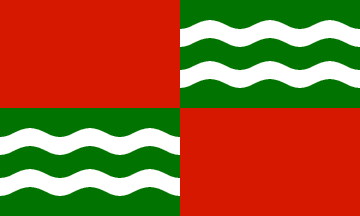
Flag
The flag of Quebradillas consists of alternating red and green fields divided by white wavy lines. The wavy bands represent the municipality's numerous streams and ravines (quebradas) that inspired its name, while the colors are derived from the municipal coat of arms.
Coat of Arms
The coat of arms features green fields symbolizing the municipality's fertile landscape, silver wavy bands representing its many streams, and a pirate motif recalling the nickname "La Guarida del Pirata." The mural crown identifies Quebradillas as a Puerto Rican municipality.
Anthem
The anthem celebrates the municipality's beautiful coastline, proud heritage, welcoming people, and love for its homeland.
De lejos canto, porque anhela el corazon...
Human & Capital Resources
Economy
Quebradillas has traditionally relied on agriculture, particularly sugarcane, coffee, fruits, vegetables, and livestock. During the railroad era, the municipality became an important transportation point connecting northwestern Puerto Rico with the island's agricultural economy.
Today, the economy is supported by retail businesses, healthcare, education, government services, construction, tourism, and small manufacturing. Tourism continues to grow thanks to attractions such as the Guajataca Tunnel, Puerto Hermina, Lago Guajataca, scenic Atlantic cliffs, and outdoor recreation opportunities. Basketball also plays an important cultural and economic role through the Piratas de Quebradillas franchise.
Education
Education in Quebradillas is provided through public and private elementary, middle, and high schools administered primarily by the Puerto Rico Department of Education. Students pursuing higher education have convenient access to nearby institutions including the University of Puerto Rico at Aguadilla, Inter American University of Puerto Rico – Aguadilla Campus, and the Universidad Adventista de las Antillas in Mayagüez, as well as additional universities throughout the northwestern region.
Demographics *
Population
23,638
Land Area: 22.68 sq mi
Density: 1,025.50 per sq mi
Median Age: 41.8
Sex: 52% female
Economics **
$10,085
Median household income: $17,425
Puerto Rico: $21,058
Persons below poverty line: 46.7%
Housing, families and educational attainment *
Number of households
8,229
Housing units density:
474.2 (2013)
Persons per household: 2.82
High school grad or higher: 73.8%
Marital status: 41% married
* U.S. Census Bureau 2020 data, unless otherwise noted - Source: Quick Facts Puerto Rico.
** U.S. Census Bureau 2016-2020
Map References
Coordinates: 18.4739° N, 66.9386° W
ZIP Code: 678
Driving Distance from San Juan: 70.1 miles
Driving Time: 1 hour, 40 minutes
Frequently Asked Questions
Where is Quebradillas located?
Quebradillas is located on Puerto Rico's northwestern coast between Isabela and Camuy.
What is Quebradillas known for?
Quebradillas is famous for the Guajataca Tunnel, Puerto Hermina, dramatic Atlantic cliffs, pirate legends, beautiful coastal scenery, and the Piratas de Quebradillas basketball team.
Can you walk through the Guajataca Tunnel?
Yes. The restored railroad tunnel is open to visitors and connects scenic coastal trails with Guajataca Beach.
Is Guajataca Beach good for swimming?
The beach is beautiful but often experiences strong Atlantic currents. Visitors should pay close attention to ocean conditions and warning flags before entering the water.
What is Puerto Hermina?
Puerto Hermina is a scenic coastal area known for its beach, cliffs, historic ruins, and legends associated with the pirate Roberto Cofresí.
What are people from Quebradillas called?
Residents are known as quebradillanos and quebradillanas.
What festivals take place in Quebradillas?
Annual celebrations include the Velorio de Reyes, Carnaval del Guajataca, and the Fiestas Patronales de San Rafael Arcángel.
Is Quebradillas worth visiting?
Absolutely. Quebradillas offers spectacular Atlantic scenery, historic landmarks, outdoor recreation, beautiful beaches, and authentic Puerto Rican culture with fewer crowds than many better-known destinations.
Why is Quebradillas called "La Guarida del Pirata"?
The nickname comes from local legends linking the municipality's rugged coastline and Puerto Hermina with the famous Puerto Rican pirate Roberto Cofresí.
Did You Know?
There are multiple species of coquí frogs native to Puerto Rico, and some exist nowhere else in the world.
Get Our Newsletter
Discover new places, local flavors, upcoming events, cultural stories, and some of our favorite finds from around the island.Read the Latest ¡La Isla! Newsletter
Follow Along


