
Monito, Puerto Rico

Monito is a small, uninhabited island in the Mona Passage, approximately 3.1 miles (5 km) northwest of Mona Island and 42 miles (68 km) west of mainland Puerto Rico. It belongs to the municipality of Mayagüez and forms part of the Mona and Monito Natural Reserve, managed by Puerto Rico's Department of Natural and Environmental Resources (DRNA).
Measuring approximately 0.057 square miles (0.147 square kilometers), or 36.3 acres, Monito is one of Puerto Rico's smallest offshore islands. Despite its size, it is an important sanctuary for native reptiles and nesting seabirds.
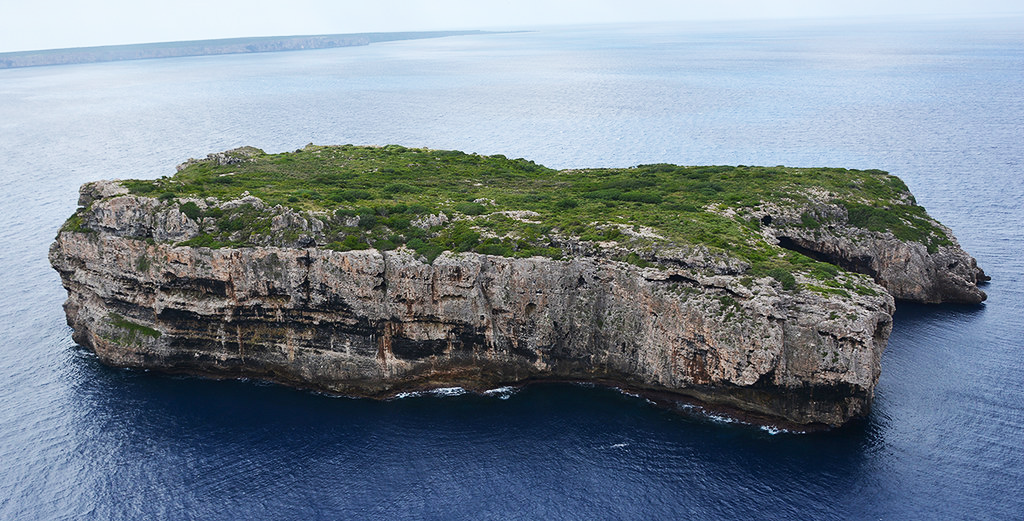
Geography and Natural Landscape
Monito consists of an elevated limestone plateau surrounded by steep, nearly vertical cliffs that rise approximately 217 feet (66 meters) above the sea. Unlike nearby Mona Island, Monito has no sandy beaches or natural harbors.
The island's rocky terrain includes small caves, limestone formations, and sparse vegetation adapted to dry conditions. Its isolated location and difficult access have helped protect important wildlife habitats.
The name Monito is a diminutive form of Mona, reflecting its much smaller size and proximity to the larger island.
Wildlife and the Monito Gecko
Monito is home to the Monito gecko (Sphaerodactylus micropithecus), a tiny lizard found naturally nowhere else in the world. The species was listed as endangered under the U.S. Endangered Species Act in 1982 because of concerns about its small population and threats from introduced predators.
Conservation work focused on removing invasive rats and monitoring the gecko's population. After years of recovery efforts, the U.S. Fish and Wildlife Service removed the Monito gecko from the federal endangered species list in 2019.
The gecko's recovery is an important example of how habitat protection and invasive species management can help preserve wildlife found in isolated island ecosystems.
Seabirds and Conservation
Monito supports important nesting colonies of seabirds, including boobies, frigatebirds, and terns. Its steep cliffs and remote location provide habitat for species that depend on isolated coastal nesting sites.
The island has been recognized as an important bird habitat, and its protected status helps conserve nesting areas and native plant communities.
Monito's Military History
During World War II, Monito was used by the U.S. military as an aerial bombing practice area. Military use began in 1940 and continued into the following decades.
The island was returned to Puerto Rico in 1961. Its military history remains visible in the form of bombing-related impacts, and unexploded ordnance may still present hazards.
The U.S. Army Corps of Engineers has investigated the former bombing range through its Formerly Used Defense Sites program.
Can You Visit Monito?
Monito is not a conventional visitor destination. Its sheer cliffs, absence of beaches, protected wildlife, and potential military hazards make landing extremely difficult and unsafe.
Access is controlled by Puerto Rico's Department of Natural and Environmental Resources. Visitors should not attempt to land without explicit authorization. Scientific research and conservation work may take place under approved arrangements.
For additional information, visit the Mona and Monito Natural Reserve website.
Map References
Location: Mona Passage, northwest of Mona Island
Municipality: Mayagüez, Puerto Rico
Land Area: 0.057 sq mi (0.147 sq km), approximately 36.3 acres
Elevation: Approximately 217 ft (66 m)
Coordinates: 18.1598° N, 67.9492° W
Frequently Asked Questions
Where is Monito Island located?
Monito is an uninhabited island in the Mona Passage,
approximately 3.1 miles (5 km) northwest of Mona
Island. It belongs to the municipality of Mayagüez,
Puerto Rico.
How large is Monito Island?
Monito covers approximately 0.057 square miles
(0.147 square kilometers), or 36.3 acres.
Its limestone cliffs rise approximately
217 feet (66 meters) above the sea.
Can you visit Monito Island?
Monito is not open for ordinary recreational
visits. Its steep cliffs, protected habitats,
and potential unexploded military ordnance
make access hazardous. Landing requires
authorization from the appropriate authorities.
What animals live on Monito Island?
Monito is home to the endemic Monito gecko
and important nesting colonies of seabirds,
including boobies, frigatebirds, and terns.
Why is the Monito gecko important?
The Monito gecko is a tiny lizard found
naturally only on Monito Island. Conservation
efforts helped its population recover, and
the species was removed from the U.S.
endangered species list in 2019.
Was Monito Island used for military training?
Yes. Monito was used as a U.S. military
aerial bombing range beginning in 1940.
Military use ended before the island
was returned to Puerto Rico in 1961.
Other Resources
Did You Know?
Old San Juan's blue cobblestones were originally ballast from Spanish ships.
Get Our Newsletter
Discover new places, local flavors, upcoming events, cultural stories, and some of our favorite finds from around the island.Read the Latest ¡La Isla! Newsletter
Follow Along


