
Manatí, Puerto Rico
(mah-nah-TEE)
Manatí is known as "La Ciudad Metropolitana" (metropolitan city) and "La Atenas de Puerto Rico" (Puerto Rico's athens). Manatí was founded in 1738 by Don Pedro Menéndez Valdéz.
Located on Puerto Rico's northern coast, Manatí is home to some of the island's most iconic landscapes, including the famous Mar Chiquita Beach, the surfing waves of Los Tubos Beach, the protected Hacienda La Esperanza Nature Reserve, and the scenic Río Grande de Manatí, Puerto Rico's longest river.
Overview
Why Visit Manatí?
Manatí blends spectacular Atlantic beaches, fascinating history, lush nature reserves, and a thriving agricultural tradition. Visitors come to relax at the famous Mar Chiquita Natural Pool, surf the waves at Los Tubos Beach, explore the historic Hacienda La Esperanza Nature Reserve, and experience one of Puerto Rico's most scenic stretches of coastline. Just 40 minutes west of San Juan, Manatí is an ideal destination for outdoor adventures, beach lovers, history enthusiasts, and families.
Top Things to Do in Manatí
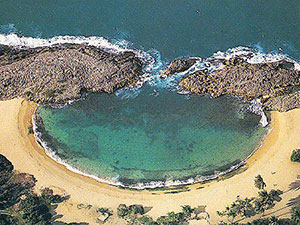
Mar Chiquita Beach
One of Puerto Rico's most photographed beaches, Mar Chiquita is a unique natural pool formed between two limestone rock formations where Atlantic waters flow into a protected turquoise lagoon.
Los Tubos Beach
A favorite among surfers and beachgoers, Los Tubos offers excellent waves, soft sand, scenic coastal views, and one of the island's most popular surfing beaches.
Hacienda La Esperanza Nature Reserve
Managed by the Conservation Trust of Puerto Rico, this historic sugar plantation features restored buildings, hiking trails, wetlands, forests, birdwatching, and one of Puerto Rico's most important conservation projects.
La Poza de las Mujeres
A naturally protected tidal pool where calm waters make it a popular swimming spot for families while offering beautiful Atlantic scenery.
Cueva Las Golondrinas
A secluded coastal cave and beach surrounded by dramatic limestone cliffs, attracting adventurous visitors looking for unique scenery.
Historic Downtown Manatí
Walk through colorful streets featuring historic architecture, Plaza Luis Muñoz Rivera, Nuestra Señora de la Candelaria Church, Teatro Taboa, and numerous buildings dating back to the nineteenth century.
Frutos del Guacabo
An award-winning sustainable farm offering educational tours, artisan cheeses, tropical fruits, hydroponic gardens, and authentic farm-to-table experiences.
Río Grande de Manatí
Puerto Rico's longest river provides scenic overlooks, kayaking opportunities, and important wildlife habitat throughout the municipality.
Plan your Visit
Manatí is located on Puerto Rico's beautiful north coast and is easily explored by car, making it a perfect day trip from San Juan or a stop along the island's scenic Atlantic coastline.
Getting There
By Air
Luis Muñoz Marín International Airport (SJU) is approximately 40–45 minutes from Manatí via PR-22.
By Car
Manatí sits directly along PR-22 (José de Diego Expressway), making it one of the easiest beach destinations to reach from San Juan, Arecibo, or the northwest coast.
Getting Around
Rental Car
The best option for visiting beaches, nature reserves, and historic attractions.
Beach Hoping
Mar Chiquita, Los Tubos, and La Poza de las Mujeres are only a short drive apart, making it easy to explore several beaches in one day.
Taxis & Rideshare
Taxis and rideshare may be available, but service can be limited compared with San Juan.
Walking
Downtown Manatí is easily explored on foot, with historic buildings, restaurants, plazas, and shops within walking distance.
Nature & Resources
Geography
Manatí covers approximately 45 square miles on Puerto Rico's northern coast and forms part of the island's spectacular Northern Karst Region, known for limestone hills, caves, sinkholes, underground rivers, and fertile valleys. Located north of Morovis and Ciales; east of Florida and Barceloneta; and west of Vega Baja.
The area is generously bathed in the waters of springs, lakes, streams, lagoons and rivers, the most impressive of which is the Río Grande de Manatí. Manatí is said to have been named for the many manatees that were sighted in its waters. It may also have had an indigenous origin, derived from the Indian-named Manatuabón River.
Neighborhoods & Barrios
Manati is made up of 9 barrios (PDF) (wards/districts):
- Bajura Adentro
- Bajura Afuera
- Coto Norte
- Coto Sur
- Pueblo
- Río Arriba
- Saliente
- Tierras Nuevas Poniente
- Tierras Nuevas Saliente
Climate
Manatí enjoys a warm tropical climate throughout the year, making it an excellent destination for outdoor activities and beach visits in every season. Average daytime temperatures range from the mid-80s°F (29–32°C), while evenings are typically comfortable, with lows in the low to mid-70s°F (21–24°C). The driest months generally occur from January through April, while the wetter season runs from late summer into the fall. Thanks to its coastal location along Puerto Rico's northern shore, refreshing ocean breezes help moderate the heat, creating pleasant conditions for exploring beaches, nature reserves, and the historic downtown year-round.
10 Day Forecast from weather.com
Where to Stay
- Aquarius Vacation Club
- Parador Boquemar
- Combate Beach Resort
- Mi Tierra Hotel
- Hacienda Tres Casitas
- Cofresí Beach Hotel
- Beachfront condos
- Boquerón vacation homes
- Combate beach houses
- Airbnb properties
Local Flavors & Festivities
Where to Eat
- El Bohío
- Annie's Place
- Tino's Restaurant
- Casabe
- Annie's Place
- Susie's Restaurant
- Pelican's Boquerón
- Tsunami Bar & Restaurant
- Boquerón Beach Resort Restaurant
- Panadería Ritamar
- Panadería La Nueva Estrella
- Coffee Mood Cabo Rojo
- Brew! Coffee Bar
- Dulce Salado Café
Festivals and Events
Displaying 7 results.
-
Fiestas Patronales Nuestra Señora de la Candelaria
- January
Manatí's largest annual celebration honoring Our Lady of Candelaria with religious processions, live concerts, artisan vendors, carnival rides, sporting events, traditional Puerto Rican cuisine, and family entertainment in the town plaza.(787) 854-2024
-
Festival de Mar Chiquita
- June
Beach festival celebrating the famous Mar Chiquita Natural Pool with live music, food kiosks, artisan vendors, family activities, and the traditional Noche de San Juan festivities.(787) 854-2024
-
Festival de los Manatíes
- July
Community festival celebrating the manatee, one of Puerto Rico's most beloved marine mammals, with educational exhibits, conservation activities, music, local cuisine, and family entertainment.(787) 854-2024
-
Festival de Los Tubos
- July
Coastal festival celebrating Los Tubos Beach with surfing competitions, beach sports, live entertainment, local food, artisan vendors, and family activities.(787) 854-2024
-
Festival de Navidad
- December
Holiday celebration featuring Christmas music, artisan markets, traditional Puerto Rican food, parrandas, lighting displays, and family entertainment in the town center.(787) 854-2024
-
Día de la Candelaria
- February 2
Religious observance honoring the municipality's patron saint with Mass, processions, and community celebrations held at Nuestra Señora de la Candelaria Parish.(787) 854-2024
-
Día de la Bandera Manatieña
- May 9
Annual celebration honoring the official municipal flag, the history of Manatí, and hometown pride with educational, civic, and cultural activities.(787) 854-2024
History
Founded in 1738, Manatí is one of Puerto Rico's oldest municipalities. >It was the ninth town recognized by the Spanish Crown in Puerto Rico. Its name comes from the Taíno word Manatuabón, the river that crosses the municipality.
The first Spanish settlement was made by Juan Ponce de León, who was attracted to the area by the promise of gold in the Manatuabón River. After building the first structures on the shore of the river, Ponce de León moved on to found Villa Caparra.
During the Spanish colonial period, Manatí became an important agricultural center producing sugar cane, pineapples, coffee, and cattle. As a result of its cultural eminence, it began to be called the "Athens of Puerto Rico" during the early part of this century.
Today, Manatí balances its rich history with modern industry while protecting some of Puerto Rico's most important coastal ecosystems and historic landmarks.
Moments in History
Taíno communities settled along the Río Grande de Manatí, benefiting from the area's fertile valleys, abundant freshwater, and rich coastal resources.
Manatí is officially founded under Spanish colonial rule by Don Pedro Menéndez Valdéz, becoming one of Puerto Rico's oldest municipalities.
Sugar cane, coffee, tobacco, and cattle ranching establish Manatí as an important agricultural center on Puerto Rico's north coast.
The municipality earns the nickname "La Atenas de Puerto Rico" for its outstanding contributions to literature, education, journalism, and intellectual life.
Manufacturing, pharmaceuticals, healthcare, and commerce diversify the local economy while preserving Manatí's agricultural and cultural heritage.
Manatí is recognized for its beautiful beaches, the Hacienda La Esperanza Nature Reserve, thriving economy, higher education institutions, and vibrant cultural traditions.
Notable People
Known as manatieños and manatieñas, the people of Manatí have made significant contributions to sports, economics, journalism, music, and Puerto Rican culture. These distinguished individuals have helped shape the municipality's legacy both on the island and beyond.
Famous Manatieños
Francisco "Paquito" Montaner
1895–1945
Sports • Tennis
One of Puerto Rico's first internationally recognized tennis players, Paquito Montaner helped popularize the sport on the island. Manatí's main sports complex, the Centro Deportivo Francisco "Paquito" Montaner, is named in his honor.
José Bernardo Vega
1938–Present
Economics • Public Service
Distinguished economist, former President of the Government Development Bank for Puerto Rico, and former member of the Federal Reserve Bank of New York. His work has significantly influenced Puerto Rico's financial and economic policy.
Edgardo Miranda-Rodríguez
1973–Present
Literature • Comics
Award-winning writer, editor, and creator of the superhero La Borinqueña. Through his work, he promotes Puerto Rican history, culture, identity, and social awareness to audiences around the world.
Enrique "Quique" Cruz
1957–Present
Journalism • Broadcasting
Well-known television and radio personality recognized throughout Puerto Rico for his journalism, political commentary, and decades of work in broadcast media.
Ángel "Cucco" Peña
1948–Present
Music
Acclaimed percussionist, composer, and arranger whose career spans more than five decades. He has collaborated with many of Puerto Rico's most celebrated musicians and helped promote Puerto Rican and Latin music internationally.
Clemente Ramírez de Arellano
1868–1945
Literature • Politics
Writer, poet, educator, and public servant who served as mayor of Manatí and became one of the municipality's leading intellectual figures. His literary work and civic leadership helped establish Manatí's reputation as "La Atenas de Puerto Rico" during the early twentieth century.
City Symbols
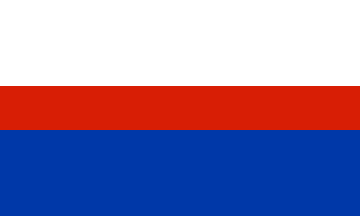
Flag
The flag of Manatí consists of three horizontal stripes: white on top, blue on the bottom, and a narrower red stripe in the center. The colors are derived from the family coat of arms of Don Pedro Menéndez Valdés, founder of the municipality, and symbolize Manatí's historical heritage and civic identity.
Coat of Arms
The coat of arms features the Greek Parthenon, representing Manatí's nickname "La Atenas de Puerto Rico" and its rich intellectual and cultural legacy. Two manatees symbolize the origin of the municipality's name, while five golden flames represent the traditional bonfires lit during the patron saint festivities honoring Nuestra Señora de la Candelaria. A mural crown signifies Manatí's status as a city.
Anthem
Atenas de Borinquen is the official municipal anthem of Manatí. Written by Wilfredo Pagán, it celebrates the municipality's history, cultural heritage, scenic beauty, and the pride of its people while honoring its nickname as the "Athens of Puerto Rico."
Human & Capital Resources
Economy
Manatí has one of the most diverse economies on Puerto Rico's northern coast, combining manufacturing, healthcare, retail, agriculture, tourism, and professional services. Historically known for its sugar cane plantations and pineapple production, the municipality has evolved into an important industrial center with pharmaceutical, medical device, and manufacturing companies providing many of the area's jobs. Agriculture continues to play a role through the cultivation of pineapples, tropical fruits, vegetables, and cattle ranching. Tourism has also become increasingly important, with visitors drawn to attractions such as Mar Chiquita Beach, Los Tubos Beach, Hacienda La Esperanza Nature Reserve, and the municipality's historic downtown. Together, these industries make Manatí one of the economic hubs of Puerto Rico's north coast.
Education
Manatí is an important educational center for Puerto Rico's northern region, offering a wide range of academic, technical, and professional programs. Public education is administered by the Puerto Rico Department of Education through numerous elementary, middle, and high schools, while several private institutions provide additional educational opportunities. The municipality is also home to respected colleges and technical schools, including Atenas University, EDP University – Manatí Campus, Dewey University – Manatí Campus, NUC University – IBC Technical Division, ICPR Junior College, and the Instituto Tecnológico de Puerto Rico – Manatí Campus. Together, these institutions offer undergraduate degrees, technical certifications, and workforce training in healthcare, nursing, business, education, information technology, engineering technologies, and skilled trades, making Manatí a regional center for higher education and career development on Puerto Rico's north coast.
Demographics *
Population
39,492
Land Area: 45.13 sq mi
Density: 843.2 per sq mi
Median Age: 42.6
Sex: 53% female
Economics **
$11,627
Median household income: $18,885
Puerto Rico: $21,058
Persons below poverty line: 46%
Housing, families and educational attainment *
Number of households
14,815
Housing units density:
426.8 (2013)
Persons per household: 2.55
High school grad or higher: 74.5%
Marital status: 40% married
* U.S. Census Bureau 2020 data, unless otherwise noted - Source: Quick Facts Puerto Rico.
** U.S. Census Bureau 2016-2020
Map References
Coordinates: 18.4325° N, 66.4844° W
ZIP Code: 674
Driving Distance from San Juan: 32 miles
Driving Time: 37 minutes
Frequently Asked Questions
Where is Manatí located?
Manatí is located on Puerto Rico's north coast, approximately 35 miles (56 km) west of San Juan. It borders Vega Baja, Florida, Ciales, Morovis, Barceloneta, and the Atlantic Ocean.
Why is Manatí called "La Atenas de Puerto Rico"?
Manatí earned the nickname "La Atenas de Puerto Rico" because of its rich intellectual, literary, and cultural heritage, having produced many distinguished writers, educators, journalists, and public figures.
What is Manatí known for?
Manatí is known for Mar Chiquita Beach, Los Tubos Beach, Hacienda La Esperanza Nature Reserve, the Río Grande de Manatí, its historic downtown, and its strong cultural and educational traditions.
What are the top attractions in Manatí?
Popular attractions include Mar Chiquita Beach, Los Tubos Beach, Hacienda La Esperanza Nature Reserve, La Poza de las Mujeres, Cueva Las Golondrinas, Frutos del Guacabo, and the historic downtown.
What festivals are celebrated in Manatí?
Major annual events include the Fiestas Patronales de Nuestra Señora de la Candelaria, Festival de Mar Chiquita, Festival de Los Tubos, Fiesta de Reyes, and the Festival de Navidad.
What are people from Manatí called?
Residents of Manatí are known as manatieños (men) and manatieñas (women).
What is the best time to visit Manatí?
Manatí is a year-round destination. The drier months from December through April offer excellent weather for enjoying its beaches, nature reserves, and outdoor attractions.
Can you swim at Mar Chiquita?
Yes, Mar Chiquita's protected natural pool is popular for swimming when sea conditions are calm. Visitors should always pay attention to weather conditions and ocean advisories, as strong waves can occasionally enter the cove.
Is Manatí a good destination for nature lovers?
Absolutely. Manatí offers protected beaches, rivers, caves, wetlands, and the Hacienda La Esperanza Nature Reserve, making it one of Puerto Rico's top destinations for outdoor recreation and ecotourism.
What is the economy of Manatí based on?
Manatí's economy is supported by manufacturing, pharmaceuticals, healthcare, agriculture, retail, tourism, and professional services, making it one of the economic centers of Puerto Rico's north coast.
Did You Know?
The Caribe Hilton Hotel opened its doors in 1949, this was the first Hilton hotel outside of the mainland United States.
Get Our Newsletter
Discover new places, local flavors, upcoming events, cultural stories, and some of our favorite finds from around the island.Read the Latest ¡La Isla! Newsletter
Follow Along


