
Ciales, Puerto Rico
(see-AH-les)
Located in the heart of Puerto Rico's Cordillera Central, Ciales is a mountain town celebrated for its coffee heritage, spectacular cave systems, rushing rivers, and breathtaking landscapes. Known as "Los Valerosos" (valiants town) or "La Ciudad De La Cohoba", Ciales offers visitors an authentic glimpse into Puerto Rico's rural traditions, where family-owned coffee farms, scenic waterfalls, limestone caverns, and panoramic mountain views create unforgettable experiences. Located about an hour from San Juan, Ciales is an ideal destination for travelers seeking outdoor adventure, local culture, and the peaceful beauty of Puerto Rico's interior.
Overview
Why Visit Ciales?
Ciales is one of Puerto Rico's premier destinations for nature lovers and coffee enthusiasts. Visitors can tour historic coffee plantations, explore caves filled with ancient petroglyphs, swim beneath waterfalls, hike through cloud forests, and enjoy some of the island's most scenic mountain drives.
Unlike the beaches of Puerto Rico's coastline, Ciales offers a slower pace where rivers carve through limestone valleys, cafés roast locally grown beans, and generations of farming traditions continue to shape everyday life. Whether you're hiking to waterfalls, tasting freshly roasted coffee, or relaxing at a mountain restaurant overlooking the Río Grande de Manatí, Ciales captures the spirit of Puerto Rico's countryside.
Top Things to Do in Ciales
Tres Picachos State Forest
Located primarily in Ciales, with portions extending into Jayuya, Bosque Estatal Tres Picachos protects more than 5,000 acres of lush mountain forest in Puerto Rico's Central Mountain Range. Named for its three distinctive peaks, the forest is home to diverse native wildlife, scenic hiking trails, rivers, waterfalls, and panoramic viewpoints. It is believed that Taino Indians thought the mountain to be sacred. The forest is home of Tres Picachos Peak, the 7th highest peak in Puerto Rico, with an elevation of 3,953 feet (1,205 meters) above sea level.
Within the forest you will find many streams and waterfalls, among them: Cascada Las Delicias (Las Delicias Falls), a lovely crystal clear waterfall, and El Chorro de Doña Juana (Mrs. Juana Falls), a three-level waterfall and one of the largest waterfalls in the island.
Birdwatchers may spot the endangered Puerto Rican broad-winged hawk and Puerto Rican parrot in nearby habitats, while hikers enjoy a peaceful escape into one of the island's least-visited protected forests. The forest also helps protect the headwaters of several important rivers that supply water to communities across northern Puerto Rico.
Forest facilities include a ranger station, forest trails, picnic tables, camping facilities, and barbeque pits. Open Tue-Sun, (787) 724-3647.
Toro Negro State Forest
Stretching across several municipalities, including Ciales, Bosque Estatal Toro Negro protects Puerto Rico's highest cloud forest. Hiking trails lead to mountain peaks, rivers, natural pools, and spectacular viewpoints that, on clear days, rise above the clouds.
Río Encantado Cave System
One of Puerto Rico's most remarkable natural treasures, the Río Encantado Cave System stretches beneath the limestone hills of Ciales and neighboring municipalities, forming the island's longest underground river and cave network, extends for 16.9 kilometers. Carved over millions of years by flowing water, the system features vast chambers, crystal-clear subterranean rivers, dramatic stalactites and stalagmites, fossils, ancient Taíno archaeological sites, and unique cave-dwelling wildlife. Protected as part of the Río Encantado Natural Protected Area, the surrounding forest preserves one of the Caribbean's richest karst ecosystems. Guided adventure tours allow experienced visitors to explore portions of the cave system through hiking, rappelling, canyoneering, and underground river crossings. Popular caves include La Virgen, Las Archillas, La Golondrina, and Yuyú, known for its stalagmites, stalactites, corridors, and subterranean waterfalls.
Museo del Café de Puerto Rico (Museum of Coffee)
Housed near the town plaza, the Museo del Café de Puerto Rico celebrates one of the island's most important agricultural traditions. It is owned and operated by Pedro Maldonado, whose family has been growing coffee since 1933, with their brand Café Cialito. The museum is located near the town plaza where visitors can learn about coffee cultivation, roasting, and brewing while viewing historic equipment, enjoying freshly brewed Don Pello coffee, and browsing locally made products. The three exhibits feature a collection of documents and equipment, some dating back to the early 1800s. Weekend barista workshops and guided tours make it one of Puerto Rico's best coffee experiences.
Paseo Lineal Juan Antonio Corretjer
Named after Ciales' celebrated poet Juan Antonio Corretjer, this scenic promenade overlooks the Río Grande de Manatí and the surrounding mountains. Walking trails, public art, shaded seating, food kiosks, and spectacular viewpoints make it one of the municipality's most relaxing destinations.
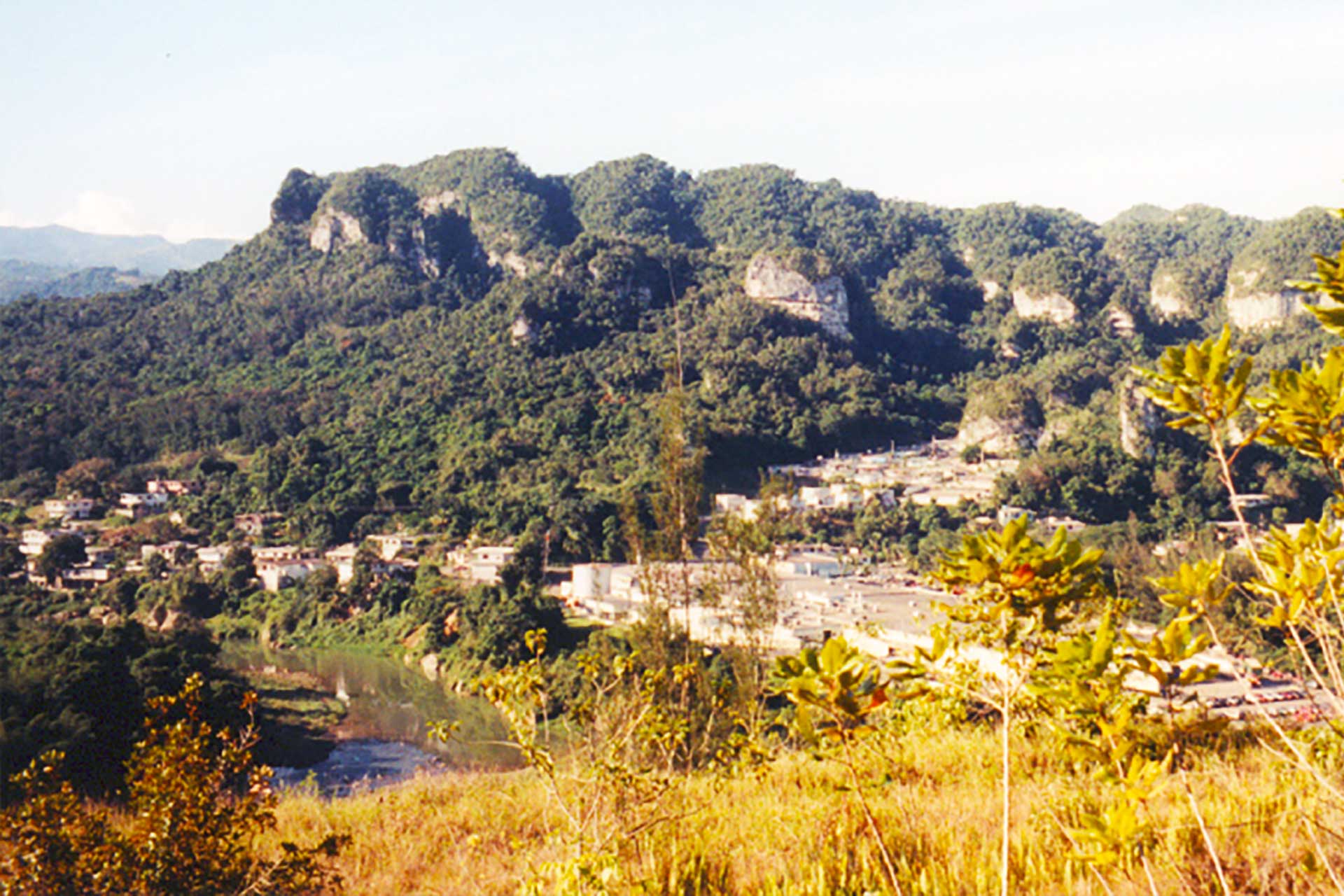
Photo: Manuel Santiago
Casa Museo Juan Antonio Corretjer
The restored home of Puerto Rican poet and nationalist Juan Antonio Corretjer preserves his manuscripts, personal library, photographs, and memorabilia while highlighting his influence on Puerto Rican literature and culture. Appointment are required. Admission is free. Located at 3 Betances St., (787) 871-3500.
Cascada Las Delicias
One of Puerto Rico's most accessible waterfalls, Las Delicias cascades into a refreshing natural pool surrounded by lush vegetation. The waterfall is only a short walk from the road, making it popular with families and photographers.
Yuyú Cave
Adventure seekers visit Cueva Yuyú for guided rappelling, canyoneering, underground rivers, stalactites, stalagmites, and ancient Taíno petroglyphs. It is one of Puerto Rico's best cave adventures.
Las Archillas Cave
Another impressive limestone cave system, Las Archillas features dramatic rock formations, underground streams, and opportunities for guided eco-adventures through Puerto Rico's karst region.
Hacienda Carvajal
This historic coffee and cacao farm combines agriculture, environmental education, and Puerto Rican history. Visitors can tour the plantation, learn about coffee production, and explore a unique printing museum.
Plan your Visit
Ciales is an excellent day trip from San Juan or a perfect stop while exploring Puerto Rico's Central Mountain Region. Its winding scenic roads reward travelers with mountain vistas, waterfalls, coffee plantations, and authentic rural communities.
Getting There
By Air
The nearest major airport is Luis Muñoz Marín International Airport (SJU), approximately 1 hour and 15 minutes away.
By Car
Driving is the easiest way to reach Ciales. Scenic highways PR-149, PR-145, and PR-146 connect the municipality with Manatí, Utuado, Morovis, Orocovis, and Arecibo.
Getting Around
Rental Car
A rental car is highly recommended. Most waterfalls, caves, scenic overlooks, and coffee farms are outside the town center.
Taxis & Rideshare
Taxis and rideshare may be available, but service can be limited compared with San Juan.
Walking
Downtown Ciales, including the plaza, museums, cafés, and Paseo Lineal, is easily explored on foot.
Nature & Resources
Geography
Ciales lies within Puerto Rico's karst region, where rivers have carved dramatic limestone cliffs, caves, sinkholes, and fertile valleys over thousands of years. The municipality is bordered by Florida and Manatí to the north, Utuado and Jayuya to the south, Morovis to the west, and Orocovis to the east. The Río Grande de Manatí, Río Cialitos, and Río Toro Negro help shape the region's spectacular scenery.
Neighborhoods & Barrios
Ciales consists of 9 barrios (PDF) (wards/districts):
- Cialito
- Cordillera
- Frontón
- Hato Viejo
- Jaguas
- Pezas
- Pozas
- Pueblo
- Toro Negro
Climate
Ciales enjoys a pleasant mountain climate with warm days, cool evenings, and abundant rainfall that supports lush forests and coffee plantations. Temperatures are generally cooler than Puerto Rico's coastal regions, especially during the winter months. Ciales annual precipitation is 75 inches, and its average temperature is 76°F. The driest month is February. July is the warmest month and January is the coldest month of the year.
10 Day Forecast from weather.com
Where to Stay
- Hacienda Negrón
- Hacienda Guillermina
- Casona Bella Vista
Several nearby eco-tourism operators and nature reserves provide camping and outdoor experiences for adventurous travelers
Private cabins, cottages, and mountain homes offer a quiet escape with spectacular valley views.
Local Flavors & Festivities
Where to Eat
- Casa Vieja
- Rancho El Desahogo
- Don Carlos Restaurant
- ASAO Smokehouse
- Chalan's
- El Caney Restaurant & Bar
- Museo del Café Coffee Bar
- Aromas D' Café
Festivals and Events
Displaying 5 results.
-
Cantata Corretjer
- March
Annual tribute honoring Puerto Rican poet Juan Antonio Corretjer with poetry readings, music, cultural performances, and educational activities celebrating his literary legacy.
-
Festival de Agua Dulce
- July
Celebrates Ciales' rivers and freshwater resources with live music, artisan vendors, traditional food, family activities, and the famous Mud Bog off-road competition.
-
Festival de San Elias
- July
Neighborhood celebration honoring Saint Elijah with religious activities, music, food kiosks, cultural performances, and community gatherings.
-
Festival del Fronton
- July
Community tournament and festival celebrating the traditional Puerto Rican sport of frontón with competitions, music, food kiosks, and family entertainment.
-
Fiestas Patronales de Nuestra Senora del Rosario y San José
- October
Ciales' patron saint festival featuring religious processions, live concerts, artisan vendors, carnival rides, traditional Puerto Rican cuisine, parades, and family entertainment in the town plaza.
History
Founded in 1820, Ciales developed as an agricultural community whose fertile valleys supported coffee, tobacco, and fruit production. During the nineteenth century, coffee became the municipality's defining crop, bringing prosperity to local farms and helping establish Ciales as one of Puerto Rico's premier coffee-growing regions.
The municipality also played an important role in Puerto Rico's literary and political history as the birthplace of poet Juan Antonio Corretjer. Today, Ciales honors its agricultural heritage while embracing eco-tourism, outdoor recreation, and specialty coffee production
Moments in History
Ciales is founded The municipality of Ciales is officially established on June 24, 1820, by Isidro Rodríguez, becoming an important agricultural settlement in Puerto Rico's Central Mountain Region.
Coffee becomes the economic engine Rich mountain soils and favorable elevations help transform Ciales into one of Puerto Rico's leading coffee-producing municipalities, bringing prosperity to local farms and communities.
Support for El Grito de Lares Residents of Ciales participate in and support the Puerto Rican independence movement surrounding El Grito de Lares, reflecting the municipality's strong tradition of civic engagement.
Birth of Juan Antonio Corretjer One of Puerto Rico's most celebrated poets, journalists, and nationalist figures, Juan Antonio Corretjer is born in Ciales. His writings would become an important part of the island's literary heritage.
Hurricane San Felipe devastates the region The powerful hurricane destroys coffee plantations and agricultural lands throughout Puerto Rico, including Ciales, dramatically affecting the municipality's economy.
Agricultural diversification While coffee remains an important crop, farmers begin expanding into citrus, fruits, vegetables, and livestock production as Puerto Rico's economy modernizes.
Museo del Café de Puerto Rico opens The municipality establishes the Museum of Coffee to preserve and celebrate Puerto Rico's coffee-growing heritage, becoming one of Ciales' most popular cultural attractions.
Río Encantado Protected Natural Area expands conservation efforts Conservation organizations and government agencies increase efforts to protect the Río Encantado Cave System and surrounding karst landscape, one of Puerto Rico's most important natural ecosystems.
A destination for coffee, caves, and eco-tourism Ciales continues to embrace its agricultural roots while attracting visitors with its specialty coffee farms, mountain forests, waterfalls, caves, and outdoor adventures. Today it is recognized as one of Puerto Rico's premier destinations for eco-tourism and coffee culture.
Notable People
Despite its small population, Ciales has produced influential writers, politicians, athletes, educators, and musicians who have left a lasting mark on Puerto Rico's cultural, political, and sporting history.
Famous Cialeños
Juan Antonio Corretjer
1908–1985
Poetry • Journalism • Literature
Born in Ciales, Juan Antonio Corretjer was one of Puerto Rico's most celebrated poets, journalists, and essayists. His writings explored Puerto Rican identity, history, and patriotism, earning him recognition as one of the island's most influential literary figures.
Antonio R. Barceló
1868–1938
Politics • Journalism
Born in Ciales, Antonio R. Barceló was a lawyer, journalist, and one of Puerto Rico's most important political leaders during the early twentieth century. He served as President of the Puerto Rico Senate and helped found the Liberal Party of Puerto Rico.
Juan "Pachín" Vicéns
1934–2007
Basketball
Although best known for representing Ponce, basketball legend Juan "Pachín" Vicéns was born in Ciales. He led Puerto Rico to its historic gold medal at the 1959 Pan American Games and became one of the island's greatest basketball players.
Javier Culson
1984–
Track & Field
Olympic bronze medalist Javier Culson was born in Ponce but raised in Ciales. Specializing in the 400-meter hurdles, he became one of Puerto Rico's most accomplished track and field athletes, winning medals at the Olympic Games, World Championships, and Pan American Games.
César Concepción
1909–1974
Music
Composer, pianist, and orchestra leader César Concepción was born in Ciales. His orchestra helped popularize Puerto Rican dance music throughout Latin America during the mid-twentieth century.
Juanito "Manny" Jiménez
1948–
Music
Born in Ciales, Manny Jiménez is a celebrated Puerto Rican cuatro player, composer, and educator whose performances have helped preserve and promote Puerto Rico's traditional folk music.
City Symbols

Flag
The flag of Ciales consists of green and white vertical stripes, reflecting the municipality's rich natural landscape and peaceful mountain setting. Centered on the flag is the municipal coat of arms, representing the town's history, geography, and cultural heritage. The green symbolizes the fertile valleys, forests, and coffee plantations that have long defined Ciales, while the white represents the integrity, hospitality, and resilience of its people.
Coat of Arms
The coat of arms of Ciales is rich in symbolism that reflects the municipality's origins and natural environment. The shield features a lion, representing strength and courage, and coffee branches, honoring the crop that has been the foundation of the local economy for generations. Wavy blue and silver bands symbolize the municipality's many rivers, including the Río Grande de Manatí, while the surrounding green elements represent Ciales' fertile mountains and forests. Topping the shield is the traditional mural crown, identifying Ciales as an official municipality of Puerto Rico.
Anthem
The municipal anthem, "Ciales, Perla de la Montaña" ("Ciales, Pearl of the Mountains"), celebrates the town's breathtaking scenery, agricultural heritage, and the pride of its residents. The lyrics pay tribute to Ciales' coffee-growing traditions, rivers, mountains, and the enduring spirit of its people, reflecting the deep connection between the community and the natural beauty that surrounds it.
Written by Jesus Roure Perez and Radames Pagan Perez. The title is El cantar de tus rios es mensaje....
Human & Capital Resources
Economy
Coffee has shaped Ciales' identity and economy for more than a century. The municipality's fertile mountain soils and favorable climate make it one of Puerto Rico's premier coffee-growing regions, with many family-owned farms continuing the tradition of producing high-quality specialty coffee. In addition to coffee, local agriculture includes plantains, citrus fruits, vegetables, and livestock, supporting both the local economy and Puerto Rico's agricultural sector.
Today, Ciales has diversified beyond agriculture. Small businesses, retail, government services, construction, tourism, and outdoor recreation all contribute to the local economy. Eco-tourism has become increasingly important as visitors are drawn to the municipality's coffee plantations, cave systems, waterfalls, rivers, and state forests. Local artisans, restaurants, and agritourism experiences continue to showcase the culture and natural beauty of Puerto Rico's Central Mountain Region.
Education
Ciales is served by several public elementary, middle, and high schools operated by the Puerto Rico Department of Education, along with private educational institutions. The municipality is home to schools such as Juan Antonio Corretjer High School, Jaime Coira Ortiz, and Concepción Pérez Hernández.
Students seeking post-secondary education have access to nearby institutions such as the University of Puerto Rico at Utuado, Pontifical Catholic University of Puerto Rico – Arecibo Campus, and colleges in neighboring municipalities. These institutions offer programs in agriculture, education, business, science, technology, and the liberal arts, supporting the workforce needs of Puerto Rico's central mountain region.
Beyond the classroom, Ciales embraces lifelong learning through its coffee heritage, environmental education, and cultural programs. Museums, agricultural tours, and community organizations provide opportunities for residents and visitors alike to learn about the municipality's history, ecosystems, and traditions, reinforcing Ciales' reputation as a center for both education and rural heritage.
Demographics *
Population
16,984
Land Area: 66.53 sq mi
Density: 243.3 per sq mi
Median Age: 42.9
Sex: 51% female
Economics **
$9,730
Median household income: $17,783
Puerto Rico: $21,058
Persons below poverty line: 54.8%
Housing, families and educational attainment *
Number of households
5,813
Housing units density:
116.3 (2013)
Persons per household: 2.78
High school grad or higher: 68.9%
Marital status: 44% married
* U.S. Census Bureau 2020 data, unless otherwise noted - Source: Quick Facts Puerto Rico.
** U.S. Census Bureau 2016-2020
Map References
Coordinates: 18.3361° N, 66.4689° W
ZIP Code: 638
Driving Distance from San Juan: 44.2 miles
Driving Time: 1 hour, 14 minutes
Did You Know?
The Taíno organized the island into about 20 yucayeques (chiefdoms).
Get Our Newsletter
Discover new places, local flavors, upcoming events, cultural stories, and some of our favorite finds from around the island.Read the Latest ¡La Isla! Newsletter
Follow Along


